
This article is the memoir of Pauline Beer, first published in 2026. Pauline grew up in Oxhey Village and eventually became headteacher at Merry Hill Infant School and Nursery. She has since retired and still lives in Watford.
The memoir covers the 1950s, 60s, and 70s, spanning her early years living on Oxhey Avenue, through to her days at Bushey Manor Junior School. She discusses her trips to local shops, recollections of contemporary cultural touch-points, as well as memories of her mum and dad. The tale is told against a backdrop of the soundtrack to her life; the Beatles.
Pauline’s words are unedited from the original version, however the formatting has been altered in some places to accommodate this website.
We are incredibly grateful to Pauline for sharing the memoir and photographs with us. We’re delighted to have preserved her personal reflections in our history archives for future generations to enjoy. If you have additional information on the subjects covered in this article, please contact history@oveg.org.
Contents
Chapter 1: Before we begin
Chapter 2: A place called home
Chapter 3: Men’s work
Chapter 4: Women’s work
Chapter 5: Local non-food shops
Chapter 6: Outdoor games
Chapter 7: Indoor games
Chapter 8: Boring Sundays!
Chapter 9: Family outings
Chapter 10: Family holidays
Chapter 11: Entertainment, music and fashion
Chapter 12: Television
Chapter 13: Oxhey Infant School
Chapter 14: Bushey Manor Junior School
Chapter 15: Christmas
Chapter 16: Tying up the loose ends
Acknowledgements
Chapter 1: Before We Begin
“All you need is love, love / Love is all you need.” All You Need Is Love (Lennon-McCartney)
When I sat down to write this memoir, I wasn’t thinking about monuments or legacies— I just wanted to capture a few memories before they faded, to leave a little something behind for those who might come after me. But then I came across this Shakespeare sonnet and it stopped me in my tracks.
“Your monument shall be my gentle verse … And tongues to be, your being shall rehearse …” Shakespeare, Sonnet 81
It says it all, really. That even the simplest words—a story, a verse, a memory— can carry someone forward in time, long after they’ve gone. That’s what I hope this memoir will do. It’s just me, remembering. But perhaps one day, someone I love will read these words and smile. And in that moment, I’ll still be here.
The funny thing about writing a childhood memoir is that I’ve no idea who’s going to read it. My daughter Nikki and her husband Pedro bought me a “Storyworth” subscription for Christmas, so I’m guessing they’re at least vaguely interested! They also bought one for my husband David, so yes, we’re both beavering away on our life stories—no competition, of course.
My son Tom and his wife Lizzy might dip into this childhood memoir too. And who knows? One day my grandchildren – Eric, Rufus, Clara, Grace and Mabel – might dust this off, or even their children might stumble across it in some digital attic of the future. Whoever you are, hello – and welcome to my past.
I’m writing these memories to preserve them while they’re still relatively fresh (though let’s be honest, they’re a little hazy around the edges). It’s daunting, trying to capture a whole childhood on paper, but I’m approaching it one bite at a time , like eating an elephant, as the saying goes. I’ll do my best to piece together the past like an amateur historian and genealogist, and if it helps someone in the future understand our family just a little better, that’ll be more than enough for me.
I’m starting, naturally, with me – not out of ego – but because every good story needs a main character. So, here’s the “Who, What, Where, When” bit, just to get us rolling. Along the way, I’ll try to keep the waffle to a minimum and avoid too many “Hesitations, Repetitions or Deviations” as they say on Radio 4’s Just a Minute.
My original plan was to write every week for a year – a sort of structured stroll down Memory Lane. It started well during the winter months, but life had other ideas: holidays, grandchildren, daily dramas, and occasional (very welcome) laziness. There were dry spells, weeks when I wrote nothing at all. But eventually, one chapter at a time, I got there. In the end, slow and steady did win the race.
As Julie Andrews sings in Do, Re, Mi from The Sound of Music: “Let’s start at the very beginning. A very good place to start.”
My name is Pauline Georgina Beer (previously Hannibal, née Mead). I was born on 23 December 1953, at Watford General Hospital— a proper Christmas baby. That makes me 70 years and 15 days old as I sit down to start this, in January 2024.
I was christened at St John’s Church in Stanmore on 27 June 1954— not because my parents were particularly religious, but because in those days, being christened was simply what everyone did. It was part of the social fabric, almost a rite of passage that marked your arrival into the world just as surely as a birth certificate would. I imagine my parents saw it less as a spiritual milestone and more as something expected of them.


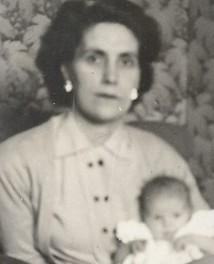
My parents were working-class through and through: Dad was John William “Bill” Mead (1925–2015), a lorry driver and later a factory worker in the printing trade. Mum was Edith Florence Mary “Edie” Mead (previously Plummer, née Hay) (1919–2006), a housewife and, (unbeknown to Dad), occasional shop worker.
I am quite a bit younger than my half-siblings. Jean Sheila Plummer (born in 1941) lives in Hemel Hempstead and John Robert Plummer (1945–1921) who lived in Watford, Abbots Langley, Rickmansworth and Honeybourne. Jean and John were Mum’s children from her first marriage to Robert Plummer (1916–1966). After Mum divorced him, Robert went on to marry Beryl Christine Craddock (1926–2013), and they had a daughter, Linda, in 1947, a half-sister to Jean and John. Jean met Linda for the first time in 2023. Families can be complicated, can’t they?
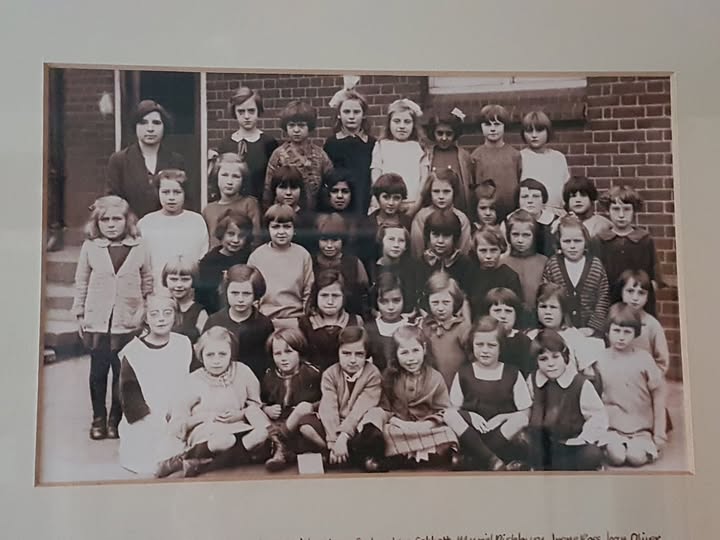
Back row: Peggy Hurst, Kathleen Smith, Mary Cailes, Lou Cobbett, Muriel Pickburn, Irene Ross, Joan Oliver.
Second row: Gladys Shrimpton, Emily McEwan, Olive Nicholls, Edna Martindale, Peggy Young, Joan Chase, Elsie Weatherley, Joan Davey, Ruth Nibbs.
Third row: Lillian Larcombe, Marie Minter, Peggy Dredge, Florrie Hunsdon, Edith Hay, Dorothy Atkins, Dorothy Ellingham, Enid Hayes, Florie Coles.
Fourth row: Hilda Martindale, Alice Thaxter, Doris Holt, Kathleen Archer, Phyllis Horwood, Hazel Muir, Audrey Exall.
Front row: Vera Limsey, Vera Collar, Dorothy Hay, Phyllis Dredge, Joan Gill, Nellie Raspin.
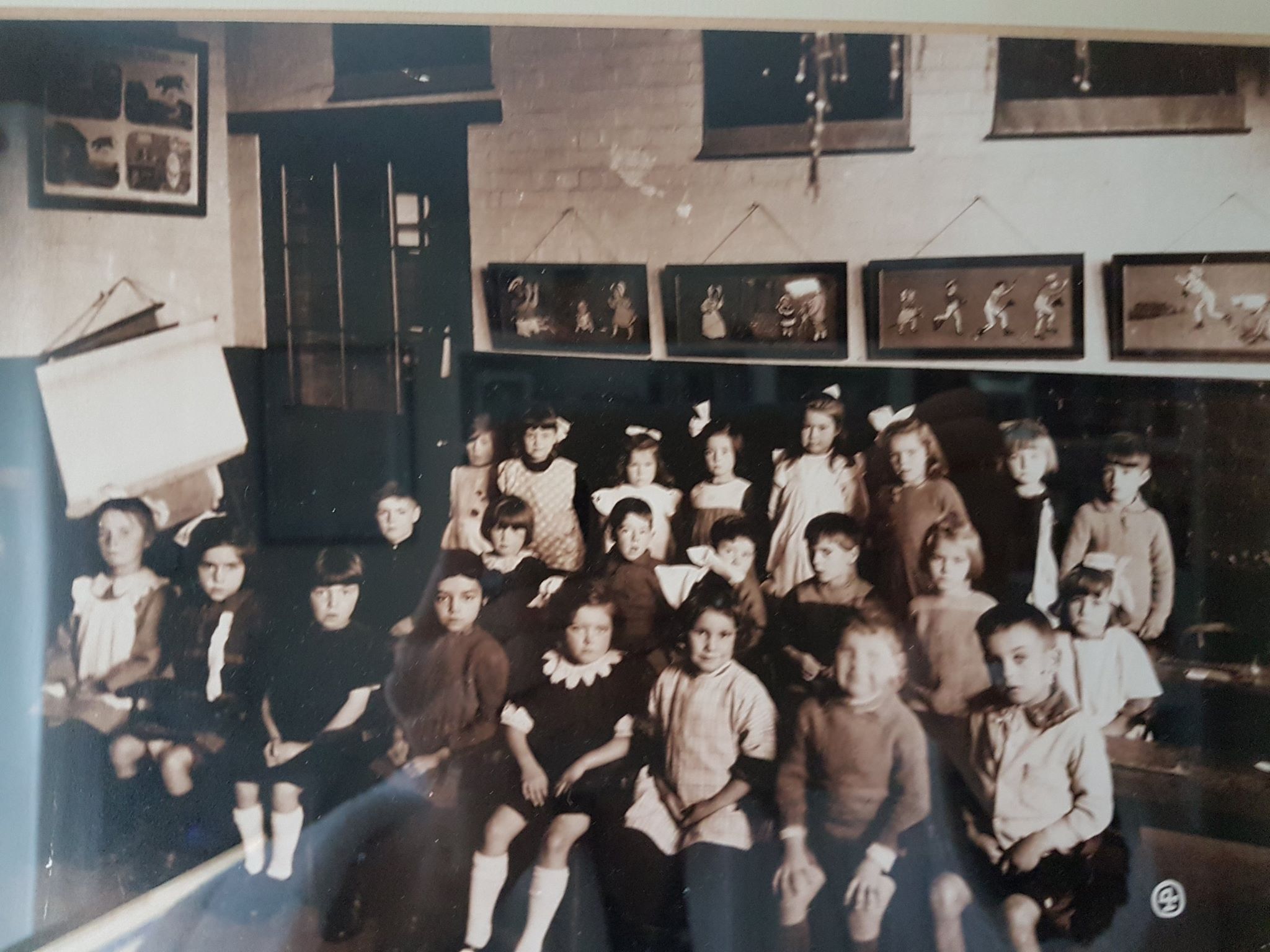
Front row: Mary Cailes, Edith Hay, Dorothy Graney, Kathleen Archer, Phyllis Dredge, Marie Minter.
Centre Row: Edith Bull.
Back Row: Dorothy Hay, Enid Hayes.
Although Jean and John were my half-sister and half-brother, as we shared the same mother, they were always just my sister and brother to me, so I’ll call them that from now on. In fact, I was blissfully unaware of the “half” part until I was of primary-school age. Jean and John had a different surname – Plummer – whereas mine was Mead, and in my childlike logic, I decided that must have meant I was adopted!
Back then, family matters like divorce weren’t talked about and Mum and Dad had a definite “Don’t Ask, Don’t Tell” attitude which we children absorbed as we got older. So, for a long time, I had no idea that Mum had been married before. It was just one of those things I wasn’t told – probably to spare me the social embarrassment—but it just left gaps in my understanding that I later had to figure out for myself.
In the early days of writing this memoir, I frequently found myself picking up the phone to Jean with a string of questions: “Who was it that…?” “What was the name of…?” “Where did we…?” “When did that happen…?” “How was it again that…?” “Do you remember when…?” and “Am I right in thinking…?” Jean was brilliant at jogging my memory, a living archive of our shared past. She became my unofficial fact-checker, gently confirming or correcting details when my own memory wavered. Memories can be unreliable witnesses after all, and it was such a comfort to have someone there who had lived it too.
I only wish I’d had the same sounding board in my brother John— but sadly, he died of Covid in 2021. I often think about the stories he could have shared and the laughter we might have had reminiscing together. His absence has been deeply felt.
I grew up in a modest terraced house at 42 Oxhey Avenue, Oxhey, Watford. These days, thanks to estate agents, it’s been rebranded as “Oxhey Village” and is highly sought after because of its proximity to Bushey and Oxhey Station for London commuters. Back then, it was just a working-class neighbourhood where most people rented their homes. Our house had no hot water, no indoor toilet, no bathroom, and no central heating. Kettles and saucepans provided hot water, the toilet was outside, the bath was a tin tub in front of the fire and in winter, the bedrooms were freezing!
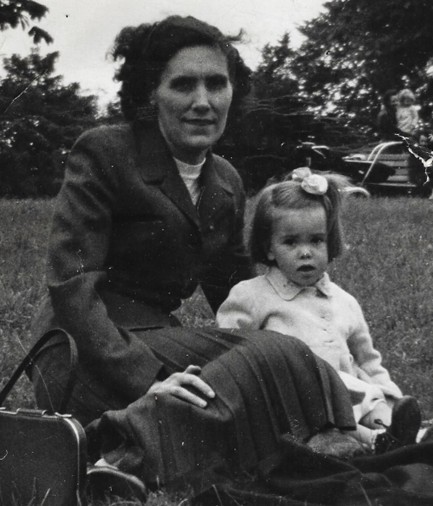
Growing up in 1950s and 1960s England meant knowing exactly where you stood in the social pecking order. Class was worn like an invisible straitjacket and Mum was particularly sensitive to it. People rarely moved house, so everyone knew everyone, and while there was a strong sense of community, people also “kept themselves to themselves” and never “aired their dirty linen in public.”
Pubs were the hub of social life, but “respectable women” wouldn’t dream of going in alone (or even with other women). They’d only go if accompanied by their husband, father, or older brother. If you want a snapshot of the class system at the time, I highly recommend looking up the Frost Report “Class Sketch” from 1966 with Ronnie Barker, Ronnie Corbett and John Cleese – it’s hilarious because it’s true.
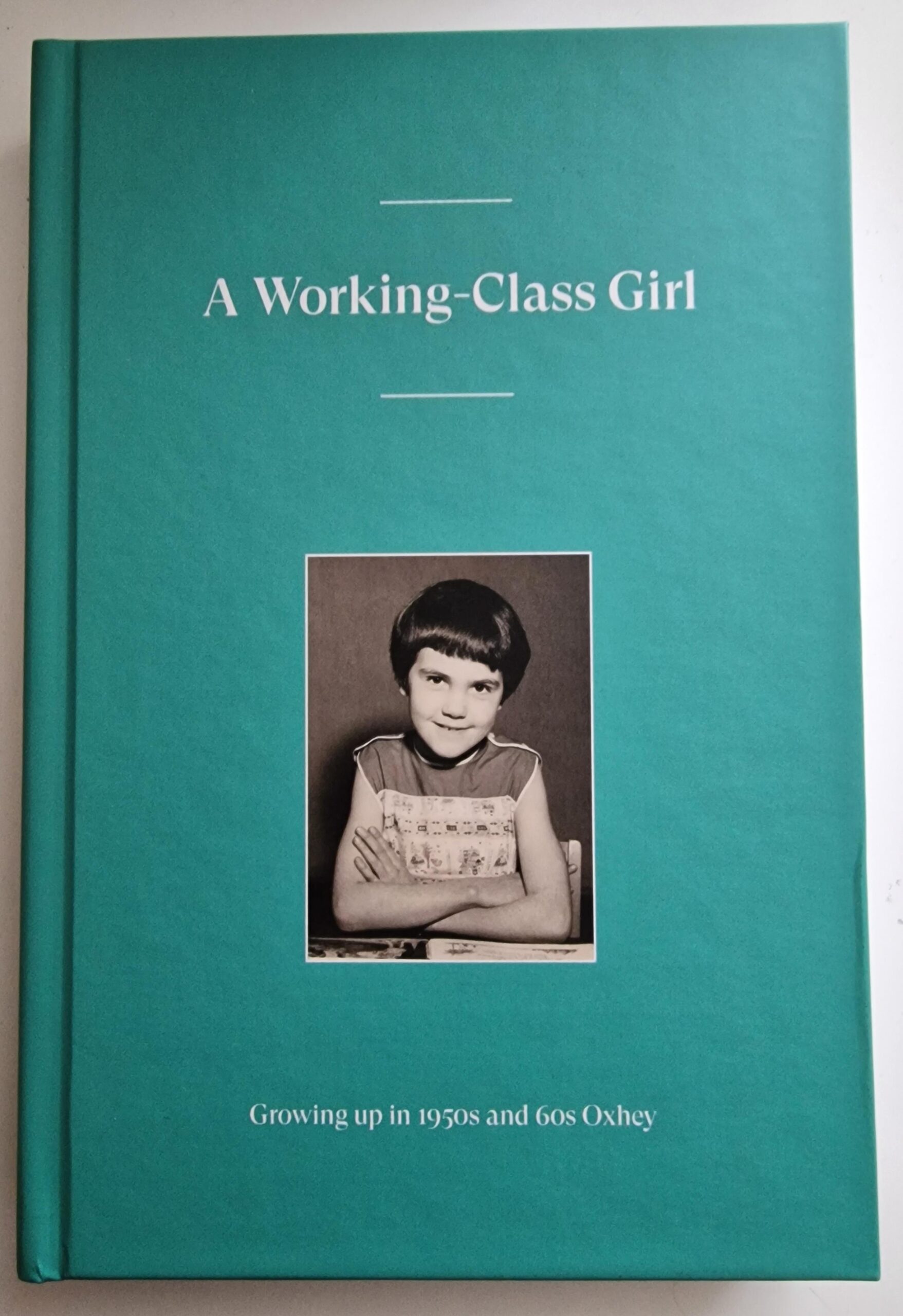
I had a marvellous start to my school years at Oxhey Infant School and then at Bushey Manor Junior School, where I proudly ended up as School Captain. I’ll write about this later.
This memoir focuses on my early years—up to 1964—but just to set the scene, here’s a quick gallop through the rest of my life …
After Junior School, I went to Watford Grammar School for Girls and then Victoria Girls’ School— less happy years, if I’m honest. But I muddled through. I did my A-levels at Cassio College, and in 1971, I headed off to Goldsmiths, University of London to train as a teacher— quite a leap at the time for someone from my background! I was the first person in my extended family to go to university.
In 1973, I married Gerald Hannibal, and we moved to a tiny, rented terraced house in Woodman’s Yard, Lower High Street, Watford. Again, no hot water, indoor toilet, bathroom, or central heating! By 1982, we’d bought our first home, a new-build at 3 Evans Close, Croxley Green, which had “all mod cons.”
After teaching for four years at Lea Farm Junior School and Rickmansworth Infant & Junior School, in 1977 I took a career break (for fifteen years!) to work with my husband Gerald in his graphic design business, “Hannibal Graphics.”
Seven years into working at Hannibal Graphics, in 1984, at the grand old age of 30, I gave birth to our son, Tom. Back then, this earned me the rather unflattering label of “elderly primigravida”, but these days, having your first baby in your 30s is completely normal. Our daughter, Nikki, arrived in 1990 when I was 36. Sadly, between Tom and Nikki, I had a miscarriage, so Nikki is what’s now known as a “rainbow baby” , although back then, that term didn’t exist.
Both Tom and Nikki inherited my genetic condition, Stickler syndrome, although we had no idea at the time. It wasn’t until years later, well into the Internet age, that I self-diagnosed using “Dr Google”. Eventually, to my great relief, Martin Snead at Addenbrooke’s Hospital, confirmed what I already suspected.
During the eight years from 1984 to 1992, I juggled working at Hannibal Graphics with raising Tom and Nikki and all their hospital appointments, making me an early adopter of “working from home,” – long before it became trendy!
After my separation and divorce from Gerald in 1992, Hannibal Graphics ceased trading, and we lost our home at 3 Evans Close, Croxley Green. It was a tough and uncertain time, a real turning point in my life. But with love, determination, hard work and resilience, the children and I made it through. We didn’t have much money, but we flourished.
As John Lennon sings in Watching the Wheels:
“… there’s no problem / Only solutions.”
With Tom and Nikki, I moved into a rented 1930s semi at 55 Beechcroft Avenue, Croxley Green – our new beginning.
In the immediate aftermath, I needed to find a way to support us, so I took on cleaning jobs to make ends meet. But teaching had always been my calling, so I enrolled in a refresher course at Wall Hall College, Aldenham, and made my way back into the classroom.
Over the next twelve years I worked at Warren Dell, Coates Way, Curzon Primary School, and Parkside Infant & Junior School, gradually rebuilding my career. Then, in 2004, I took a huge leap and became Headteacher at Merry Hill Infant School and Nursery – an achievement I could never have imagined during those difficult early days.
In 2010, I took Merry Hill to an Ofsted grade of “Outstanding” and, as a thank you, the Governors very generously funded my Master’s studies at Cambridge University. It was a part-time, two-year course that I somehow managed to juggle alongside my full-time headship – so you can imagine it was no walk in the park! In 2012, I proudly graduated with an MEd in Leadership and Learning and was even offered the chance to stay on and do a Doctorate. I was hugely flattered – but the sheer time and cost involved made it a step too far for me.
In 2011, I met David Beer— little did I know then he would become my future husband.
By 2014, at the age of 60, the symptoms of my Stickler syndrome were starting to take their toll on my energy levels. With David’s encouragement (and more than a little gentle persuasion!), I decided to take early retirement and look forward to the next chapter of my life.
That same year, David and I tied the knot, with a wonderful wedding at The Grove Hotel in Watford, and we’ve been happily married ever since – splitting our time between David’s flat in Islington Green and mine in Watford. As I write this memoir, we’ve just celebrated eleven wonderful years together, and I can honestly say it’s been the happiest of decades.
A heartfelt thank you to David, who patiently read the entire final draft of this memoir with care and attention to every comma, full stop and stray apostrophe. His sharp eye for grammar, spelling and punctuation—and his occasional gentle comments on style— helped bring clarity and polish to these pages. Though David didn’t know me during the years I’ve written about, his quiet support throughout this process has meant the world to me. I couldn’t have done it without him.
David and I have the absolute joy of seven wonderful grandchildren between us— each one a source of endless pride and happiness! Hester and Nancy from David’s son Matthew and his wife Catherine; Eric, Rufus, and Clara from my son Tom and his wife Lizzy; and Grace and Mabel from my daughter Nikki and her husband Pedro.
We couldn’t be prouder of everything our children have achieved, and watching the next generation grow is nothing short of magical. Being a grandparent is, without a doubt, the best thing in the world— no Ofsted, no performance targets, just love, laughter and absolute joy!
So, that’s my first “bite of the elephant”. I hope it’s whetted your appetite for the rest of the feast.
This memoir is my way of capturing what life was like for a working-class girl growing up in the 1950s and ’60s – a time of tin baths, ration books, chilblains, skipping ropes and the first stirrings of Beatlemania. It was a world very different from the one my children and grandchildren know today.
If you know me well, I hope you’ll hear my voice in these pages, as if I’m sitting beside you, telling the story. And if we’ve never met – well, I hope I can still make you smile. You’ll notice that each chapter begins with a short quotation from a Beatles song. Please humour me – as you’ll soon discover, I’m a staunch Beatles fan!
Let’s get going, shall we?
Chapter 2: A place called home
“There’s nowhere you can be that isn’t where you’re meant to be.” All You Need Is Love (Lennon-McCartney)
“When I was just a little girl
I asked my mother, what will I be Will I be pretty? Will I be rich?
Here’s what she said to me: Qué será, será Whatever will be, will be
The future’s not ours to see
Qué será, será: What will be, will be”
Sung by Doris Day
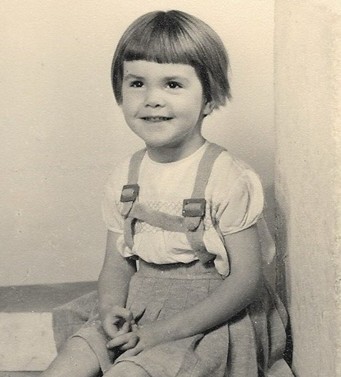
I grew up in the 1950s, a time that now feels like a world away – simpler, slower and full of a unique charm that I remember fondly.
The post-war era was all about rebuilding, finding joy in the little things, and making do with what you had. Life wasn’t always easy, but there was a real sense of community. Everyone knew everyone. That kind of close-knit support gave my childhood a feeling of safety and belonging that’s hard to replicate today.
There are so many memories, that I’ve tried to gather them under different headings to make sense of them all! And where better to start than with Home Life – the heart of it all.
“When you’ve got friends and neighbours
All the world is a happier place
Friends and neighbours
Put a smile on the gloomiest face
Just take your little troubles and share ‘em With the folks next door
Makes it twice as easy to bear ‘em That’s what friends are for
‘cos if you’ve friends and neighbours
That is something money won’t buy
You can hold your head up high
Although you’ve not a penny
And your house may be tumbling down
With friends and neighbours
You’re the richest man in town.”
Sung by Billy Cotton and his Band
At the start of this period there were five of us living at 42 Oxhey Avenue: Mum, Dad, my sister Jean, my brother John and me.
In 1958, when I was five, Jean was seventeen and working at Hills and Lacey in Carey Place, just off Watford High Street (where the Harlequin / Intu / Atria shopping centre now stands). Hills and Lacey printed Drapers’ Record, cigarette cards and glossy advertisements for the London Underground. John, at thirteen, was already in the teenage world of school, mates and adventures of his own.
By the time I was eleven, in 1964, life at home had changed. Jean was twenty, married (in 1963) to David Element and had a baby son, Paul. She had moved in with her in-laws in Waterman Close, Watford. John, now nineteen, was working as a window cleaner.
I mention these relative ages because neither Jean nor John feature very much in my memories from this period. True, I shared the middle bedroom with Jean, and John had to go through our bedroom to get to his “box room”, and I do have some recollections of John teasing me and having “rough-and-tumbles” as older brothers tend to do, but apart from that, my memories are fleeting. Despite this, when Jean married, I remember crying because I didn’t want her to leave me, so there must have been sibling closeness after all. John married in 1968, so really, with the big age gap between me and my siblings, I was almost like an only child.
One of my very first memories is of me sitting in a great big pram. I must have been at least three. I doubt it was a fancy “Silver Cross” like the ones the Royal Family had – more likely a second-hand “Marmet” or “Pedigree” from The Pram Exchange in Queens Road, Watford. Back then, prams were enormous, solid things that didn’t fold up for the bus (and we didn’t have a car at that time), so I imagine Mum must have done most of her shopping at the local corner shop, butcher’s, baker’s, and greengrocer’s, loading up the pram with groceries as she went. Either that, or she must have pushed me a couple of miles to Watford, probably to go to Watford Market. The pram had a trapdoor-style compartment under the mattress for storage – although when I got bigger, that’s where my feet went!
These “coach-built” prams are now probably considered vintage treasures, but at the time, they were just practical. I don’t remember ever having a pushchair (or “buggy,” as they’d be called now), so maybe I just stayed in that giant pram for as long as possible – partly for transport, partly for convenience and possibly because it was a great way to carry the shopping!
Speaking of that pram, it later found a new lease of life when my brother John repurposed its axles and spoked wheels for his homemade go-cart. But that’s a story for later!
Looking back, I think I was a bit of a Daddy’s girl when I was little. One of my fondest memories is an evening ritual we had. By the time Dad got home from work, I’d already had my tea, but when he sat down for his, I’d climb onto his lap and steal tasty morsels from his plate. Dad was a classic “meat and two veg” man – bubble and squeak on Mondays, or during the rest of the week, liver and bacon, bangers (sausages from Gibson’s the butcher’s) and mash, lamb or pork chops, toad-in-the-hole or fish and chips on Fridays. Whatever Dad was having, I’d tuck in, with a little plate at the side for my share. Mum must have cooked extra, knowing this routine!
It wasn’t really about the food, though. It was the closeness, the unspoken bond. Dad was a typical man of his generation – no big hugs or outward shows of affection – but these small gestures spoke volumes. That simple act of sharing his tea made me feel safe and loved.
I should mention here the names working-class people gave to meals. “Breakfast” was straightforward enough. The meal in the middle of the day was always “dinner,” and the one at the end of the day was “tea.” “Supper” wasn’t a meal at all, really— just a little snack before bed, usually a hot drink and a biscuit. We had no concept of “lunch.”
One of the more shadowy memories from my early years (I think I was under school age) was Mum’s miscarriage. It happened at home, and I remember the doctor and Mum’s best friend, Olive Ladmore, being called. (This was the era when doctors made home visits!) I was too young to understand what was happening, but I remember the unusual tension in the house.
Later, I found out that Mum had needed a hysterectomy afterward. As an adult, I can now begin to imagine the grief she must have felt, but back then, women were expected to just “get on with it”. There was no counselling, no open discussion about loss – just a quiet, unspoken sadness that lingered in the background.
Dads weren’t given much space to grieve either. The loss was seen as the mother’s burden, while fathers were expected to stay strong and keep working. Dad never spoke about it, but it must have been hard for him too. Years later, when I discovered a tiny box of baby clothes at the top of Mum and Dad’s wardrobe, Mum told me I’d have had a little brother called Alan. It’s strange to grieve for someone you never met, but even now, I sometimes wonder what life would’ve been like if Alan had lived.
Jean tells me I was a “sickly child—always ill, always had a cold.”. Apparently, I even ended up in the hospital with pneumonia when I was four or five, although I have no recollection of it at all.
Jean helped bring me up in that way older sisters often do – helping with my potty training, making sure I was looked after. Jean says that when I was about five, when I woke up in the morning, I used to climb into her bed, and she used to sing me the Billy Cotton and His Band song Friends and Neighbours and I used to fall back asleep again. That sounds cozy, doesn’t it?!
Since Jean described me as a “sickly child,” I’ll dive into some of my early health memories – mysterious heel pains, an odd bit of electric treatment, a proposed stay in a convalescent home, and, of course, the classic childhood tonsillectomy.
It’s worth remembering that the NHS had only been founded in 1948 – just five years before I was born. Before that, patients had to pay for medical care. So I was lucky: I benefitted from free vaccinations against polio, measles and diphtheria, and I could be prescribed antibiotics. That was no small thing.
I had several health issues. The first was a recurring pain in my heels. Mum took me to the GP, and then on to one of the local hospitals – either Shrodells in Vicarage Road, Watford, or the Peace Memorial at the top end of Watford by the Town Hall. I can’t be sure which one it was. (Technically, Shrodells’ was already Watford General by then, but Mum always called it by its old name – it had once been the Workhouse. The Peace Memorial is now the site of the Peace Hospice Care.)
I don’t know what was wrong with my heels, and it may be that the doctors didn’t know either. However, the treatment seemed to me to be worse than the symptoms I was experiencing! First, my heels were wrapped in a tight adhesive bandage. Then electrodes were applied to the bandage and electrical stimulation was applied, presumably to stimulate the bone or cartilage. This was not particularly painful, but it was quite terrifying to me as a young child. You must remember that in those days, adult patients were not really involved in their care, and children certainly were not. I’ve since Googled the treatment and discovered that it was quite pioneering for its time.
However, the worst part was that I was sent home wearing the tight adhesive bandages, which were extremely uncomfortable. Dad, thinking he’d ease the pain, put my feet into a bowl of warm water, but this only served to tighten the bandages even more. In the end, Dad grabbed the scissors and cut the bandages off himself. I don’t ever remember going back for another treatment, so that was the end of my revolutionary heel treatment!
The second health issue that I can remember relates to my being very underweight, and clearly my GP thought I needed feeding up! The GP suggested to Mum that I should be sent away for a few weeks to a convalescent hospital for children. I think the prevailing medical orthodoxy at the time was that diet, rest and fresh air improved children’s health. (I have subsequently discovered that Hertfordshire used convalescent homes in Aldenham and one in St Leonards-on-Sea. Countryside and / or sea air was considered beneficial.) Thank goodness Mum and Dad refused to send me away as I think I’d have found it very traumatic. (It would be called separation anxiety today).
Speaking of trauma, that takes me straight back to the time I went into hospital to have my tonsils out. In the 1960s, a tonsillectomy seemed to be the default solution for any child plagued by endless coughs, colds and sore throats.
One morning I woke up to Mum casually announcing that I was going into hospital to have my tonsils removed. Of course, the words meant nothing to me at the time. We caught the bus to Shrodells’ Hospital and, as was the custom back then, I was simply left there to my fate. Nowadays, parents are encouraged to stay in the hospital with their children, but in the 1950s and 1960s this was not allowed as it was thought it might disrupt the hospital routine and because there was fear of cross-infection.
I spent the night in a wheeled metal bed in a big room with several other children, all sleeping in similar beds and all “having their tonsils taken out” the next day. In the morning the nurses came to get us one by one. I noticed that a bed with a child was rolled out, and when it returned, the child was asleep. Finally, it was my turn. A man guided my bed through the halls into a drab, echoing room. No one spoke to me. I was lifted onto a narrow gurney, and the doctor placed a sort of cup, like a colander, upside down over my face. A sickly-sweet smell was filling the cup (ether, I later learned). The next thing I remember is waking up back in my hospital room with a raw, painful throat.
The silver lining? Ice cream and jelly – lots of it! In those days recovery after an operation was spent in the hospital bed – I don’t remember getting out to play, but perhaps we did. I think I was in hospital for about a week, and the daily visiting hours were short, so it was a very lonely time.
One thing Dad recounted, but I don’t remember, is that on the day after my operation, during visiting time, I was given ice cream and jelly to eat, with a digestive-type biscuit. I didn’t like the biscuit as it was too rough on my sore throat, so Dad ate it for me. Dad says that a nurse told him off and I was given another biscuit to eat. According to Dad, he was told that the roughness of the biscuit was to remove any clots or scabs from my throat and to aid healing. Whether his recollection of the event is accurate, I have no way of telling, but it certainly stuck in his mind and was a story he often retold.
As I have mentioned previously, Mum had several medical issues and I can remember being sent to stay with my paternal grandmother (“Nan”, Annie Mead, nee Rathbone) in Stanmore and my Aunty Ann and Uncle Don in Hemel Hempstead, presumably while Mum went into hospital. I was never told why!
I can remember visiting Mum in hospital on one occasion and found it quite odd that her hospital bed was out in the open-air on a balcony. I have since read that open-air wards were popular as a treatment for tuberculosis, but Mum never had that, so I suppose it was thought that the combination of fresh air and sunlight was important for a patient’s recovery. I suppose Mum’s bed was wheeled back indoors at night!
Dad, on the other hand, was never ill. He took it as a badge of honour that he never had a day’s illness from work and never visited his GP. The first time I can remember Dad going to the GP (and subsequently Mount Vernon Hospital, in nearby Northwood) was about two years before he died, when he had symptoms of bowel cancer.
Thinking back on these very early years, I realise how much they shaped me. Life in the 1950s wasn’t always easy, but it was filled with love, resilience, and a sense of community that made even the simplest things feel special. From being wheeled around in that great big pram, to sharing Dad’s tea, from Jean’s morning lullabies, to the quiet grief that was never spoken about— each memory is a little piece of the puzzle that made up my childhood.
Chapter 3: Men’s work
“Life is what happens to you while you’re busy making other plans.” Beautiful Boy (John Lennon)
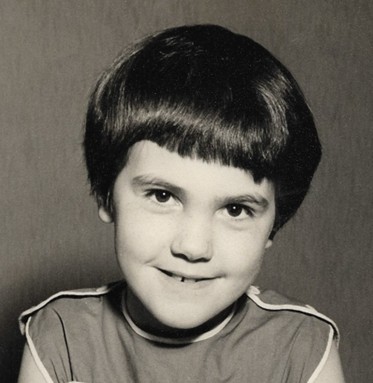
Our family life followed the traditional structure of the time: Dad had his “men’s work” – being the breadwinner, doing the DIY, decorating and gardening – while Mum had her “women’s work” – being the “housewife,” bringing up the children, cooking, washing, housework and shopping.
Men’s Work
Dad’s paid work during this time was as a lorry driver for a landscape gardening company called Courtens, based in Stanmore. It was hard, physical graft – not just driving but also loading and unloading heavy goods. But I think he liked the independence. Once he was out on the road, he was his own boss. Many’s the tale he had of “tricks of the trade” he got up to, some of which I’m sure were illegal!
When Dad got home, there was a set routine. His cooked tea was always on the table promptly. After tea, he’d settle into “his” armchair either reading the Daily Mirror or watching the telly. No one was allowed to sit in Dad’s armchair, either in the middle or in the front room, and no one was allowed to read the paper before Dad in case they got it in a muddle.
I’ve called the dining room the middle room and the lounge the front room, because that’s what they were to us. Calling them the dining room or the lounge (or sitting room) would have felt far too posh!
Dad was paid weekly, in cash, in a little brown envelope. From this, he handed over the housekeeping money to Mum, which she used for food, clothes and running the home. The rest was divided up – some put aside for bills and a bit kept back for Dad’s “beer money”. I remember Mum and Dad had separate tins for things like gas and electricity, each one carefully labelled and tucked away. No direct debits in those days—just good old-fashioned budgeting in cash.
Allotment, Greenhouse, Gardening, Birds and Tropical Fish!
Part of Dad’s role was to tend his allotment, his greenhouse, the small back garden and the even smaller front garden. This was his weekend hobby, and he took great pride in it.
Dad’s allotment, just a few hundred yards further up Oxhey Avenue, took up his Saturday and Sunday mornings. Dad was such a creature of habit that I think the neighbours could set their clocks by the sight of him trundling his wheelbarrow up the road and back again.
Being a Daddy’s girl, I often joined Dad at his allotment and tried to “help” him, but I fear I was more of a hindrance than a help!
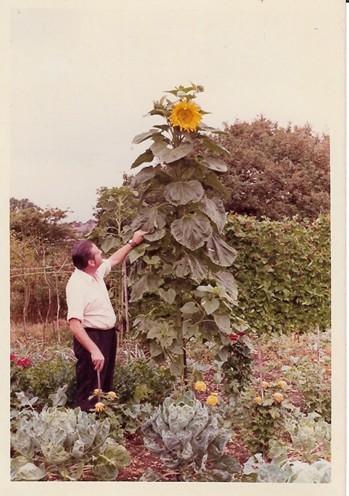
But Dad’s real pride and joy wasn’t his allotment vegetables – it was his flowers. His chrysanthemums and sweet peas were the stars of the show. In the summer months, the house was always filled with freshly cut blooms, their colours brightening every room and their sweet scent drifting gently through the air. He especially loved growing sunflowers, always aiming for ones that towered above him. I have a treasured photo of him at his allotment, standing among a sea of cabbages, grinning proudly as he points to a sunflower that’s easily twice his height – a moment of quiet triumph captured forever.
Dad’s greenhouse wasn’t just where he grew tomatoes and cucumbers— it was his quiet retreat from the noise of daily life. He’d often slip out after tea “just to check on the plants”—pottering, tying, watering and tinkering. But “growing your own” wasn’t just a hobby for Dad – it helped save money too. It meant our plates were always full of fresh vegetables and soft fruits. We never went without. In fact, I thought everyone ate home-grown carrots, potatoes, runner beans and strawberries straight from the allotment or greenhouse!
At home, the small back garden was mostly lawn, edged with neat flower beds, while the tiny front garden was reserved for seasonal bedding plants. Dad beamed with pride whenever a passerby paused to admire his display of flowers. He was a keen follower of Percy Thrower on BBC’s Garden Club and ordered his seeds and bulbs from Garden News magazine. Gardening wasn’t just a hobby for Dad – it was something he truly loved.
It was a sad turning point when, in his later years, Dad had to let go of his beloved allotment. That was the first to go, and I think it hurt him more than he let on. Slowly, he began to step back from tending the back garden too, and eventually—even more reluctantly—he gave up looking after the front garden. For a man who had always taken such pride in his garden, it marked a quiet, painful surrender to the passage of time.
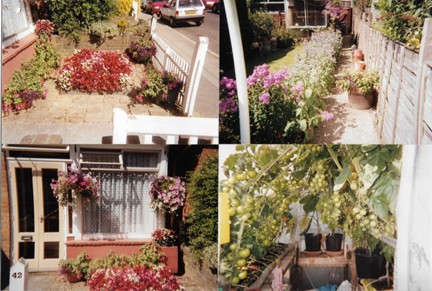
I will mention here Dad’s back garden shed – it was very much his domain. Inside, he kept his DIY tools, a well-worn workbench and all his gardening gear. Like the greenhouse, the shed wasn’t just a place where he got things done; it was also his quiet escape from the bustle of the house.
In time, Dad extended the shed with a little lean-to that became an aviary. He didn’t quite fit the image of the working-class man with a pigeon coop; Dad’s tastes were more exotic. At different times, he kept budgies, canaries, zebra finches and doves. He adored those birds and spent hours tending and talking to them – though I’m not entirely sure our close neighbours in Oxhey Avenue and Grover Road were quite as fond of the constant chirping and cooing that drifted across their gardens!
Thinking about the aviary has reminded me that long before that, we had a budgie in a cage in the front room. The cage sat on a tall stand so that adults could chat to the budgie at eye level, and Joey—yes, of course he was called Joey! – would sit on his perch chirruping away happily. Once a week, usually on a Saturday or Sunday evening, as a special treat (for us and for Joey), we’d let him out to stretch his wings and fly around the front room. It was always Dad’s job to gently catch him and pop him back in the cage – quite a performance!
At night, Mum or Dad would cover the cage with a cloth to stop Joey singing, and in the morning, off came the cover and the chirping began again. Mum used to get annoyed because Joey scattered birdseed everywhere. Dad tried to solve the problem by attaching a special plastic skirt under the cage to catch the mess, but some of it of it still ended up on the carpet.
I suppose Joey gave me my first experience of death. One day, we found him lying on his back at the bottom of the cage. I don’t remember being terribly upset – I think I took it all in my stride. And before long, another little budgie appeared to take his place!
I’m glad that people don’t keep budgies (or canaries) as pets anymore. Seeing them in those tiny cages now feels cruel – but at the time, it was commonplace.
At one point, we also had a tank of tropical fish on the sideboard in the front room – one of Dad’s shorter-lived hobbies. Like the aviary, I’ve no clue where the idea came from. One day, the tank simply appeared. Dad carefully set it all up, arranging stones, plants and rocks, fitting a little filter, and heating the water to just the right temperature. Then we had to wait a whole week for it to “settle” before the fish could go in – a lesson in patience!
Eventually, Dad introduced a colourful collection: angel fish, guppies and my favourite – black-and-white zebra fish. Some fish shimmered with neon colours, although I’ve forgotten their names. At the time, it all felt incredibly exotic.
As lovely as it looked, I know it became quite a chore for Dad to keep up with the cleaning and regular water changes. Perhaps that’s why, after a few years, Dad decided to get rid of it. You don’t see many home aquariums these days— the only place I see one now is at my dentist’s and my physiotherapist’s surgeries!
DIY and Decorating
In his holidays, Dad did DIY and decorating jobs about the house. He was not very skilled, but he worked hard and tried his best!
I remember Dad using something called “distemper” on the ceilings – I think it was a forerunner of today’s emulsion paint. It was meant to keep the ceilings looking clean, which was no easy task when soot and grime from our coal fires settled on them so quickly. Later, he moved on to Artex, swirling away to create the “must-have” ceiling patterns of the day, or sometimes he’d fit polystyrene ceiling tiles. Back then, they were the height of modern home improvement; now, of course, they’re more likely to be labelled an asbestos hazard or a polystyrene fire risk. Funny how what was once the mark of a stylish home is now something you have to remove wearing protective overalls and a mask!
I can always remember Mum telling me not to disturb Dad when he was decorating because he was concentrating (when really, I think it was because decorating made him grumpy!).
Dad always papered the walls himself, often choosing the bold, gaudy patterns that were fashionable at the time – much to Mum’s delight, especially if they included her favourite colour, orange. After Mum died, I commissioned a watercolour painting as a quiet tribute to her love of that vibrant shade. The artist painted three soft orange ‘Remember Me’ roses, symbolising Dad, Mum, and me. It’s a beautiful, heartfelt piece that now hangs in pride of place in my bedroom – a gentle reminder of love and memory.
Mending Shoes
Like many working-class Dads of the time, mine was a firm believer in the “make do and mend” philosophy – especially when it came to shoes. Why pay a cobbler when you could fix them yourself? Armed with his “hobbing foot”, “last”, bradawl, hammer, nails and a very sharp knife, Dad set to work in his shed, saving us a few bob in the process. If a repair was too tricky, we’d take them to Mathews, the local cobbler in Paddock Road, Oxhey, but most of the time, Dad managed to get the job done.
I can still remember the smell of leather and glue when Mum took me along to collect repaired shoes from Matthews. When Dad died in 2014, his tools were still in the shed, untouched for years, a reminder of a time when fixing things was simply what you did.
There are two other shoe-related memories that stick with me. First, Dad polished his shoes every evening using Cherry Blossom Shoe Polish, a hard brush and a soft cloth. Second, if we children outgrew our shoes and money was tight, Mum had a simple solution – she’d slice off the top of the toe, turning them into open-toed shoes! It seemed perfectly normal to us at the time, although I imagine it might raise a few eyebrows today!
I mentioned earlier that Dad worked for Courten’s the landscape gardening company. After that he worked for Bliss the builders, based, I think, in Oxhey or Bushey. Later, he worked for Ever Ready, the electrical company in Lower High Street, Watford and Benskin’s Brewery, next to Watford High Street Station. (I wonder if the free beer perks had anything to do with that job!).
Dad’s last two full-time jobs were at Odham’s, the printers in North Watford, and then at the Sun Printers in West Watford. But even after retiring from the Sun Printers, Dad was never one to sit around. He took on a part-time job as a driver for Suits You, the men’s clothing store in the Harlequin Shopping Centre in Watford. I can still picture him telling the story of the time he parked the Suits You van in London to make a delivery – only to return a few minutes later and find the rest of the stock had disappeared. Not exactly a good day for Suits You, but it made a great tale for Dad to share with his mates over a pint!
Dad was immensely proud that he had never missed a day’s work through illness – if you could stand up, you could go to work, simple as that. He had a saying, “If you can dance at night, you can dance in the morning.” Dad thought badly about anyone who didn’t work to support their family. That said, he was definitely not a “company man.” He was a staunch union man, always looking out for himself and his mates, and he refused to bow and scrape to anyone. He despised yes-men and bootlickers, and oh, the stories he’d tell of the little dodges and tricks he used to make his life easier and outwit his bosses! He may have been a grafter, but he was never a mug.
So, that’s a little window into Dad’s world of “men’s work” – hard graft, a few clever dodges, and a strict no-sitting-in-his-armchair policy! But, of course, while Dad was out earning a living, Mum was running the show at home. In the next chapter, I’ll take you into her world of “women’s work” – and trust me, she had just as much on her plate!
Chapter 4: Women’s work
“It’s getting better all the time.” Getting Better (Lennon-McCartney)
According to the traditional rhyme (and with no disrespect to Dad):
“Man works till set of sun, Woman’s work is never done. From rise of morn to set of sun Woman’s work is never done.”
And wasn’t that the truth!
Mum’s “women’s work” was mostly domestic, although she was never what you’d call houseproud. Back then, before labour-saving gadgets made life easier, just keeping the house looking clean and tidy was a full-time job – a workload that that would amaze women today. No wonder so few married women had jobs outside the home – they were too busy running it! Their job was to be a “housewife.” Mum undertook some of her housewife chores every day, and others on certain set days.
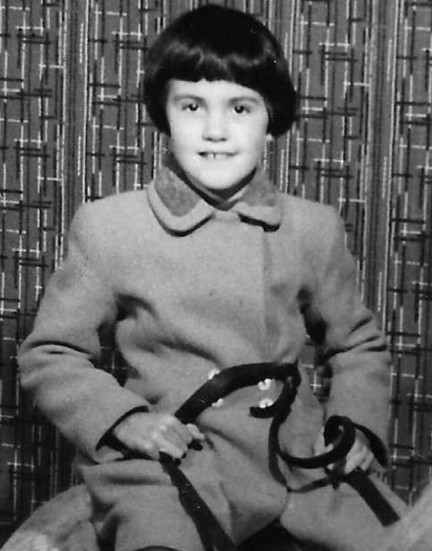
This is a long chapter, so buckle up!
First Things First – Making the Coal Fires
If you’ve ever complained about a chilly house in winter, spare a thought for us before central heating! Our only heat came from coal fires – one in the middle room, one in the front room and whatever warmth escaped from the kitchen when Mum was cooking. The rest of the house? Absolutely freezing!
Winter mornings were the worst. We’d wake up to find “Jack Frost” had been busy, leaving delicate ice patterns on the inside of our bedroom windows. Getting out of bed felt like stepping into the Arctic!
To stay warm at night, we layered up with blankets – some of them scratchy old army ones from Mum’s brother, Graham – topped off with an eiderdown and even our coats. In the morning, when it was freezing cold, we tried to get dressed whilst still under the covers, so that we didn’t lose what little night-time heat there was. Then we dashed downstairs as quickly as possible into the middle room where Mum had already made the coal fire. The coal fire in the front room was only made in the afternoon and evenings, or for daytime special occasions.
Despite all the effort, there was something magical about those coal fires. The flames flickered in shades of blue, orange and yellow, and the glowing embers formed little caves between the coals. I used to sit mesmerised, calling the rising sparks “fairies.” And on special nights, Dad roasted chestnuts on the grate of the front room coal fire or buried jacket potatoes in the embers, making them extra crispy and delicious.
But for all their charm, coal fires were a lot of work – mostly for Mum. First thing every morning, she had to clear out the ashes from the fire grate. The grate was a raised iron basket that held the coal, allowing the air to flow through while the ash collected in a pan below. This pan had to be carried out and emptied into the dustbin, creating clouds of dust. Although most of the ashes did collect in the pan, Mum still had to sweep the space below which made more dust! (We’ll get to Mr Atkins the Chimney Sweep later!)
Then came the tricky business of actually laying the fire. Mum had it down to a fine art. She’d start with crumpled newspaper, topped with wood shavings known as kindling. Then she’d put a small amount of coal on top – not too much! If the fire was too heavy, it wouldn’t catch properly. Finally, she’d strike a match and light the crumpled paper, sometimes using a rolled-up newspaper like a taper to set fire to different parts.
Sometimes Mum needed an extra, but dangerous, trick to get the fire to start. She used to put a sheet of newspaper across the front of the fireplace, to increase the draught through the grate, which helped the fire to ‘draw’. This was very effective, and as I thought, rather exciting, but as I didn’t realise, quite dangerous, because as the draught increased, if Mum wasn’t careful, the newspaper could be sucked in and up the chimney or it could burst into flames sending hot charred bits flying into the room! Mum had to have her wits about her. Although it was Mum’s job to light the fires (I think by this time of the morning Dad had already gone to work) it was Dad’s job to carry the heavy bucket of coal in from the coal shed (which was in the back garden “coalhole” next to the outside toilet).
Of course, once the fire was going, it needed constant attention. Mum (or later, Dad when he was home from work) poked at the coal with the poker to get more air in or add extra lumps when the fire started to fade. But coal wasn’t wasted! If we were going out for the day, the fire was left unlit, and I have vivid memories of coming home to an icy house, watching Mum – still in her coat and headscarf – hurry to get the fire started. We’d all keep our coats on until the room warmed up enough to move about without shivering!
Towards bedtime, there was always the question of whether Dad (once Dad was home from work, he took over the duty of, “Keeper of the fire”) would put more coal on the fire as it was wasteful (and dangerous) for it to be blazing when Mum and Dad went to bed. At bedtime, Dad would put a caste-iron fireguard around the fire, just in case there were any stray sparks or falling embers. The ironic thing about our coal fire was that when it really got going, we sometimes had to put the fireguard round it anyway – not for safety, but simply so we could sit in the room without slowly roasting our legs!
Back then, coal fires were the only form of heating in the front and middle rooms. The rest of the house was icy cold. Central heating? That was still a dream for the future!
Next Job – Emptying the Guzundas
Future generations might be amazed to learn that I grew up in a house where the toilet was in the garden. No nipping to a cosy en-suite in the middle of the night – if nature called after dark, we had a far less glamorous solution: the guzunder.
For the uninitiated, a guzunder (or chamber pot) got its name because it “goes under” the bed. Ours was a fancy china one with a blue pattern – very posh-looking, considering its purpose! Others were made of enamel, but whatever the material, the job remained the same: it had to be emptied every morning. And who had that delightful task? Mum, of course! Every so often, Mum would clean the guzunders by filling them up with a weak solution of water and Parazone.
No one really talked about it, but guzunders were a fact of life. You just used them when needed, shoved them back under the bed, and hoped it didn’t get knocked over (because that was a disaster no one wanted to deal with!). Poor Mum – adding “Chief guzunder-emptier” to her never-ending list of daily chores!
Monday – Washing Day
“Today’s Monday, today’s Monday, Monday is washing day Is everybody happy? You bet your life we are!”
Sung by The Scaffold from a traditional nursery rhyme
Monday was always washing day, and in the early days, that meant hard work. Before the luxury of a washing machine, Mum tackled everything by hand – scrubbing with a stiff brush, rubbing clothes up and down a washboard, and wringing out sopping laundry through a heavy, hand-cranked mangle. The mangle lived in the garden, covered with a sheet of tarpaulin and had to be wheeled in every washday. Mum never had rubber gloves, so by the end of the day, her hands must have been raw!
It was only in the early 1960s when Dad bought Mum a “new-fangled” twin-tub washing machine, so-called because one tub of the washing machine was for washing and the other was for spinning and draining. Whilst our twin-tub was less hard work than our old-fashioned mangle, it was still labour-intensive. Our twin tub was not plumbed in. I suppose it could have been, but that was clearly not expected because the manufacturers supplied two hoses. One was for filling the wash tub and the other was for emptying the spinning and draining tub. Mum had to attach the hose for filling to the tap and hook it over the wash tub and hook the other hose over the sink for emptying. Unfortunately, neither the filling nor the emptying was automatic. Mum had to stand over the washing machine while it filled, ready to turn off the tap. Then she had to set the washing going and then come back to pull the clothes out of the wash tub and put them into the other tub for spinning and draining.
Once the washing had spun and drained, Mum had to return to the wash tub, which she now had to fill with new water for rinsing. Mum had to repeat this to-ing and fro-ing between the two tubs several times, depending on how many rinses she wanted. Washing day was a steamy business, even standing back and using long wooden tongs, and twin-tubs were noisy!
One disadvantage was that If Mum didn’t attach the hose firmly to the sink when it was spinning the water out, it jumped free and sprayed the water all over the kitchen floor! Another disadvantage was that our twin-tub washed by rotating the clothes in only one direction. The result was that the clothes wound together, and Mum had to unwind them to separate them!
I remember Mum separated the “whites” from the “coloureds” and in the final rinse of the whites she used a little blue bag of Reckitt’s Blue, which was a small muslin cloth tied round a small cube of blue substance and kept in a bowl of water. Goodness knows what the blue bag contained or if it worked to keep the whites, white!
Drying the washing was another job in itself. Whatever the weather (unless of course it was raining), it went on the line. If it was frosty, the clothes came in stiff as boards. If it was windy, all the better – Mum said the wind blew out the creases and gave everything a “fresh air” smell. But if it rained? Out came the wooden clothes horse (airer), and Mum draped the washing on it in front of the coal fire in the middle room.
And yet, washing day in those days was nothing like today. There wasn’t the same mountain of laundry – far from it! Mum washed underwear weekly (it was common practice in those days to only change underwear once a week!), and top clothes had to last, with stains being sponged off rather than washed away. Mum washed sheets in rotation – last week’s top sheet became this week’s bottom sheet. As for blankets? Mum washed them once a year, if that – she saved it for a hot summer’s day when they could dry properly!
I should mention my imaginary friend “Vera,” who – rather bizarrely – lived down one of the the washing machine hose pipes. Goodness knows where I got the name from; we didn’t know a single Vera, and why I decided she’d taken up residence at the other end of a hose pipe is anybody’s guess. Sometimes it’s best not to try and work out what’s going on in a child’s mind!
The game was simple: whenever Mum wasn’t using one of the hose pipes, I’d crouch down and chat away to Vera. She always replied, naturally – although, funnily enough, I was the only one who could hear her answers. Looking back, it was hardly the most high-tech form of entertainment, but on washing day, Vera and I had a great time. Who needs toys when you’ve got a hose pipe and an imaginary friend?
Mum and Dad hung on to that twin-tub for years, even after Mum occasionally used the launderette on Pinner Road (where the Co-op used to be) or, when Mum and Dad were older and couldn’t manage their own washing and sent it to Watford Laundry on Sydney Road. Dad even made a Formica-laminated wooden cover for it (orange of course), turning it into a handy work surface in our tiny kitchen. The twin tub with its Formica cover was still there in 2014 when we cleared the house after Dad died – like a relic from another era.
Since Mum was so busy on washing day, there was no time for cooking. Instead, dinner was always cold meat from Sunday’s roast, served with bubble and squeak which was made from leftover vegetables. That’s why washing day was always Monday – we ate the Sunday leftovers: a quick and easy meal!
And, as if all this palaver on washing day wasn’t enough, Mum even “took in washing” for a local amateur football team. It was her little sideline, a way to earn some money of her own, rather than relying entirely on what Dad gave her. As if she wasn’t doing enough already!
Tuesday – Ironing Day
Tuesdays were always ironing day. Mum liked to get started while the Monday washing was still just right – not too damp, not too dry. If it had dried out too much overnight, she simply damped it down, flicking water over it with her fingers before rolling it up to let the moisture spread evenly.
Before Mum had the luxury of an ironing board, she did all her ironing on the table in the middle room. The full width of the table was perfect for tackling big items like sheets and tablecloths. To protect the surface of the table, she layered an old blanket, folded thick for padding, with a well-worn sheet on top – kept especially for ironing day.
Sunday – Bath Night
Not only did we not have an indoor toilet – but we also didn’t have hot water or a bathroom either! Just one cold tap in the kitchen and a galvanised tin bath that hung on a nail on the coal shed door. Bathing wasn’t something you just did – it was a full-blown operation, and once you hear what was involved, you’ll understand why it only happened once a week!
“What’d come out on a Saturday night?
The old tin bath
Put in the kitchen right under the light
The old tin bath
We’d fill every kettle, we’d fill every pot
We’d boil ‘em up until scalding hot
Then where did we pour the boiling lot? In the old tin bath”
A verse from the song, Old Tin Bath from Snaps by Harvey Andrews
Contrary to the song quoted above, Sunday night was our bath night, so that we were clean and ready for the week ahead, and I can’t remember ever having a bath on any other night.
Bath night was a time-consuming job for Mum and here is why. First, Mum had to carry the tin bath into the kitchen and get rid of any spiders or spiders’ webs before the bath-time ritual could begin. Then she filled up every available saucepan and kettle with water. Next, she lit the four gas rings on the top of the cooker and put the saucepans and kettle on to boil – with two saucepans on some gas rings to provide enough hot water.
Once the water was boiling, Mum tipped it into the tin bath. This had to be done quickly because as soon as the boiling water was in the bath it started to lose its heat. Mum added a small amount of cold water to get the bath water to the right temperature. Because our kitchen had a stone floor, even when our bath had hot water in it, the base of it was still cold. It was a strange sensation sitting in a warm bath, but with your bottom feeling cold!
Because heating up all this hot water involved such a lot of work, everyone took it in turns to use the same bath water. With me being the youngest, I went first, then my brother, sister, Mum and finally Dad. With us all only bathing once a week, by the time Dad got in the water it must have been quite cold and very dirty!
The soap that Mum bought was Lifebuoy, which came in a big red block that smelled sharp and clinical. Sometimes she bought Sunlight carbolic soap, which was also red, and bizarrely could also be used for cleaning sinks and floors! I think the idea was that the soap should kill germs and prevent B.O. (body odour) which was probably a good idea when people only bathed once a week!
In addition to the strong soap, Mum gave us a good scrubbing with a flannel, which meant that, for one day at least, we were clean. On the other days of the week, we had a “stand-up wash” at the kitchen sink, with a small bowl of warm water and the ever-present flannel. I can remember having ingrained dirt between my toes because mid-week, it was difficult to wash my feet. It didn’t seem unusual to me to have dirty feet!
Hair-washing was its own adventure. Mum bought little sachets of a powdered soap called Amami, which she dissolved in a jug of hot water and poured over our heads. We always hoped it was not too hot! Only later did Mum progress to buying liquid shampoo such as Sunsilk, Supersoft, Loxene or Vosene (for dandruff).
If you think filling the bath was a mammoth task, imagine the bother of emptying it! Mum scooped the water up with a saucepan and tipped it down the kitchen sink. Towards the end she manoeuvred the bath out into the garden, tipping the remaining water down the drain and then hanging the bath back onto its nail on the coal shed door ready to do it all over again the following Sunday.
Something relevant here to mention are our “special treat” trips to the Public Bathhouse at the top of the town near the original swimming pool (now closed) and library. My sister Jean has reminded me that they were called Slipper Baths, which I think related to the curved tops to the baths – like a slipper.
Now, let me take you on one of our expeditions there – modern generations will be amazed.
Imagine you fancy a bath. Now imagine you must get on a bus to Watford and go to a Public Bathhouse. Sounds ridiculous, right? But that’s exactly what Mum and I did for special occasions. (To be fair, it was probably easier than going through the whole tin bath hassle at home!)
I remember Mum and I entered the bathhouse; Mum paid an attendant at a little kiosk by the door, who gave us a numbered ticket, and we were allocated adjacent bathroom cubicles (there was a long corridor with doors to the tiny cubicles on either side). I don’t know if there were separate entrances for men and women, but I expect there were.
I think it was possible to pay extra and use the bathhouse towel and soap, but we always took our own (plus a clean set of clothes to change into). We were allowed a certain amount of hot water and a certain amount of time – I’m not sure how that worked. Maybe the water just stopped running after a while!
Once we’d finished, I suppose the attendant cleaned the bath for the next person – although I never actually saw that happen. What I do remember was that the attendant seemed incredibly strict and frightened the life out of me. The whole experience was so intimidating that, given the choice, I’d much rather have just stayed dirty!
So, that was Monday (washing day), Tuesday (ironing day), and Sunday (bath night) sorted! The rest of Mum’s week was filled with shopping, cooking, cleaning, sewing, darning and knitting.
Every Day (except Sundays and Wednesday afternoons!)
Food Shopping
Since we didn’t have a fridge until well into the 1960s, Mum had to go food shopping every single day – except Sundays, of course, and Wednesday afternoons when the shops shut early. If I wasn’t at school or out playing, I had to tag along, so I remember those shopping trips (and all the local shops) like it was yesterday.
Shopping wasn’t the quick in-and-out job it is today. There were no supermarkets where you could grab everything in one go. Instead, Mum had to visit different shops for different things, and each one was a slow process. There was no self-service – you had to queue up and then when it was your turn, tell the shopkeeper what you needed, and then watch as they fetched every single item, weighed it, wrapped it up, and – most importantly – had a good old chat. No wonder shopping took so long! Maybe that’s where I get my love of chatting!
And then there was the job of lugging it all home. No car, no shopping trolleys with wheels, just Mum carrying everything in heavy shopping bags, with me trotting behind.
Luckily, we had lots of local shops in Oxhey in those days. One of our regular stops was the Co-op on the corner of Oxhey Avenue and Pinner Road, which I found fascinating. Not because of the food, but because of its brilliant overhead cash railway system. The assistant popped the money into a little canister, sent it whizzing along the rails to the cash desk, and back it came with the change. It felt like magic!
The Co-op had a “Dividend” system where we told the shop assistant our Dividend (Divi) number and at the end of the year the Co-op gave a small percentage back to club members in the form of a ‘Dividend’. I’m not sure how Mum received her “Dividend” or how much it was, but it must have been enough encouragement for her to buy the bulk of her shopping there – that and the fact that the Co-op was at the end of our road! Many’s the time I can remember having to “nip to the Co-op” to buy something that Mum had forgotten.
I can also remember a transition from the Dividend to Green Shield Stamps, which felt very modern at the time. In this sales promotion scheme, we received stamps relating to the amount of money we had spent. My job when we got home was to stick the stamps into the Green Shield Stamp book. Once we had collected enough books of stamps, Mum and I went into the Green Shield Stamp shop in The Parade, Watford (somewhere near the pond) and exchanged the stamps for goods that Mum chose from a catalogue. I suppose, in a way, Dividend and Green Shield stamps could be thought of as the forerunners of modern-day supermarket loyalty cards, just with more faffing around.
The Co-op wasn’t the only place Mum shopped for food. If I start at Capel Road and work my way along Villiers Road, I can give you a good idea of the shops we visited. (I’ll save the non-food shops for later.)
First, there were Brown’s and Turner’s, both family-run greengrocers and both right next to each other. For some reason, Mum preferred Brown’s. It was run by Ethel Brown who was very smart and efficient. Perhaps Mum knew her and that is why she shopped there rather than at Turner’s.
I mentioned earlier that we ate lots of fruit and vegetables from Dad’s allotment, but there were still some items that Mum bought from Brown’s because we ate lots of fruit and vegetables in those days.
I remember the scales were the balance sort, with weights on one side and a pan for the goods on the other. Ethel Brown tipped the goods straight into Mum’s shopping bag – no plastic bags in those days. Ethel Brown wore a shopkeepers’ “pinny,” (which was like a half apron or pinafore – hence the name “pinny”) where she kept the money from purchases and gave you your change.
Loveday’s the Bakery, in a prime position on the corner of Villiers Road and Capel Road, was another family-run business and it did a roaring trade. The preparation and baking were done behind the shop, which was referred to as “out the back.” I used to love the wonderful smell of freshly baked bread as we approached Loveday’s.
Loveday’s had all sorts of appetising breads, cakes and pastries displayed in the window and inside the shop, but I don’t remember them selling cream cakes – perhaps that is why I have never developed the taste for them. I really liked to see the baker come out of the area “out the back” wearing his long white apron over his regular clothes, and a white cap. It is great to know that Loveday’s is still going strong today.
Next stop: the food shops along Villiers Road – or at least the ones Mum used. I definitely remember a butcher’s shop … or was it two? Was it called Dewhurst? Or was it Dixey’s? Or maybe Dewhurst was next to Dixey’s? Or maybe one replaced the other? Honestly, it’s all a bit of a meaty blur. I’m sure someone my age will be reading this, wagging a finger and muttering, “No, no, she’s got that all wrong.” But hey – these are my memories! Wobbly, patchy, and possibly factually dubious … but mine all the same!
Inside, the butcher’s shop, (whatever it was called!) felt like a different world. Sides of beef hung from big metal hooks, suspended from the ceiling. The floor was covered in sawdust, and the walls gleamed with white tiles. A massive wooden chopping block sat in the middle, its surface worn into a dip from years of chopping and slicing. I remember watching the butcher scraping it clean with a huge knife.
Mum always bought mince for shepherd’s pies, but it wasn’t like today, neatly pre-packed and ready to go. The butcher had a big mincer attached to the counter, and Mum chose her meat first – then he minced it right in front of her. Even so, the mince was so fatty that Mum boiled it the day before she planned to use it, let it set, and scraped off the solid fat that formed on the surface before making it into a pie.
Mum also bought beef suet, which sounds rather unappealing when you realise it’s the fat from around a cow’s kidneys! But it made the best suet puddings, stuffed with raisins and served with Bird’s Instant Custard. Mum also used suet for dumplings and pie toppings, so it worked for both sweet and savoury dishes. For sausages and bigger joints of meat (usually beef or lamb), Mum always went to Gibson’s in Lower High Street, near Water Lane, Watford – more on that later.
I don’t remember there being a Fishmonger in Oxhey (Mum went to Watford Market for wet fish), but there was a Fish and Chip shop in Villiers Road called Oxhey Fisheries. Our Friday treat was fish and chips (usually cod or haddock). The fishmonger stood over large vats of bubbling fat (probably lard). They had two containers, one with flour and the other with batter made with flour and water.
The fishmonger dipped the pieces of fish Mum had chosen into the flour, then into the batter and then then dropped it into the hot fat. It sizzled away until it was golden brown. Then the fishmonger took it out with a wire slice with a longish handle and put it onto a wire rack to drain off the surplus fat.
Before wrapping up the order, the fishmonger always asked, “Salt and vinegar?” Mum always said yes, plus she picked up a couple of gherkins for Dad. Everything got wrapped in newspaper – an early version of a takeaway!
In addition to the food shops in Capel Road and Villiers Road I have mentioned above, there were numerous “corner shops” (not always on corners!) around Oxhey: Sutton’s which later became Westies, in Pinner Road, opposite the Co-op; Huggin’s, which later became Bissett’s, then became Tilbury’s on the corner of 37 Pinner Road and Grover Road (this was an interesting shop because it had, and still has, a statue of Queen
Victoria on a stone plinth high up above the main entrance) and Letherby’s in Grover Road which we very rarely used.
Mum mainly went to Westie’s. I remember Mr West would “Keep a Book” where customers bought their shopping, he wrote it in his book, and then customers paid at the end of the week.
Later, Mum even worked at Westie’s – but more on that later.
There were some food shops in Oxhey that Mum never shopped in as she considered them too expensive: Sheila’s Pantry in Pinner Road; “Palmers for Perfect Provisions” on the corner of Capel Road and Villiers Road, opposite the Rifle Volunteer (unless she needed bacon or ham, which was cooked on the premises); and another general store in Capel Road that I can’t remember the name of (was it the Handy Stores?).
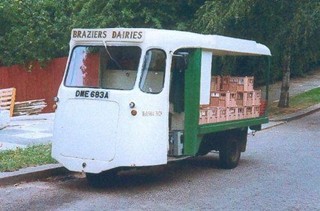
Mum never bought milk from a shop – it was delivered to the doorstep very early every morning by Brazier’s Dairy, based in Oxhey Lane. Mum had a regular delivery, but if she wanted more, or fewer, bottles (glass in those days), she left the milkman a note in an empty bottle on her doorstep. No online orders back then! Everything ran on trust – even the money for the week’s milk got left outside the night before, ready for the milkman to collect in the morning.
Milk deliveries bring back such clear memories. First, the sounds – the soft whirr of the electric float, the clinking of glass bottles and the clunk as they landed on doorsteps. Then, the thieving birds, pecking through the foil-topped lids to drink the cream from the top. Finally, the frozen bottles in winter, with solid milk pushing right up out of the neck like a pale, frosty volcano. Bringing the milk in was not my favourite job!
Of course, Mum couldn’t get all her food shopping in Oxhey, so once or twice a week, usually on Fridays and Saturdays, she took the bus into Watford. The usual stops?
Watford Market
Mac Fisheries (next to the market)
Gibson’s the Butchers in Lower High Street, near Water Lane
Sainsbury’s
Woolworths
Watford Market always buzzed with life. You could buy absolutely anything – not just food, but also plants, clothes, fabrics, haberdashery, household goods, jewellery and even pets! Mum picked up extra fruit and vegetables at Brown’s (the same family that had the greengrocers in Capel Road). I remember the greengrocer shouting out his wares, luring in customers with his booming voice and best deals, which gave a lovely atmosphere to the place.
At the “smelly end” of the market, Mum stopped at the fish stalls. Dad loved seafood, so she picked up jellied eels or “half a pint” of cockles, winkles, or whelks. When we got home, I had a special job – helping Mum with the winkles. First, I used a pin to flick off the tiny shell-like trapdoor. Then, I had to delicately root around and pull the winkle out in one piece – easier said than done. (They are narrow and fragile towards the end, so I had to go very carefully to get them out intact.) If I looked too closely, they seemed hideous, but with a splash of vinegar, they actually tasted alright. Certainly, better than chewy, rubbery whelks! Winkles were poor man’s oysters, I suppose.
If the market fish stalls didn’t have what Mum needed, she popped into Mac Fisheries next door. That’s where she bought Dad’s kippers, which she always cooked in milk. I hated kippers – not just the taste, but the overpowering fishy smell that clung to the house for hours after Mum had cooked them.
Gibson’s the butchers was the place to buy meat. Gibson’s “famous” homemade pork sausages were the best sausages ever, and you can still buy them today! Although they had a stall in the market, for some reason Mum mainly went to their shop in Lower High Street, near Water Lane.
The weekend always meant a proper joint of meat, usually a leg of lamb. I can still hear Mum asking the Gibson’s butcher for “A leg of lamb, about a pound in money.” It sounds ridiculous now, but in 1960, £1 was worth about £29 today – so maybe not so mad after all!
When Mum went shopping in Watford, she stopped at Sainsbury’s in The Parade, near where the flyover stands today. Think of Sainsbury’s today – what comes to mind? Is it a vast supermarket with aisles packed with everything imaginable? Well, not when I was growing up! It was nothing like the supermarkets of today – it was small, charming and not self-service! I remember the beautifully ornate floor tiles, the shiny wall tiles and the railway-style cash system that whisked money away to the cashier along an overhead wire.
Shopping at Sainsbury’s took time and patience. Instead of pushing a trolley through aisles, customers queued at long counters – one for tinned goods, another for dairy and yet another for meat. I loved watching the shop assistant cut a chunk of butter from a massive block, then shape it carefully and wrap it in greaseproof paper. There were no glass barriers between customers and food – so anyone could cough or sneeze all over the produce!
But my strongest memory? Mum leaving me outside the shop! It sounds shocking now, but back then it was perfectly normal – prams lined up outside of shops were a regular sight, and us school-age children were expected to wait patiently on the pavement. To my mind, Mum was gone forever. By the time she emerged, I was crying my eyes out, being comforted by a kindly passer-by. I wasn’t exactly traumatised … but I’ve never forgotten it!
For me, the best part of a Watford shopping trip? Woolworth’s. Located at the bottom of the High Street near King Street, it was a treasure trove of sights, sounds and smells.
The moment you stepped inside, the old wooden floorboards creaked underfoot. Counters stretched out before me, each filled with different delights:
The broken biscuit counter (a weekly treat)
The pick ‘n’ mix sweet counter (pure heaven for a child)
Toiletries and cosmetics
Artificial flowers, cards and Christmas decorations
But the best part of Woolworth’s? The Tea Bar.
The Tea Bar wasn’t quite a cafeteria, but it had its own charm. The Tea Bar stood on the right as you entered, where customers would stand at the bar or perch on high stools. Of course, I always chose a high stool.
Mum often met up with Mrs Lewis (from Waterman Close) and Mrs Janaway (from Farraline Road, who, as my sister Jean reminds me, had loads of children!). Woolworth’s Tea Bar was their weekly meeting place – people didn’t pop into each other’s homes back then.
Sometimes, my sister Jean joined us with her baby son, Paul. You could buy sandwiches, but I only remember Mum ever ordering toasted teacakes – probably the cheapest thing on the menu! I can’t remember if Mum bought herself a cup of tea, or whether she ordered “milky coffee.”
I’ll squeeze in a mention here of Provident Cheques – not because I know exactly where they belong in the memoir, but because they deserve a place somewhere. Provident Cheques were a sort of strange halfway house between saving and borrowing. You paid into the scheme weekly, bit by bit, and once you’d built up enough credit, you were issued with vouchers (or “Cheques”) that you could spend in certain shops.
Mum used the system as a way of spreading the cost of more expensive items like clothes. It would have made sense at the time – Dad’s wages didn’t stretch far and in those days there weren’t many other options. Credit Cards hadn’t been invented, and even if they had been, Dad wouldn’t have used them. He didn’t approve of getting into debt. I’m sure Mum kept her use of Provident Cheques quiet from Dad. I’m equally sure he knew though. Dad always knew more than he let on! “Don’t Ask, Don’t Tell!”
I didn’t like Provident Cheques, even as a child – and for two reasons. First, I felt a bit ashamed that we couldn’t just pay with money like everyone else. Second, because you could only use them in specific shops that were signed up to the scheme, it limited where Mum could buy my clothes, so sometimes I’d be stuck with something I wasn’t keen on, just because that was the shop we had to use. It’s only looking back now that I understand what a lifeline Provident Cheques probably were for Mum.
Mum’s shopping routine ran like clockwork – five and a half days a week. Never on Sundays or Wednesday afternoons.
Why? Because of The Shops Act – a set of strange, outdated laws that dictated when and what shops could sell. All of Watford High Street shut down on Sundays – except for tiny corner shops, which were allowed to open.
And the rules? Utterly bizarre!
You could buy fresh fruit and vegetables but not tinned ones. You could buy fresh cream but not tinned evaporated milk.
It was all quite complicated and even small shopkeepers could not understand it, with the result that, if they knew a customer well, and no one else was around, they’d ignore the rules altogether.
Half day trading meant that shops closed on Wednesday afternoons – I think a half day closing was the law too. It seems that shops in a certain area coordinated which half day they’d close. Again, there were bizarre rules which meant that not all shops had to close for half a day (although some of them still did) – for example if they sold perishable food, medicines or newspapers.
If Mum had forgotten something, I can remember having to run on an errand to the shops before 1.00pm on a Wednesday, before they closed for their half day. Whatever day of the week it was though, most shops were closed by 6.00pm – no late-night shopping, no 24/7 supermarkets.
For today’s generation, the idea of shops shutting early, closing on Sundays, and running on strange old-fashioned rules must seem ridiculous. But back then, it was just the way things were – and somehow, it all worked.
Every Day – Cooking
Like most working-class women of her generation, Mum was what was called “a plain cook.” We enjoyed Mum’s home cooking, which is just as well because this was the era when children were not allowed to be fussy about food. Mum didn’t have the money for fancy ingredients (even if she could find them in the shops – this was the era of if you wanted olive oil you had to go to the chemist where they sold it in small bottles which people warmed to loosen ear wax!). Neither did Mum have the time to experiment with new recipes. “Eat your greens or you won’t grow,” “Carrots will make you see in the dark” and “Eat that up, it will make your hair curl,” were common refrains that Mum and Dad used to encourage us to clear our plates.
We ate what Mum and Dad ate – or went without! Mealtimes were a serious business, and Dad didn’t like us to talk at the table – mealtimes were for eating, not chatting! So unlike nowadays, when families are encouraged to eat together at the table and to chat about their day.
Mum had a weekly plan, but there was some scope for variety. I have already mentioned that Monday was cold meat with bubble and squeak, Friday was fish and chips, and Sunday was a roast dinner. That just left four days – Tuesday, Wednesday, Thursday and Saturday – to worry about. The meals were always meat, potatoes and two other vegetables.
Vegetarian food wasn’t an option. And vegan food? It might as well not have existed! Mum and Dad thought that anyone who shunned “meat and two veg” was a bit odd to say the least. They thought that vegetarians were eccentric at best … downright peculiar at worst! It was akin to people who went to nudist camps or lived in communes!
Mum’s savoury recipe repertoire mainly consisted of homemade stews and meat pies. We always had OXO gravy cubes, which it was my job to crumble up into the gravy boat, ready for Mum to add hot water. Chicken was much too expensive in those days, but we occasionally had rabbit. There were no convenience foods such as pizza or pasta and the only “fast food” was Heinz baked beans or spaghetti, Birdseye fish fingers, eggs, sandwiches or cheese on toast (not Welsh Rarebit though!)! Microwaves hadn’t been invented. Carrots and green vegetables were never cooked “al dente” – they were boiled to death! We didn’t eat tinned vegetables but sometimes had Birdseye frozen peas. If we had chips, they were homemade and cooked in a deep chip pan full of lard.
Talking of sandwiches – they were nothing fancy and were all made with sliced white bread and butter. (In our house, I don’t think Mum replaced butter with margarine until the 1980s, and she didn’t use low-fat spreads until much later.) If we were very lucky, we might have crumpets as a treat. I remember cheese and pickle, marmite, jam and tinned ham (or spam) sandwiches. So far, nothing unusual. But I also remember banana sandwiches and, bizarrely, sugar sandwiches! I think the latter may have been when money was tight, or when Mum thought I needed the extra calories to build me up. I was a “sickly” child after all! Either way, they were a curious mix of thrift and love, served up between two slices of Mother’s Pride!
Dad had stronger tastes than us: he loved onions, raw, cooked or picked. Mum cooked him onions most days, with the result that our house (and Dad’s breath!) reeked of onions! Perhaps that’s one reason why I don’t like onions to this day!
People didn’t eat garlic in those days – that came in the 1970s when foreign travel became more common. If Dad was lucky there was enough dripping from the Sunday roast for him to have some bread and dripping sandwiches. He also enjoyed stuffed hearts and brains on toast, which was often be his Saturday treat. Depending upon what he was eating, Dad added extra flavour with vinegar (or vin-re-ga as he jokingly called it), brown sauce or Worcester (or Waw-sta-shire-sha sauce!). Dad never ate rice as a savoury dish (for some reason sweet rice pudding was OK), because he knew of soldier-friends who had been Japanese prisoners of war and had existed on a very poor diet of rice which led to malnutrition.
We always had puddings (or “afters” as we called them) and I think Mum’s idea was that they’d help to fill us up. Mum was expert at creating something from scratch every day: jam roly-poly, spotted dick, and bread and butter pudding (all served with Birds Instant Custard) and sliced jam Swiss Roll (or sliced banana) dropped into a bowl of custard, were firm favourites. Mum made fruit pies or crumbles using the raspberries, blackcurrants, blackberries, gooseberries or rhubarb from Dad’s allotment – served yet again with custard. Sometimes, instead of custard, we might have tinned Carnation evaporated milk as a topping. (Ice cream was something we bought from an ice cream van, not something we kept in the freezer – because we didn’t have one!)
Milk puddings were another of Mum’s staples: rice pudding, tapioca or semolina – with a dollop of jam on top. One thing I remember, was when Jean, John and I had a bowl of plums (and custard!), we’d spit out the stones as we ate them and line then up around the rim of our bowls. Then we’d say the nursery rhyme “Tinker, Tailor, Soldier, Sailor, Rich Man, Poor Man, Beggar Man, Thief” as we counted round the stones. Mum always had to be careful that we children had the same number of plums (and hence stones), otherwise the sibling with the fewest stones felt very hard done by!
Sunday tea was always something special. We’d have (tinned) salmon sandwiches (no one ever ate smoked salmon in those days) or a ham salad which consisted of just ham, lettuce, cucumber and tomatoes. There were no salad dressings as we know them today and the only dressing we had was Heinz Salad Cream. Mum was not adventurous, so she never ventured into having exotic foods such as potato salad or coleslaw!
My job on a Sunday afternoon was to help Mum get the tea ready. If I was buttering the bread (and it was always real butter), I had to make sure to spread it right up to the edges – “The middle will take care of itself!” Mum always said.
Mum had a rabbit mould that she’d use for red jelly or pink blancmange, or she might make a trifle which consisted of layers of tinned peaches, custard and sponge (soaked in sherry if it was a special occasion!) and with “hundreds and thousands” sprinkled on the top. I also remember helping Mum make Angel Delight, a powdered mousse mix which I whisked with milk. Mum’s “special” pudding for Sunday tea though was a Royal Lemon Meringue Pie. It came in a packet and consisted of a pastry base which Mum filled with lemon curd and topped with meringue. Mum must have made the pastry base herself, but I remember there was a little capsule filled with lemon juice which I had to melt into the egg yolks. It was also my job to whisk up the egg whites until they formed peaks. The test that the egg whites were whisked enough was if I could turn the bowl upside-down and they didn’t slide out!
We were never allowed to eat in the front room, but for some reason Sunday tea was exempted from this rule and we were allowed to balance our plates on our laps.
Sunday tea was washed down with a cup of tea. We didn’t have beer or wine in the house in those days. I drank R White’s lemonade or Corona (a name that hasn’t aged well since the advent of the coronavirus!). I don’t ever remember drinking Coca Cola or Pepsi Cola – perhaps they were too expensive, or maybe they just weren’t as common back then.
In the late 1950s and early 1960s we never ate out. The closest we came to eating out was an outing to the pub. We’d sit in the pub garden with a packet of crisps!
Whether it was breakfast, dinner or tea, we were not allowed to waste food. I think this was a hangover from wartime rationing and the years of austerity that followed – throwing out food was a waste of money. As Dad used to say, “Waste Not, Want Not.” Once, I remember Mum having some stale bread and waiting until Dad had gone to the allotment before she hid it at the bottom of the bin, rather than him see that she had thrown good food away!
Every Day – Cleaning
The floor-covering in our house was something called oilcloth (it was cheaper than linoleum). Mum swept it with a broom to remove the surface dirt. Mum washed the oilcloth on her hands and knees using a scrubbing brush and soapy water, so obviously it didn’t get cleaned very often. The scrubbing brush was bristle set in a wooden handle. The soap was Sunlight carbolic soap – the same block that we used to wash ourselves! The hot water came from a kettle. Mum softened the water with a few crystals of washing soda, as the water in Watford was hard. Only later did Mum have a sponge mop that used a sort of lever and flat strip of metal to press against the wet mop and squeeze it dry. This “automatic” mop at least meant that Mum didn’t need to get down on her hands and knees to clean the floor anymore and the floor was therefore cleaned more frequently!
We had a few rugs in the middle and front rooms (working class families didn’t have fitted carpets in those days) and Mum cleaned these with a brush or took them out into the garden, hung them over the washing line, and beat them with a special cane carpet beater. You had to check which way the wind was blowing before you started, otherwise you’d get covered with a cloud of dust.
Vacuum cleaners had not yet been invented, and it was only in the early sixties that Dad bought Mum a mechanical carpet cleaner called a Ewbank. I seem to remember that our Ewbank deposited the dirt and dust as fast as it swept it up!
Most working-class people didn’t employ a window cleaner in those days; they did it themselves. Mum used Windolene, a pink liquid with a strong smell. It was hard work because it was oilier than the window cleaning products you can buy today. Also, you had to rub very hard to remove it, especially if you left it on too long. Cleaning the downstairs windows and the inside of the upstairs windows was hard enough, but when Mum cleaned the outside of the upstairs windows, she took her life in her hands. We had sash windows, which meant that Mum used to open the bottom half, manoeuvre herself out of it and sit on the outside window ledge facing in. From that precarious sitting position, she cleaned the outside of the windows. Can you visualise it? When I was a bit older, I even did it, so I’m glad I lived to tell the tale!
The last of Mum’s cleaning jobs that I can remember in the late 1950s and early 1960s was sweeping the front path and then getting down on her hands and knees and scrubbing the front doorstep (and front downstairs windowsill) with Vim or Ajax scouring powder. Again, as with the window cleaning above, I can remember doing it too. As a little girl I always wanted to be like Mum – until I realised it was hard work and then I went out to play instead! Eventually Dad applied Cardinal Red Floor Polish to the doorstep and windowsill, which saved Mum a whole lot of scrubbing work. It was even better when he painted them with red gloss paint – no more scrubbing required!
Every Day – Sewing, Mending, Darning and Knitting
Mum spent a lot of time sewing, mending and darning socks when I was little – I can still picture her wooden darning mushroom, her sewing box and her button tin – but I don’t think she ever enjoyed doing it or was particularly good at it. Knitting, though, was a different story. That was Mum’s real talent.
There was a little wool shop on the corner of Grover Road called The Wool Box (was it run by Miss Bush?). Mum bought all her wool there, along with knitting patterns – full, it seemed to me, of mysterious shorthand – and knitting needles. Money was always tight, so Mum didn’t buy everything at once. Instead, she’d choose her skeins of wool, and the shopkeeper put them aside for her, letting her buy a ball or two whenever she had the spare cash.
My job was to help Mum wind the skeins into balls, a task that sounded fun at first but quickly lost its charm! I had to stand with my arms stretched out in front of me, a skein of wool looped around each hand, while Mum pulled one end and wound it into a ball. The trick was to watch which of my hands the wool was coming from next, moving that arm forward just enough for the yarn to slip off easily, then shifting the other arm forward in time for the next loop. With practice, Mum and I got into a rhythm, but it was tiring – and mind-numbingly boring.
One jumper stands out in my memory – a bright orange one Mum knitted for me when I went to Cuffley Camp at around nine. Have I mentioned that orange was Mum’s favourite colour?! I loved that orange jumper so much that I wore it all week!
When money was particularly tight, Mum got creative. Instead of buying new wool, she unravelled old, outgrown, or worn-out knitwear, rolling the yarn back into balls and re-knitting it into something new. That wasn’t as easy as it sounds. Unravelled wool turns all crinkly and Mum had to straighten it out before she could reuse it. Plus, she had to cut out worn-out bits. First, she wound the old wool into skeins again, then gave it a gentle hand wash and hung it up to dry. Only then was it ready to be knitted into a fresh jumper.
If Mum’s time was money, those jumpers would have cost a fortune!
Later on, when money wasn’t quite so tight, Mum could afford actual balls of wool instead of skeins, but she still used her trusted system at The Wool Box – choosing her wool, having it put aside, and buying it ball-by-ball as she could afford it.
Annually – Mr Atkins the Chimney Sweep
Clearly, Mum didn’t clean our chimneys herself, but I thought this would be a good place to write about it because it involved Mum in a lot of clearing up before and after our annual chimney clean. Mum had to remove all small items such as ornaments, and she had to cover larger items like furniture with old sheets.
Mr Atkins the chimney sweep lived on Chalk Hill, by Bushey Arches, and I think there was some sort of connection between Mum’s side of the family and the Atkins family. Mr Atkins arrived in his van and put a tarpaulin sheet over the fireplace. The tarpaulin had a hole in the middle, and Mr Atkins threaded a chimney brush and rods through it. He needed several rods, and he joined them together by screwing one into the other. The idea was that as the brush progressed up the chimney it dislodged the soot, which would fall down the chimney and into the grate at the bottom.
My job – the best part – was to run outside and watch the chimney, ready to shout the moment I saw the brush pop out the top. That was always the highlight of chimney-cleaning day!
Once the chimney was done, all the dislodged soot came crashing down into the grate. Mr Atkins shovelled it into a sack and took it out to his van. I never knew what he did with all that soot – did people use it in their gardens?
For Mum, though, the real work began after Mr Atkins left. Having the chimneys cleaned was a very messy business, so afterwards Mum spent a lot of time dusting, washing the floors and putting everything back again.
It must have been a long, tiring day for Mum, but for me? It was great fun! Nothing beat the excitement of seeing that chimney brush poking out against the sky.
Homeworking
In the early 1960s, Mum tried “homeworking” to bring in a little extra money. I’m sure she thought it was a flexible way to supplement the household income, but in reality it was tedious, fiddly and badly paid. Plus, it took up a lot of space in our middle room. The job involved assembling Christmas crackers from flat packs delivered straight from the factory.
I remember sitting with Mum, helping to slot the cardboard tubes into place, tucking in the snaps and adding the tiny paper hats and jokes. But after the first few dozen, the magic faded, and it became mind-numbingly dull. Before long, our middle room looked like a warehouse, stacked floor to ceiling with rows and rows of finished crackers. Imagine walking into a supermarket today and seeing shelf after shelf of Christmas crackers – that was our house! Dad was very cross about the whole thing. The pay was dreadful, and after a while, Mum must have decided it just wasn’t worth the effort, plus Dad was grumbling, and she gave it up.
But that wasn’t the end of Mum’s working life. For several years, she took on other jobs – in secret.
Mum started working in local corner shops, but she had to keep it quiet because Dad saw himself as the traditional breadwinner and didn’t want her working outside the home. He believed a man should provide for his family, and a working wife somehow suggested he wasn’t doing his job properly. But needs must, and Mum found a way around it.
For a while, Mum worked at Tilbury’s on the corner of Pinner Road and Grover Road, but mainly she worked at West’s on Pinner Road. It was perfectly convenient – close to home, easy to fit around the family, and, best of all, it gave her first pick of any out-of-date or damaged stock to bring home. That little perk helped stretch the household budget, so it’s fair to say that, deep down, Dad must have turned a blind eye. He knew Mum was working. Mum knew he knew. But neither of them ever admitted it. Don’t forget: “Don’t Ask, Don’t Tell” was the unspoken rule in our house, and it worked.
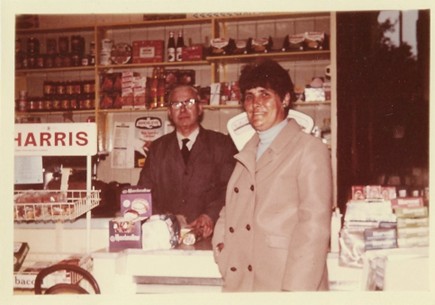
Mum’s days were full-on and physically demanding, even before you add in the fact that she was raising three children. She always seemed exhausted, and I vividly remember her lying down on the sofa every afternoon for a quick nap.
Mum was never the healthiest of people, either. She suffered from what were discreetly called “women’s issues”, along with arthritis, back problems (which once needed a plaster cast), a carbuncle under her arm, gallbladder issues and all sorts of other aches and pains.
You might think that all this talk of guzunders, tin baths, freezing cold houses, and backbreaking work means we felt hard done by, but we didn’t. Not for a second. This was an age of innocence. When I was young there were only two (black and white) television channels, BBC and ITV, and even then, the broadcast hours were limited (can you imagine!). Obviously, there were no computers, internet or social media. We had nothing to compare our lives to, and that made all the difference. Of course, we knew that some families had more money than others. There were the really rich – the likes of the Royal Family – but for the most part, we mixed with people just like us. Our world was small, familiar and comfortingly simple.
The everyday realities of my childhood years weren’t just about life at home – they were also shaped by the rhythms of shopping. I’ve already described the local and Watford food shops, where we bought everything from fresh bread to broken biscuits. But, of course, food was only part of the story.
At the beginning of this chapter, I said Mum was never houseproud. She just couldn’t be. Keeping the house spotless was a luxury she didn’t have time, energy or even the inclination for. That didn’t stop her admiring others who did – she used to marvel at houses where, as she put it, “You could eat your dinner off the floor!” But looking back, I can see now that she did her very best under challenging circumstances.
Love you, Mum.
In the next chapter, I’ll take you on a different kind of shopping trip – one that goes beyond the grocers and butchers, into the local non-food shops that filled Oxhey.
Chapter 5: Local non-food shops
“You say you want to save some money But you spend it all the same.” You Never Give Me Your Money (Lennon-McCartney)
Let me start with a whirlwind tour of the non-food shops we visited regularly.
It might not seem like the most obvious way to capture the excitement of these changing times but trust me—it’s a perfect way to show how we children had a foot in both camps.
We were straddling two worlds: the last echoes of the 1950s and the dawning of the dynamic 1960s.
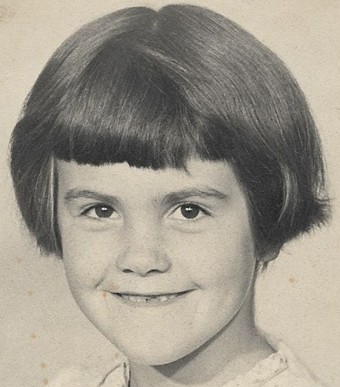
I’ll start at the top end of Villiers Road with Barden’s, the newsagent and confectioner, run by Albury Barden. Every morning, Barden’s delivered Dad’s daily newspaper, along with our comics – Beano, Dandy and Topper for my brother John, Bunty and Judy for me. (By then, my sister Jean considered herself far too grown-up for such things!) Bunty and Judy filled their pages with comic-strip adventures of working-class girls, plus letters, competitions, and puzzles. Of course, I read John’s comics too – but he never read mine!
Dad, a man of habit (have I mentioned that?!), never missed paying his newsagent’s bill. Every Sunday, on his way to the pub for his Sunday pint, he’d “settle up” at Barden’s. Dad had a funny turn of phrase when he was going to the pub. He’d say, “I’m going to see a man about a dog.” It was his jokey way of saying that he was going out, and don’t ask where—but of course we all knew where he was going. Especially since he said it at the same time every week! I’ll slip in here the nickname Dad’s friends gave him: “Twirly”, a natural elision of the words Too Early. Dad always arrived anywhere not just on time, but always too early, and woe betide you if you were late!
In late October and early November, Barden’s also stocked fireworks for Bonfire Night. A large glass case displayed sparklers, firecrackers, rockets and Catherine Wheels. Every firework seemed deafeningly loud – no quiet ‘safe’ options existed back then! With no organised displays, families set off fireworks in their own back gardens. I watched our display from the safety of my bedroom window, too scared to stand outside with Dad, but I loved sparklers.
Across the road from Barden’s stood Crawley’s the Ironmonger. This place had everything – tools, nuts and bolts, nails, buckets, taps, brooms, paint, brushes, glue, wallpaper paste, handles, and locks and hinges. They also sold electrical items such as radios. It felt like an Aladdin’s Cave of household goods. When Dad wanted
to decorate, he would bring home a thick, heavy book of wallpaper samples. Mum picked a pattern (often involving orange!), Dad placed the order, and a week later, Crawley’s had the rolls ready to collect.
I can also remember Dad buying paraffin for his greenhouse heater from Crawley’s. Dad took a can round to them and they filled it up. When you entered the shop, you straightaway noticed the distinct smell of paraffin, probably due to spillage. Health and safety rules would never allow that now!
Next to Crawley’s was a butcher’s shop, Eastman’s I think, although I can’t remember mum shopping there very often. Much later the butcher’s shop was replaced by a dry cleaners and laundrette.
At the bottom end of Villiers Road, almost opposite Loveday’s, the baker’s, was a chemist called Dyson’s (later Bond’s). It had lots of large glass jars, filled with coloured liquids, and always smelled strongly of medicinal lotions and potions! I think there was some sort of ownership link with the post office next door. The post office was always busy, and I can remember Mum queuing up at the counter – presumably to collect her weekly family allowance (now called child benefit, I think). The Government introduced this allowance at five shillings a week (about £6 in today’s money). The post office also sold sweets, so I always had a little bag of them to carry home. Like many of the shops at that time, the post office was also a place where women (and it was usually women) could chat and exchange gossip.
Leaving Villiers Road, and going down into Capel Road, there was a ladies’ hairdresser called Stella’s, on the left-hand side of the entrance to Caroline Place. Mum always had a perm or a shampoo and set. I can remember, even as a very young girl, and as a treat, Mum paid for me to have a perm! The hairdresser used pink and blue plastic curlers and then applied the perming lotion, which had an overwhelming smell of bad eggs (I think it was ammonia). Then I had to sit under the hairdryer, which was like a dome over my head. I felt as if I was cooking! The smell on my hair was so strong that it took about four washes (that is four weeks) to go away.
There was another ladies’ hairdresser called Tejo’s Hair Parlour on the corner of Pinner Road and Grover Road where Mum subsequently went. Tejo’s Hair Parlour took over the premises of the Wool Box. Perhaps knitting had started to go out of fashion. Diane Seabrooke, a hairdresser there at the time, posted on a local Facebook group that she always remembers Mum asking for “A cup of tea with a bit of extra milk with a little bit of sugar on the end of the spoon.” Diane Seabrooke’s comment really brought back that memory of Mum, because that is exactly what she asked for if anyone offered her a cup of tea!
There was yet another ladies’ hairdresser called Molly’s in Villiers Road. It was a tiny shop, and Jean says she went there, but I can’t remember having my hair done there.
In those days there were no such things as unisex hairdressers. Dad went to Witty’s the barber in Aldenham Road, opposite the Victoria pub (I think it was later called “By Donato”). Dad went there every week for a “short back and sides” – or perhaps the barber just used his electric clippers on Dad’s neck to keep it tidy. Dad was a Brylcreem man until his dying day. He liked the way it made his hair shiny and kept it firmly in place (a bit like women’s hair spray). The only time I ever saw Dad’s hair without it was after his Sunday bath, when it lay soft and a little fluffy, making him look years younger. But come Monday morning, the Brylcreem was back, and his hair was slicked into place.
Dad liked to look smart—he had shiny shoes and shiny hair! I remember Brylcreem came in a red tub, and I sometimes bought it for him as a birthday or Christmas present. The downside of Brylcreem was that it rubbed off on the backs of armchairs and on pillows. Mum got around the armchair problem by putting embroidered “antimacassars” on the chair where he leaned his head and which she could easily remove for washing. (The antimacassars, not Dad’s head!). The greasy pillow problem was one Mum could not solve, as even newly washed pillows had a telltale brown mark on them where Dad had laid his head. I suppose Dad’s love of Brylcreem is no different to men nowadays using gel, clay, wax or even the current version where the footballer David Beckham became the face of Brylcreem.
Next door to Witty’s the Barber was Witty’s Ladies’ Hairdresser, but we never went there. Too much choice nearer to home!
On the corner of Pinner Road and Capel Road there was a shop that sold sweets called Benton’s. I’m sure it sold more than that, cigarettes I expect, but I only remember the big jars of sweets! There were no strict hygiene laws then and I remember that items like liquorice pipes were handed to me by Mr Benton. Sometimes I’d choose a mixture of sweets like flying saucers, Barratt’s Sherbet Fountain (with a stick of liquorice in it), Rowntree’s Fruit Gums, Love Hearts, or Spangles and Mr Benton put them into a little bag for me to carry home. Benton’s later became Oxhey Angling Centre.
There was one mysterious shop on Watford Heath that we never ventured into, but I thought I’d mention it here because it always intrigued me as a child. It was called Rose Tea Gardens, so I suppose customers could buy a cup of tea, but it also sold sweets and ice creams. I think Mum, ever conscious of “her place”, thought that it was too “posh” for us! It later became a general store. Now it is a residential property and a Locally Listed Building—34 Watford Heath.
York Radio and TV Services on Aldenham Road, just near to Bushey and Oxhey Station, was one of the most important shops in the area. Mum’s brother, Walter (Wally) Hay, worked there, although I never knew whether he actually owned it. A Sid York also worked there, and since his name matched the shop’s, he was probably the real owner.
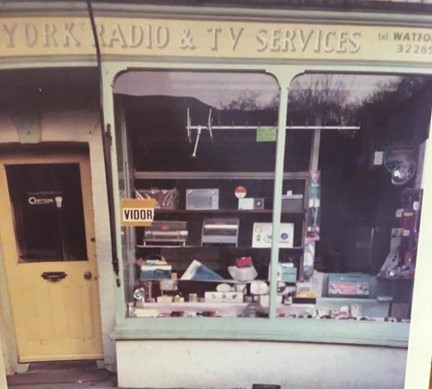
I think Mum and Dad got their first black-and-white TV in the mid-1950s—possibly in time for the Coronation in 1953— and they’d have rented it from York’s. Back then, almost everyone rented their television because buying one outright cost a small fortune. Renting came with a built-in safety net—if anything broke, the rental company repaired it at no extra cost.
We didn’t visit York’s often, unless the radio (or “wireless,” as Mum and Dad called it) or TV broke down. I remember hearing talk of TV valves blowing, which sounded dramatic, but probably just meant a quick repair. Eventually, as TVs became cheaper and more reliable, Dad decided to buy one instead of renting—although I have no idea when that switch happened.
The few times I went to York’s, I remember that it was always dark and dingy from the giant brown Bakelite radios and TVs. A thick smell of stale tobacco smoke always hung in the air. In those days, smoking was common in all public places. Most men, like Wally Hay and Syd York, seemed to smoke, although Dad said he had given it up (for financial rather than health reasons) long before I was born.
Not exactly a shop, but worth mentioning for its location, our doctors’ surgery sat at the bottom end of Chalk Hill, near Bushey Arches. I still remember the names of the GPs: Dr Brown, Dr Aveling, Dr Jarman, Dr Lees-Lowe and Dr Carreras.
Dr Jarman sometimes smoked in the surgery (impossible to imagine now), and Dr Brown smelled of alcohol – not exactly reassuring! My favourite, though, was Dr Carreras. When I was born, I had a tiny strawberry-shaped birthmark, and he used to call me his “little strawberry.” That small act of affection made me feel special—and it stayed with me for years. There was something so gentle, so kind about him. Even now, I can still hear the warmth in his voice.
Nearly fifty years later, I spotted him across the foyer at Watford Palace Theatre. I couldn’t help myself—I had to go over and thank him. I introduced myself and told him how much his kindness had meant to me as a child. Goodness knows what he thought—this grown woman suddenly appearing with a memory from half a century ago! But I do hope he felt the quiet joy of knowing that a small kindness, all those years ago, had never been forgotten.
As for the birthmark itself, Dr Carreras referred me to Great Ormond Street Hospital. There was talk of freezing it off, or some other procedure, but in the end, the doctors decided to leave it alone and just let it fade as I grew. And that’s exactly what happened—as I got bigger, it grew paler, and now it’s barely noticeable.
But my visits to Great Ormond Street? Oh, I loved them. Right there in the entrance stood a giant rocking horse you could sit on. The doctors always made a fuss of me, but all they ever did was measure my birthmark as it grew. To me, it was simply a wonderful day out in London and a chance to ride a rocking horse the size of a small pony!
Back then, seeing a GP was simple. No appointments, no endless phone queues, and certainly no telephone consultations—we just turned up at the surgery. As soon as we walked in, we went to a little office window, announced ourselves, collected our patient notes, took a numbered card, and waited for our turn. If we were too sick to go in, the GP visited us at home. Imagine that—a doctor actually coming to your house!
And there you have it – a run-down of all the shops Mum and Dad used. My apologies to the reader for any I’ve left out! Looking back, Oxhey had everything we needed. If something wasn’t available, Watford was only a short bus ride away. We rarely went anywhere else – except for the occasional train trip to Wembley to visit C&A, a clothing shop that felt like Primark does today. That trip always felt like a real adventure!
In the next chapter, I’ll dive into memories of our outdoor games, long before children were glued to their screens. There’s plenty to look forward to!
Chapter 6: Outdoor games
“When I get to the bottom I go back to the top of the slide …” Helter Skelter (Lennon-McCartney)
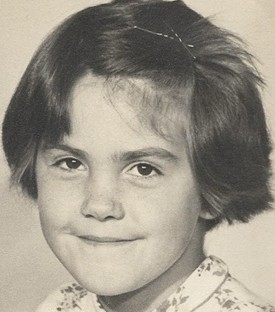
“We didn’t realise we were making memories; we just knew we were having fun.”
That quote is attributed to AA Milne, the author of the Winnie-the-Pooh books.
Whether or not A.A. Milne said those words, the sentiment resonates with the nostalgia and joy of this period of my life which straddles the late 1950s and the early 1960s. I was five in 1958 and eleven in 1964, and it’s during these years that so many of my happiest childhood memories took shape.
Outdoor Games
We children in the 1950s and 1960s certainly knew how to enjoy the great outdoors. From playing in the street, adventures at the swings, in the woods, and going swimming, we enjoyed freedom. With hardly any traffic on the roads and no sense of health and safety, we disappeared for a morning of fun and adventures, went home for dinner, went out again in the afternoon and returned home when it got dark. Think Enid Blyton’s ‘The Famous Five’ – that was us (minus the dog and the ginger beer!)
During those years, I had two close playmates who were part of my everyday world: Angela McGovern, who lived just off Pinner Road next to Tilbury’s corner shop, and Sarah Stewart from Grover Road, whose garden almost backed onto mine. Our little trio spent hours together – inventing games, weaving stories and sharing secrets only children understand. Sarah had an older sister, Maggie, but she didn’t join in our games, and the other local children were closer in age to my sister and brother, so they weren’t part of our circle either.
I’m especially grateful to both Angela and Sarah for kindly acting as unofficial “proofreaders” of this memoir. As they read my early draft, they gently nudged my memory, reminded me of details I’d overlooked and diplomatically corrected the occasional wild inaccuracy. Their recollections brought extra colour and richness to the memories we shared – and reminded me just how lucky I was to have them by my side.
There’s only one surviving photo of the three of us and it’s a curious one. I don’t remember where it was taken, but Sarah says it was at Oxhey Grange, which is just behind Watford Heath. (More of that later.) We’re all dressed rather smartly in what appear to be suit jackets, and, in a detail that now makes me wince, we’re each wearing the so-called “must-have” accessory of that era: Golliwog badges. I think it might all have been part of some club we had created – The Golliwog Club. A stark reminder of how times have changed – and how unaware we were then of the deeper meanings behind such symbols. It was, sadly, part of the landscape of childhood at the time, accepted without question.
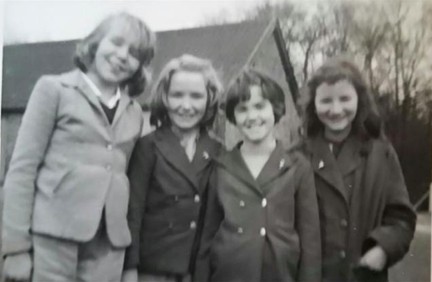
Angela and Sarah knew each other as they went to Holy Rood Catholic Primary School. Angela was two years older than I was, and Sarah was three years older. The age difference didn’t seem to matter. I can’t remember how I became friends with them, but we were great friends, and we had many adventures together. I’m still friends with Angela and Sarah to this day.
The only real hiccup in my friendship with Angela was her annual disappearance – off to Crossmolina in County Mayo, Ireland with her mother, older sister Marie, and even older brother Sean for the entire school summer holiday. (Angela’s Dad, a builder, stayed behind to work through the summer.) It was a long absence, and if Sarah was away or otherwise occupied, I’d find myself at a bit of a loose end.
One summer, in 1965, I found unexpected company in the form of an “American friend.” I’ve tucked that story away under a section called Minor Events – but truthfully, that title doesn’t do it justice. That fleeting summer friendship was anything but minor. It left more of an impression than I realised at the time … but more on that much later.
I’ll describe some of the things below that we three girls played and the escapades we had together— and remember, these were the days when children “went out to play.” Children didn’t go into each other’s houses to play or even play in each other’s gardens. We played at school with our school friends and locally with our local friends. We never had “playdates.” I don’t know why, that was just the way it was. I suppose our parents wanted peace and quiet, plus they could not afford to feed other people’s children!
The rule was that we were not allowed out to play until after 9:00 a.m., so as not to disturb the neighbours. Then one of us (Angela, Sarah or I) knocked on the others’ doors, collected them and and then off we went! Bear in mind that this freedom started when I was about six or seven years old.
We had several places where we played. The first was literally in the street – Oxhey Avenue or Grover Road. Not many people had cars then, so the only thing we had to watch out for was the occasional 302 bus going up Oxhey Avenue. The second place where we played was “the dump,” in Lower Paddock Road, now called Oxhey Green Playground. (I think “the dump” was so-called because there had originally been some clay brick kiln pits there that had been filled with rubbish.) The third place was Watford Heath, Oxhey Grange and the footpath leading to South Oxhey. The fourth place was Oxhey Park. I’ll tell you a little bit about each one.
Oxhey Avenue and Grover Road were our main haunts, and this included the alleyway that runs between the back gardens of Oxhey Avenue and Grover Road. In those days all the residents kept the bit of the alleyway near to their house tidy and weed free, so we could run up and down it to our hearts’ content. There was only one resident, who had a house next to the short alleyway going from Oxhey Avenue to Grover Road, who got irate, especially on Monday washing-day, if we ran up and down the alleyway and caused a cloud of dust. We were frightened of her, and for some reason nicknamed her “Nanny Goat.” Of course, we never called her that within her hearing!
We used to play lots of traditional games, including variations of “Tag,” “He” or “It” where we had to decide who was going to be the “chaser.” For this purpose, we had a few rhymes, some of which, like the “Eeny Meeny Miny Mo” version we used, are rightly frowned upon now, but we had no clue at the time.
“Eeny, Meeny, Miny, Mo! Catch a n***** by his toe!
If he hollers let him go!
Eeny, Meeny, Miny, Mo!”
Other rhymes included:
“Ip-dip-sky-blue-who’s-it? Not you!”
“One potato, two potatoes, three potatoes, four Five potatoes, six potatoes, seven potatoes more!”
Other running games included What’s the Time Mr Wolf? and British Bulldog, which I think most people will know.
Skipping was a strong favourite, both with individual skipping ropes and one long one. Because there were only three of us, when using a long rope, we tied one end to a lamppost.
With individual skipping, we chanted things like, “Salt, Mustard, Vinegar, Pepper.” Things got a bit more complicated when we used a long rope (usually a piece of old washing line), then we chanted various rhymes. First, two “action” rhymes:
“I’m a little Dutch girl dressed in blue
Here are the actions I must do:
Salute to the captain Bow to the queen,
Turn right round to the girl in green.”
“Teddy Bear, Teddy Bear, turn around. Teddy Bear, Teddy Bear, touch the ground. Teddy Bear, Teddy Bear, touch your shoe. Teddy Bear, Teddy Bear, that will do.
Teddy Bear, Teddy Bear, Go upstairs. Teddy Bear, Teddy Bear, say your prayers. Teddy Bear, Teddy Bear, turn out the light. Teddy Bear, Teddy Bear, say goodnight!”
Then there were the rhymes that invited another “skipper” into the game:
“I like coffee, I like tea,
I like (name) in with me
I don’t like coffee, I don’t like tea, I don’t want (name) in with me.”
“Granny in the kitchen, doing a bit of stitching, in comes the burglar and knocks granny out.”
A twist on regular skipping was something called French Skipping – although why it was “French,” I’ve no idea! All we needed was a long piece of knicker elastic, tied into a big loop. One of us stood at one end and another stood a few feet away at the other end with the loop of elastic stretched around the outside of our ankles. The third girl then did a series of skipping movements on, under and over the elastic, including twists and turns. If this girl did the skips and twists without any mistakes, we moved the elastic to knee-high, then thigh-high and then – if she was really good – waist-height, until the skipper made a mistake. Once that happened, one of us had a turn.
French skipping was great fun. It had the advantage that the elastic was small and easy to carry, so we could pop it into our pocket and take it to school to use at playtime. It also meant that we could practise it at home by putting the elastic around chair legs! Simple, portable and always fun.
As girls, we didn’t play football (that was very much a “boys’ game” back then), but we did play “two-balls” which was a bit like simple juggling, either up in the air or against a wall. Our wall-of-choice was the side of the corner house at the top end of Grover Road. The residents of this house, Mr and Mrs Leech, usually tolerated this (or perhaps they were out) but sometimes they came out and shouted at us! Our ball bouncing rhyme was: “One, two, three, aleerie, four, five, six, aleerie,” and so on until we dropped a ball. Was it aleerie or O’Leary? I don’t know!
We played other street games such as May I?, Simon Says, hopscotch, hula hoop, leapfrog and handstands (with dresses tucked into knickers). I imagine most people will remember those!
We also played conkers. We went conker hunting in September and October, usually in Oxhey Park. If we were too early in the Autumn to collect the conkers, we threw sticks up to try to dislodge them from the tree. This was all part of the fun.
At home, Dad drilled through the conkers with a meat skewer and threaded each one onto a piece of string for me. The idea of the game was to strike our friend’s conker and try to break it – that conker was then the winner. To win the game it was important to have the hardest conker. In our house the game of conkers involved some family-favourite methods of hardening our conkers. Dad helped me with various methods. One was to soak the conkers in vinegar overnight. Another way was to bake them in the oven. The best way though was to store them in a dark place one year and not use them until the next year. Some went mouldy, but there were always enough good ones to drill and thread for the game. Conkers was one of the few games that I can remember playing with my brother John. Invariably he won and I ended up crying because he had bashed my knuckles with his conker!
Cat’s cradle was a gentler game. It’s difficult to describe, but I’ll give it a go. First, we had to make a loop out of string (or elastic). Then we put the loop around the back of both hands and kept it taut. As far as I can remember, there was then a choice. Either that person could play solo, manipulating the string by looping,
shifting and adjusting it to form shapes, or two people could play, passing the loop back and forth to each other. The object of this second version of the game was to pass the string back and forth as many times as possible, keeping the cat’s cradle intact. I’m afraid you have to play it to fully understand it!
“Jacks” was another sitting down game, which we often played sitting on the kerb (remember, there was hardly any traffic) or sitting on Angela McGovern’s front doorstep. If we were lucky, we used shop-bought Jacks, but if not, we just used stones. It was a “take it in turns” game. I think there were probably lots of different versions of the rules, but the one we played was like this. The idea was to throw a Jack (or a small stone) in the air, pick up a Jack (or a stone), and catch the falling Jack (or stone) on its way down. We had to repeat this over and over again, each time picking up an extra Jack (or stone). We were “out” if we dropped any of the Jacks (or stones) or failed to pick up the correct number of Jacks (or stones). Then it was the next person’s turn. It was harder than it sounds! The advantage of having shop-bought Jacks was that the set came with a little red ball that we tossed up in the air before we scooped up the Jacks.
Very occasionally, we ventured from Angela’s front doorstep into her back garden to make little fairy gardens in tin lids or baking trays. We collected various materials such as moss, grass, pebbles, sand and lolly sticks and arranged them in the tin lid or tray to look like a miniature garden. If we were lucky, we might have a mirror for a pond. The fun was in making the garden – I don’t remember us playing with them afterwards. A variation of this was making a flower potion, which consisted of collecting flower petals, adding then to water and expecting it to magically brew into a beautiful perfume. Of course, it never did. It became a stinking mess and had to be thrown away!
We loved playing different “hand-clapping games.” The best bit?You didn’t need any equipment – just two of us and a good rhythm. Before writing this, I actually had to practice one just to remind myself how it went! Ready? We’d face each other and: clap our own hands, clap right hands together, clap our own hands again, then left hands, then both hands with each other, then pat our knees – and repeat! I think that’s right. We’d clap to rhymes like the ones below, trying to go faster and faster without messing up:
“My boyfriend’s name is Fatty/He comes from Cincinnati. With a dimple on his nose/And turned up toes
And this is how my story goes.
One day when I was walking/I heard my boyfriend talking
To a pretty little girl with a golden curl/And this is what he said to her I L-O-V-E, love you/I K-I-double-S, kiss you
In the DARK, DARK, DARK!”
Or
“My Mother told me If I was goody
That she would buy me A rubber dolly
My Auntie told her I’d kissed a soldier
Now she won’t buy me A rubber dolly.”
I think that handclapping became a bit of a craze in the UK and USA because in 1965 the American singer Shirley Ellis released “The Clapping Song” which includes the words from “Little Rubber Dolly” mentioned above. It is well worth listening to.
One game which I think was unique to us was playing dead! Yes, really. We’d lie on the pavement, playing dead, and wait for passers-by to step over us. We thought it was hilarious! The best time to play this game was at about 5.30pm when commuters were walking up Oxhey Avenue on their way home from Bushey & Oxhey Station. We played this game on the corner of Oxhey Avenue and Grover Road. What a strange little game it was, but we enjoyed it and no adults complained. A more innocent version of this was when we pretended to be horses and neighed and clip-clopped around on tiptoe! Looking back, I think we were probably a sight to behold!
Playing dead and playing horses were about as silly as our games became.
However, there was one game we played that could be construed as us over-stepping the mark. I think it was a game that all children of our generation played at least once. We called it Knock Up Ginger, but everyone else I have spoken to called it Knock Down Ginger. Either way, I don’t know why it was called that. Basically, we knocked on someone’s door and then ran away before anyone could answer it! Angela, Sarah and I were goody-goodies really, so we only dared try it once. It was far too scary!
Nothing exciting ever happened in Oxhey, except for once, in the early 1960s, when a film called Lolita was being made in Grover Road, starring James Mason, Shelley Winters and Peter Sellers. They were all very big stars in their day. Angela, Sarah and I spent days watching from afar as the filming took place. I didn’t know it at the time, but Angela tells me that some American letters belonging to her parents were used as props in the film. Apparently, James Mason asked the watching fans if anyone had an envelope with an American stamp on it. Angela’s Mum had one from Angela’s Aunty Veronica and that was used. James Mason gave Angela’s Mum a box of chocolates as a thank-you.
James Mason later did a photocall at the petrol station in Pinner Road (where the car wash is now). He was charging for autographs, but Dad, “Not having any of that,” elbowed his way to the front of the crowd, and got one for free. I lost mine long ago, but Angela still has hers!
No memoir of my childhood would be complete without mentioning that a real, proper famous actor lived at the “posh” (top) end of Oxhey Avenue! His name was Mario Fabrizi— even his name sounded glamorous and mysterious, especially in 1950s England. It was the kind of name you’d expect to see in lights outside a cinema.
I’d seen Mario Fabrizi on the telly in The Army Game, and he was on the radio too in Hancock’s Half Hour. In 1963, he was even in the Tony Hancock film The Punch and Judy Man. He was a proper actor – and he lived on my road!
But here’s the best part: I used to see him walk right past our house! He was tall and thin, with a luxuriant, swirly moustache— just like someone out of a film. I couldn’t believe it… a real-life famous person, right there, striding up Oxhey Avenue.
Oxhey’s only other real claim to fame – apart from the exotic Mario Fabrizi up the road – was that Shirley Eaton once lived right on the corner of Bucks Avenue, just a stone’s throw from our house. Yes, that Shirley Eaton – the glamorous blonde bombshell who later became famous as the girl painted head to toe in gold in the James Bond film Goldfinger. I remember thinking, even as a child, how impossibly glamorous and grown-up she seemed.
Just knowing Shirley Eaton lived nearby added a certain sparkle to the neighbourhood.
But for Mum’s friend, Olive Ladmore, Shirley Eaton wasn’t some distant screen siren – she was someone Olive actually worked for—she was Shirley Eaton’s cleaner! Can you imagine? Mum’s friend cleaned the home of a real-life film star! To my young mind, that was only one step removed from Hollywood.
Olive, of course, was very matter-of-fact about it all, but she couldn’t resist repeating snippets about Shirley’s beautiful home, how she was always polite, and how, even though she was becoming more and more famous, she never acted like she was “above herself.”
For a little working-class girl in 1950s Oxhey, the idea that a real film star had once lived just around the corner, and that someone I actually knew had dusted her mantelpiece, was the stuff of dreams. We didn’t need red carpets and flashbulbs—we had Shirley Eaton in Bucks Avenue and that was glamorous enough for us!
But of course, life as a child in Oxhey wasn’t all about spotting local celebrities. Once we’d had our fill of skipping and chalking hopscotch grids on the pavements of Oxhey Avenue and Grover Road, we ventured further afield to “the dump,” (in Lower Paddock Road), Watford Heath, (which included Oxhey Grange and the footpath leading to South Oxhey) or Oxhey Park on the corner of Eastbury Road and Wiggenhall Road. Wiggenhall Road was known locally as Tommy Deacon’s Hill.
I have since read in the 1931 edition of History of Watford by W R Saunders that there are several legends about Tommy Deacon. One is that for a wager, he rode down the hill and broke his neck and was buried at the bottom of the hill. Another is that he is buried at the top of the hill, and another is that Tommy Deacon hanged himself in one of the parlours of Wiggen Hall. The Deacon family lived at Wiggen Hall and W R Saunders says that for eight generations the eldest son was named Tommy; so there is a choice of Tommy Deacon to fit the legends!
The dump was one of our favourite haunts. The play equipment was basic, but that didn’t bother us. The dump always seemed to have lots of stinging nettles and Angela, Sarah and I became experts at finding dock leaves to “cure” the pain of nettle stings. I’m not sure if it really helped or whether it was a placebo effect. We also became experts at making daisy chains—simple pleasures. On one occasion we saw a snake, probably an adder—very exciting.
Nowadays the Oxhey Village Environment Group (OVEG) holds lots of events, including summer fayres at the dump, but nothing like that ever happened in my childhood.
Watford Heath at the top of Oxhey Avenue was another of our haunts. (Watford Heath is now a conservation area.) We played on the grass area and jumped along the tops of the blocks of stone that surround it. One funny story, although not funny at the time, was that I was standing on one of the blocks of stone one day and Sarah’s dog Pebbles cocked its leg and weed up the stone block and on my legs!
Behind Watford Heath is Oxhey Grange, where there was more grass to play on and there was a small, wooded area. We loved playing in the woods and making camps. Angela has reminded me how, on one occasion, we cooked a tin of baked beans on a little campfire we had made! We were very frightened of the Grange Keeper (I think his name was Gordon), who seemed a bit “odd” to us, and we ran away if he was around. Whether he was “odd” or not I don’t know, but he was probably not too impressed by our camps and fires!
A long footpath went (it still does) from Watford Heath to Prestwick Road, South Oxhey and if we were feeling very brave, we went down there, especially about Maytime to see the bluebell woods on our left. We often picked ourselves a bunch of bluebells, oblivious to the fact that they’d be dead by the time we got them home. I think it is now illegal to pick bluebells. The footpath runs alongside the railway line to the right, and partway down there was a bridge where we stood and watched the trains go by. It seemed to us to be a very long walk, but an adult could probably walk it in about twenty minutes – although it took us a lot longer at our childish meandering speed!
The last public open space where Angela, Sarah and I played was in Oxhey Park. This was reserved for a grand adventure, as it was a bit further away. Our main point of interest was the River Colne which runs through Oxhey Park. We’d take fishing nets, lean over the low wall of the river, scoop up sticklebacks, and put them in a small plastic bucket of river water. We soon learned that the trick was to place the fishing net in the water as gently as possible, and then in one swift motion, sweep it through the water to catch the fish. We always took our catch proudly home, but sadly, they were always dead the next day. That didn’t deter us!
Oxhey Park also had playground equipment which would be banned today as highly dangerous, but which we loved. The ones that stick in my mind are a witch’s hat, a switch back, a mountainously high high slide and a seesaw. The best way to describe the witch’s hat is that it was a cross between a climbing frame and a roundabout. It was conical in shape and balanced on a central pole. The idea was that we had to make it whirl round and round, and in and out. Sometimes, it crashed into the central pole. I’m sure the witch’s hat produced many broken limbs, but we loved the juddery ride!
The switchback was another ride which would quite rightly be deemed dangerous nowadays. As far as I can remember, it was a long (twelve foot?) piece of wood suspended about three or four feet off the ground. Lots of children sat on it and together we swung it from side to side. (It was so heavy it needed lots of children to make it work.) The danger was mainly for passing children because it could smack them in the face while moving, so we had to keep our wits about us if we were near it!
I’m sure I’m not exaggerating when I say that the slide at Oxhey Park was about twenty feet tall. We had to be very brave to climb to the top. It was never a good idea to go down it in the summer either, because the metal surface was red hot.
We used the wooden seesaw without mishap, even though if one of us got off too quickly, the other one had a crash landing! All in all, it is a wonder that Angela, Sarah and I escaped the playground at Oxhey Park with only bumps and bruises – nothing a bit of Germolene couldn’t fix.
One plus for Oxhey Park was that it had a public convenience. Luckily for our naïve selves, we didn’t understand the syphilis and gonorrhoea posters on the walls. Nor did we question who the interesting ladies were who sometimes came in. However, something must have stayed lodged in my mind, because I can remember those posters and those interesting ladies to this day!
Angela, Sarah and I were allowed to take ourselves off swimming – either on the bus to Watford Swimming Baths or, in the summer, to Bushey Open Air Swimming Baths at King George Recreation Ground. After our session of splashing and swimming at Watford Swimming Baths, our treat was to eat the Oxo cube. Yes—an Oxo cube! Salty, crumbly, savoury—and for some strange reason, completely delicious after a swim.
Bushey Open Air Baths was a different experience altogether. I don’t know if the pool was heated, but if it was, it certainly didn’t feel like it, because it was always freezing cold. But we loved it. Our summer reward there was a proper treat: an ice cream, usually eaten shivering in the sun.
In those days, parents didn’t take their children to swimming lessons; so we taught ourselves to swim by trial and error! Somehow, we managed it.
No recollection of outdoor games can be complete without me describing my brother John’s go-cart (or trolley, I can’t remember what he called it). All the boys (and it was a boy thing) of his age group had one. It was made from old bits of wood fixed to old, spoked pram wheels (large at the back and small at the front) and a pram axle. He steered it with a combination of his feet on the front cross bar and a bit of rope he held on to. There weren’t any pedals; forward movement was by him pushing off from the top of a slope or hill and letting gravity do the rest. There weren’t any brakes!
Of course, as an annoying little sister, I always wanted to ride on John’s go-cart, and this was his opportunity to both tease and scare me. I can remember him letting me have a few rides on his go-cart and then, clearly bored with entertaining me, he put me on it at the top of Grover Road and launched me down the (small) slope towards Oxhey Avenue! Of course, I was quickly out of control and terrified and it ended in tears. I’m sure Mum told him off when I went home with my sorry tale, but he probably thought it was worth it to get rid of his pesky little sister!
That said, when I read this memory aloud to my sister Jean, she reminded me that John also took me to play on Watford Heath and told her that he, “Loved the bones of me.” How sweet is that?
As I mentioned earlier, Jean was twelve years older than me, so when I was five, she was seventeen. In relation to this topic of outdoor games, I don’t remember our paths ever crossing, but I do remember her white ice-skating boots hanging up with the coats at the bottom of our stairs. Jean tells me that she went ice-skating in Wembley with her friend from school, Ann Bignell, on Sunday afternoons. Jean says that they had matching blue checked ice-skating skirts and big floppy jumpers. She says that when they came out of the ice rink, they went to DeMarco’s ice-cream parlour opposite the Regal Cinema and had a cup of tea and a slice of cake. Then they caught a bus to the Greenford Hotel in Southall, for a spot of rock ‘n’ roll dancing. Unfortunately, I never went ice skating with Jean on a Sunday. My Sundays were much more boring, and I’ll write about them later.
Angela, Sarah and I were, on the whole, what might be considered ideal children, but we weren’t perfect all the time. There were two escapades we got up to that could have landed us in hot water!
The first escapade was how Angela, Sarah and I made illegal free calls from public phone boxes. In those days, no one had phones in their home (and mobile phones weren’t invented for a few more decades), so all phone calls were made from public phone boxes. Our nearest was outside the Post Office in Villiers Road. Somehow, we discovered how to make illegal free calls – don’t ask me how we came upon that information, I just don’t remember. The method we used was to mimic the clicks that came from dialling the number, i.e. one click for one, two clicks for two etc. We made the clicks by tapping the numbers out on the receiver rest (cradle). We didn’t regard it as stealing; it was just a fun way to phone people for free! We came a cropper one day though when the operator interrupted our tapping and asked, “What’s all this tapping?” You have never seen us move so fast. We quickly hung up and, hearts pounding, ran all the way home. We never did that again!
Of course, the above method became useless once technology moved on. These days, I can video call anyone on WhatsApp – which would have felt like science fiction back then!
The second escapade was potentially more serious. Have you ever heard of the Hayley Mills and Alan Bates film “Whistle Down the Wind?” No? To make sense of what Angela, Sarah and I got up to, I’ll need to explain the storyline.
In brief (or at least, as brief as I can be!), Whistle Down the Wind tells the story of Kathy Bostock (played by the wonderful Hayley Mills) and her younger siblings, who discover a mysterious man hiding in their family barn. I remember the first time I saw it—I was completely glued to the screen. The man, played by Alan Bates, turns out to be an escaped killer, but the children —innocent and imaginative— become convinced he’s none other than Jesus Christ. I mean, it sounds far-fetched now, but at the time, I could totally see why they believed it.
Excitement builds as the children start whispering the “news” to their friends, and before long, it seems like every child in the village is caught up in this holy secret. I must have watched it with my mouth half open—it was such a mix of suspense and wonder. Their father, played by Bernard Lee, starts to suspect something odd was going on and begins investigating.
The part that really stayed with me, though, was the ending. Kathy manages to get to the back of the barn, peeking through a tiny window just in time to tell the man that she didn’t betray him. My heart ached for her in that moment – I think I actually cried. Then the police arrive, and he surrenders, just as all the children come running to the farm, too late to see their “Jesus.” It was all so haunting and beautiful – and it really struck a chord with my own childhood sense of right and wrong, of magic and truth being tangled up together.
The storyline prompted Angela, Sarah and me to behave in a similar way. Let me explain. We were out exploring one day and ended up in the timber yard next to the old Bushey Manor Junior School on London Road. The timber yard and Bushey Manor Junior School are no longer there, but the site is roughly where Bushey Health Centre is now. We stumbled upon a rundown caravan with a teenager living in it. We decided to befriend him and bring him food. (Unlike in the film, we didn’t think he was Jesus Christ!) This went on for a few days until one day when we turned up, he was gone. Angela subsequently heard that he was a runaway from Borstal. Whether, as in the film, we inadvertently gave his location away, I don’t know, but Angela says that he was re-arrested. Perhaps the teenager was harmless, perhaps not. We’ll never know. But I think we may have had a lucky escape. Luckily, our parents never found out about this foolish adventure!
Two final outdoor activities which fit into this chapter on childhood freedoms were making a guy in November and going carol singing in December – opportunities for the three of us friends to make a bit of pocket money. In the run-up to Firework Night, we made a life-size guy by stuffing newspapers into old clothes. We took the guy down to Bushey and Oxhey Station and asked passers-by for a “Penny for the Guy.” This was always a bit of a secret mission for me, because Dad thought it was akin to begging and forbade me to do it, but Mum said I could do it anyway and I remember her helping me to make the guy! One day Dad walked past as we were standing by our guy asking, “Penny for the Guy”. He didn’t say anything to us. Perhaps he said something to Mum.
I haven’t seen anyone asking “Penny for the Guy” in decades—it’s one of those childhood traditions that’s quietly faded away.
Dad thought carol singing was acceptable, so Angela, Sarah and I, wrapped up in scarves and gloves, went from door-to-door singing “Away in a Manger.” I don’t think we were very good because we were cold and nervous, but enough people gave us money to enable me to buy Christmas presents for Mum and Dad. Even Shirley Eaton gave us something at her door!
One thing to note for younger readers: in the 1950s and ’60s, Halloween didn’t exist. No dressing up, no trick-or-treating, no pumpkins. American-style Halloween didn’t cross the Atlantic until decades later. Our autumn and winter fun came from Penny for the Guy and carol singing.
I’ve talked a lot about the outdoor games we loved. But we also had indoor fun, which I’ll describe in the next chapter.
Chapter 7: Indoor games
“It’s been a hard day’s night / And I’ve been playing like a dog.” A Hard Day’s Night (Lennon-McCartney)
(Do you see what I did there with working/playing!)
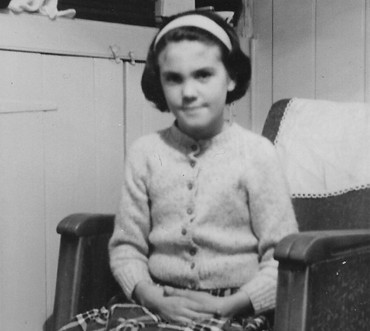
Although my greatest adventures happened outdoors, I wasn’t completely lost when the rain came down or the pavements froze. Indoor play had its own charm — albeit a much quieter one — and while I’m tempted to say, “there were plenty of things to keep me busy,” the length of this chapter rather proves otherwise!
Indoor Games
Although my best fun was when I went out to play, I did have indoor games for when it was raining, and I couldn’t go out. What the modern reader needs to be aware of though, is that in the 1950s and 1960s, children didn’t have boxes and shelves full of toys and gadgets. Most of my indoor play involved homemade crafts, card games or paper-and-pencil fun. I’ve divided them into two categories: things I played on my own, and things I played with Mum or Dad. My brother and sister were too old by then to want to play with me – it is fair to say I was almost like an only child.
Games I Played Alone
Things I played by myself included: playing with my dolls and playing with paper dolls where I changed their paper clothes, drawing and colouring (of course), painting from a watercolour paints tin (little blocks of paint in a tin), making trees out of old newspapers (!) and making things out of plasticine (or once out of papier-mâché).
There were card games like Patience, and the engineering marvel that was a cotton reel tank – a wooden cotton reel, an elastic band, a slice of wax candle, and a couple of matchsticks could be transformed into a little contraption that juddered across the floor.
I also tried my hand at knitting (usually squares) and French knitting—winding leftover wool from Mum’s basket around a cotton reel to make endless knitted tubes. Simple things, really, but they kept me happy.
Games I Played with Mum or Dad
When Mum or Dad joined in, it was often with pencil-and-paper games like hangman, dots and boxes, noughts and crosses, battleships and Consequences. We also played “hunt the thimble” and made paper fortune-tellers. Some Sunday evenings we’d bring out the cards for snap, Happy Families, Rummy, Pontoon (or “21s”) and even Whist.
It sounds, reading this list, as though I played with Mum and Dad all the time – but in truth, Dad was usually at work, the allotment, the pub or having an afternoon nap, while Mum was busy with “women’s work.” So while there was a decent list of activities, they didn’t happen as often as my younger self might have wished!
Paper Fortune-Tellers
I think most of the activities I mentioned are self-explanatory, but I’ll describe three of them – starting with one of our absolute favourites: the paper fortune-teller.
Now, if you’ve never made one, bear with me—it sounds more complicated than it is!
You start with a square of paper and fold it in all sorts of ways until it becomes a little puppet for your fingers, with flaps you can open to reveal hidden messages. We’d scribble numbers and colours on the outside and then write silly or spooky “fortunes” inside – things like “You’ll marry a pop star” or “You smell of cabbage” (classic playground humour!).
Once it was made, you slipped your fingers underneath, asked your partner to pick a number or colour, and then moved the fortune-teller back and forth to spell it out before lifting a flap to reveal their fate. The making of it was half the fun – lots of folding and creasing and getting it wrong and starting again.
Honestly, if you’ve never made one, try it—you’ll see what I mean.
Dots and Boxes
Dots and boxes which is a lot easier to explain! On a grid of dots, we took it in turns to draw lines joining two adjacent dots. The one who drew a fourth and final line to create a box won that box and wrote their initial in the box. We continued playing until all the boxes were completed. At the end of the game, the winner was the one with the most boxes.
Consequences
The rules of this game varied depending upon who I was playing it with! The version I played with Mum or Dad was, we started off with a strip of paper and wrote down a boy’s name to start a silly story. Then we folded the paper over to hide what we had written and swapped papers. Next, we wrote a girl’s name, then swapped papers each time: he said / she said, where they met / why they met / he wore, she wore / what he did / what she did / and the consequence was. Then we unravelled the paper and read the stories out loud. A finished story might read: Michael / met Mary / by the seaside / to buy roller skates / he said it’s hot today / she said why are you running / he wore pyjamas / she wore Wellington boots / he went to the shop / she went to play hopscotch / and the consequence was that they both had chips for tea.
Sometimes we played a simpler, drawing version of Consequences, where we drew weird and wonderful creatures instead of creating stories. First, we drew the head of an animal or monster, folded the paper over to hide what we had drawn and swapped papers. Then we drew the body and tail, swapped papers, and then drew the legs. When unfolded, the results were gloriously ridiculous – a giraffe’s head on a ballerina’s body with chicken legs, for instance.
Looking back, these were modest, make-do entertainments – but they had their own magic. They were simple pleasures in simpler times … and now, it’s time to turn to the one day of the week that felt completely different from all the others: Boring Sundays.
Chapter 8: Boring Sundays!
“Ob-la-di, ob-la-da / Life goes on …” Ob-La-Di, Ob-La-Da (Lennon-McCartney)
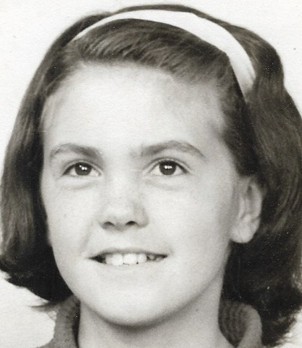
Earlier on, I promised I’d tell you about my “not allowed out to play” Sundays – and here we are. Even though Mum and Dad weren’t religious, they insisted that Sunday had to be a proper day of rest. Looking back, I suspect it had more to do with them being exhausted from the working week than anything to do with the Ten Commandments! Whatever the reason, the rule stood: no going out to play in case it annoyed the neighbours.
The result? Sundays felt l-o-n-g and b-o-r-i-n-g.
That said, they had their own quiet rhythm, and some memories have stuck with me to this day. I remember the constant hum of the radio in the background, the comforting smell of Sunday roast wafting through the house, sometimes visiting my Auntie Ann and her husband Don, sometimes my paternal grandmother (Nan) coming for the day, and even (shock, horror!), a short stint at afternoon Sunday School. There were the TV programmes, the ice-cream van, the saga of the dog and the tortoise (more on that soon!), Sunday tea with tinned fruit and evaporated milk and of course, the gentle wind-down of Sunday evening telly.
First, listening to Sunday morning radio – it was always on in the background, like a familiar friend. We listened to Two-Way Family Favourites on what was then called The Light Programme. It was a record request programme designed to link families at home in the UK with British Forces serving in West Germany or elsewhere overseas. I remember the presenters Judith Chalmers and Michael Michelmore. Their calm tones became part of the Sunday soundtrack.
Fifty years later, I still have the memory of them saying BFPO 49 and it was only as part of writing this that I looked it up and discovered that BFPO stands for British Forces Posted Overseas and 49 stands for NATO HQ Brussels! Interestingly, Two-Way Family Favourites had its own rules: mention of fiancées and girlfriends was taboo; there was no banter, and jazz was forbidden on Sundays!
Two-Way Family Favourites played the popular music of the day – everything from Glenn Miller, Mantovani, Perry Como, The Andrews Sisters, Bing Crosby and Doris Day, to (my favourites) Nellie the Elephant, I’m a Pink Toothbrush, Little White Bull and Ugly Duckling, to (Dad’s favourite) the Laughing Policeman. My sister Jean reminded me that Mum’s favourite was “Don’t Laugh at me ‘Cause I’m a Fool”.
My favourite songs:
“Nellie the Elephant packed her trunk And said goodbye to the circus
Off she went with a trumpety-trump Trump, trump, trump”
Sung by Mandy Miller
“You’re A Pink Toothbrush, I’m A Blue Toothbrush Have We Met Somewhere Before?
You’re A Pink Toothbrush And I Think Toothbrush That We Met By The Bathroom Door”
Sung by Max Bygraves
“Once upon a time there was a little white bull Very sad because he was a little white bull Little white bull
All the black bulls called him a coward Just ’cause he was white.”
Sung by Tommy Steele
“There once was an ugly duckling/With feathers all stubby and brown And the other birds, in so many words, said
Get out of town/Get out, get out/Get out of town!”
Sung by Bernard Cribbins
Dad’s favourite song:
“I know a fat old policeman/He’s always on our street
A fat and jolly red-faced man/He really is a treat
He’s too kind for a policeman/He’s never known to frown
And everybody says he is the/Happiest man in town!
Oh, ha-ha-ha ha-ha-ha ha-ha-ha ha-ha-ha! And so on …
Sung by Charles Penrose
Mum’s favourite song:
“Don’t laugh at me ‘cause I’m a fool
I know it’s true, yes I’m a fool
No-one seems to care.
I’d give the world to share my life with someone
Who really loves me
I see them all falling in love
But my lucky star hides up above
Someday maybe my star will smile on me
Don’t laugh at me ‘cause I’m a fool”
Sung by Norman Wisdom
I can still remember the mouth-watering smell of Mum’s Sunday roast drifting through the house. Just writing this now brings it back to me. Even today, if we’re cooking a roast, that rich, comforting aroma instantly transports me back to those childhood Sundays. If lamb was on the menu, I had an important job – making the mint sauce! It came out of a jar (was it Baxters or Colemans?), and all I had to do was add a splash of vinegar, a bit of water, and the tiniest sprinkle of sugar. Job done— and I felt very proud of my culinary contribution!
Some Sundays, before Dad had a car, we sometimes went by bus to visit Dad’s sister Ann and her husband Don in Widmore Drive, Hemel Hempstead. This was mainly before they had their two sons, Conrad and Adrian. I can always remember being a bit in awe of Aunty Ann and Uncle Don. They had, what seemed to me, to have a big, fairly new, (Council) house and garden and to be very “proper.” It was all very different to Oxhey Avenue. I’m not sure what I did while I was there as I don’t remember them having toys. I think I probably just sat on the sofa being bored—this time, in someone else’s house!
There are a few things I do remember though about those Sunday outings to Aunty Ann and Uncle Don’s house. The first was that one day when I went upstairs to go to the toilet (don’t forget that we didn’t have an indoor toilet at this time), I washed my hands afterwards and forgot to turn the hot tap off. Horror of horrors! When it was time to wash up after dinner, there was no hot water left!
The second memory was that Aunty Ann, being an ex-seamstress, had a professional steam ironing press. Very grand!
The third memory about those Sunday outings to Aunty Ann and Uncle Don’s was that, when I was ten, in the winter of 1963, on our way home on the bus one dark evening, it started to snow. I was snuggled up to Dad and, to this day, I remember the roughness of his winter coat on my face. I was so excited to see the snow that I repeated “I want it to snow, and snow, and snow and snow” over and over again in my head all the way home. Well, that was the beginning of The Big Snow of 1963, and I blamed myself for it for years afterwards! I’ll write more about The Big Snow later.
For some reason our visits to Aunty Ann and Uncle Don started to tail off, perhaps because they were busy with their own young family, perhaps because Mum and Dad had some sort of falling out with them, or perhaps because visiting them so regularly became a chore. Who knows? Don’t forget, the unspoken family motto was, “Don’t Ask, Don’t Tell!”
About this time, Dad got his first car, and my paternal grandmother (Nan) started to come for Sunday dinner and tea. Nan lived in Stanmore and Dad was able to collect her and take her back home as buses were only on “Sunday Service.” When I was seven in 1960, Nan was sixty-six, which isn’t old by today’s standards, but it was old in those days. I remember Nan used to just sit in the chair the whole time she was with us. I don’t remember any interaction or conversation with her.
It was very common in the 1950s and 1960s for children to go to Sunday School, even if, like mine, the family wasn’t religious. I suspect that many parents sent their children to get them out of the way on a Sunday afternoon! I went to Paddock Road Free Church – I don’t know why Mum chose that church. (Jean and John went there when they were young too.) I remember we sang hymns, said prayers, listened to Bible stories and coloured in pictures. I don’t think I was a very committed member of the congregation because my attendance was erratic, and eventually I stopped going. Paddock Road Free Church later changed its name to Oxhey Village Baptist Church, but as the size of the congregation diminished it ceased holding services. At the beginning of the 21st Century the church closed and was later demolished. Unsurprisingly, I think the land has now been developed for residential use.
From memory, Sunday afternoon TV seemed to consist mainly of American Westerns, with cowboys, cattle drives and the open range. Titles I can remember include: Gunsmoke, Bonanza, The Lone Ranger (and his faithful Indian companion, Tonto) and Rawhide. All of them had their own rousing signature tunes and I can remember most of them now. Whether all these Westerns were really on TV (at different times) on a Sunday afternoon I can’t be sure. Perhaps some of them were on weekday evenings.
The plots of these Westerns were simple, with the “good” cowboys often wearing white hats and the “bad” cowboys wearing black hats. Looking back, they were basically cowboy morality tales! A familiar scene would be the cowboys— the “goodies,” of course – forced to “circle the wagons” while under attack from the Indians, who were always cast as the “baddies.”
Naturally, the cowboys would fight bravely, prevail against the odds, and ride off into the sunset, victorious yet virtuous. They’d “Live to fight another day” as my Dad would say.
It wasn’t until many years later that I began to understand how one-sided and misleading those portrayals were. The Native Americans were shown as little more than faceless attackers, whooping and waving tomahawks, when in reality they were defending their lands, families and way of life from invasion. Likewise, the cowboys— depicted as noble, justice-loving heroes – were far from blameless in the real history of the American West. But as a child in the 1950s, armed only with the “truth” according to Sunday afternoon TV, I had no idea that the real story was far more complex and much less flattering to my white-hatted heroes.
To illustrate how boring my Sundays were, the highlight of the afternoon was when the ice-cream van came round! When I heard the van’s “Greensleeves” signature tune, I rushed out and bought a block of ice-cream, put it into a tall glass and filled it up with lemonade. In our house we called it an ice cream float because, well, the ice cream floated! The key was to pour the lemonade gently … or risk a fizzy explosion!
Now to the saga of the dog and the tortoise. For one of my birthdays, Mum and Dad bought me a puppy which we called Judy. She was a lovely even-tempered black and white mongrel. Although, as an adult, I’m not a dog lover, I loved Judy to bits. My sister Jean remembers Judy going to stay with her when she lived at Croxley View, West Watford when we went on holiday to Ramsgate, so Judy had a little holiday too! My brother John only had to say, “tats” to Judy, and she knew he was going to take her for a walk.
Into this story comes Mum’s friend from Heath Road, Olive Ladmore. Olive, her husband and their two sons, Michael and David, were going on holiday and asked Mum to look after their tortoise while they were away. Mum duly agreed and we kept the tortoise in a box in the front room. One Sunday afternoon, Dad was having a nap upstairs, Mum was having a nap on the sofa, and I was busy watching Westerns on the TV. Unbeknown to to us all, Judy was busy chewing up the tortoise! I can’t remember which one of us found the poor creature, but I distinctly remember everyone’s horror when we did. It was dead of course. Mum panicked about how she was going to break the news to Olive.
This is where the saga of the dog and the tortoise descends into farce. Dad decided that the thing to do was to go the pet shop and buy a matching tortoise, and do a secret swap. Luckily for Dad, there were lots of pet shops to choose from, and in those days you could buy tortoises. There was White’s Pet Shop / Polypets in
Market Street, The Pet Stall in Watford Market, Ivor Newman’s Pet Shop in Queen’s Road and William Bush’s Pet Shop (later Sangina’s Pets’ Parlour) in Villiers Road. Unluckily for Dad, despite scouring all the shops, he couldn’t find a match. It was down to Mum to confess to Olive about the fate that had befallen her tortoise. “Don’t worry,” said Olive breezily, “the boys were fed up with the tortoise anyway!” What a relief!
I will quickly mention another rather unusual pet we had – a mouse! As I remember it, it lived in a box filled with shredded paper, on a high shelf in the middle room. You couldn’t really see it unless you took it out, so if I wanted to play with it, Mum or Dad had to get the box down for me.
The trouble was, the mouse was usually fast asleep when I was ready to play – so I’d have to wake it up, which I don’t think it appreciated very much! Eventually, we got a second mouse to keep the first one company. I wouldn’t say they were the most interactive pets in the world! However, playing with the mouse, and later mice, was one thing I was allowed to do on a Sunday! Like the death of Joey the budgie, which I mentioned earlier, I took the death of the mice in my stride. I suppose it was because they were small, quiet creatures who didn’t give much back in the way of affection. When Judy, our dog, died, her death touched me much more.
I have already mentioned our Sunday tea routine, so I won’t repeat that here. After tea, Dad must have taken Nan back to Stanmore, because I don’t ever remember her being there when we settled down to watch Sunday evening TV. Those were the days when the whole family sat down to watch TV together. It’s difficult for me to remember which programmes we watched on Sundays and which programmes on other evenings. For example, were The Adventures of Robin Hood, The Adventures of William Tell, Dixon of Dock Green, This Is Your Life or Double Your Money on Sunday evenings? I don’t know. Dad loved the music hall show The Good Old Days, but again, I can’t remember if that was on a Sunday evening either.
What I can remember though is Sunday Night at the London Palladium. The best-known compere was Bruce Forsyth with his catchphrase, “I’m in charge.” I remember the high-kicking Tiller Girls at the start and the game “Beat the Clock” in the middle. “Beat the Clock” was based on an American quiz show of the same name and involved married couples (picked from the audience) playing silly games which they had to complete within a set time for a chance to win a huge jackpot. The highlight of our Sunday evening was the famous ending to Sunday Night at the London Palladium where all the stars of the show waved frantically from a revolving stage with ridiculously wide grins on their faces! Glorious!
So yes – my Sundays were long, quiet, and pretty uneventful … which was exactly how Sundays were supposed to be. A day of rest, a roast dinner, a radio and a bit of telly. As I look back, I feel fondness for the simplicity and innocence of childhood. But if I’m honest – I don’t miss those Sundays!
In my next chapter, I’ll take you somewhere a little more exciting – on the outings and holidays I enjoyed with Mum and Dad. Happier memories await!
Chapter 9: Family outings
“A splendid time is guaranteed for all.” Being for the Benefit of Mr. Kite! (Lennon-McCartney)
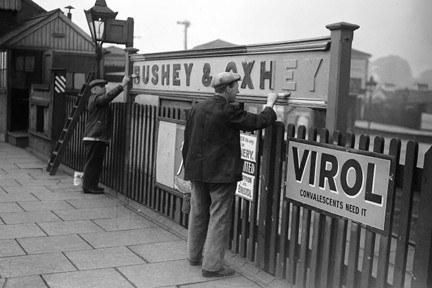
Before I start, let me tell you about a little bit of fun Wikipedia trivia here that I was vaguely aware of, so I checked it out.
During the war years of 1939–1945 the station was often known as “Ampersand” – this was due to a typically bureaucratic application of emergency regulations. To hinder enemy troops in the event of an invasion, it was ordered that all station names should be painted out on station name-boards, and this was interpreted at Bushey & Oxhey to mean the words ‘Bushey’ and ‘Oxhey’ but not the ‘&’. For the duration of the war, therefore, the station bore the designation ‘&’. Sadly, in 1974, Bushey & Oxhey Station was renamed Bushey Station. I find this very bizarre because the station is actually in Oxhey and the nearest part of Bushey (Bushey Village) is over 1 mile away!
It may seem that we had a jolly time, with frequent trips here, there and everywhere. Nothing could be further from the truth! Most of the time I went “out to play” with my friends Angela and Sarah. Outings with Mum and Dad were few and far between—special occasions rather than regular events.
The descriptions below of places we visited cover six years. We visited some of these places more than once, and others only once or twice – so don’t be fooled into thinking I was forever off to the seaside or gallivanting around grand houses!
Before the reader thinks that I was hard done by, let me reassure you that my situation was not unique. Indeed, when Angela read this, she was shocked at how much we did as a family.
Working class people in the 1950s and 1960s didn’t have the money for visits or excursions, so it seemed perfectly normal to us as children that most of the time we played outside locally. But when a day out did come along … oh, what a treat it was.
Our family outings could be divided into two types— local and further afield. Let’s start with the local ones.
Cassiobury Park: Paddling Pool, Miniature Railway and Fun Fair The first thing to say about Cassiobury Park is how lucky I am to remember the magnificent brick gate entrance. Sadly, the council demolished it in 1970 as part of work to widen Rickmansworth Road at the junction with Cassio Road. The demolition caused an outcry locally and I still lament their destruction. I’m aware that there have even been campaigns for funding to construct a replica of the gates, but, unfortunately, they have been unsuccessful.
We visited Cassiobury Park for three main reasons: the first was to go to the paddling pool with Mum, the second was to go on the miniature railway with Mum and Dad and the third was to go to the funfair with Mum and Dad. All three left me with very happy memories.
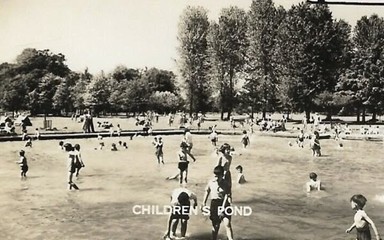
First, the paddling pool. Nowadays the paddling pool is a grand affair with several brightly painted splash pools, water jets, fountains, changing facilities, toilets and food kiosks. In the 1950s and 1960s, the paddling pool was just a large concrete shallow pond! Mum packed a simple sandwich picnic, and we’d set off, by bus, to the top of the town and then walk through the grand brick gate entrance to Cassiobury Park and walk down to the pool. Then I’d spend the day splashing about and generally having fun.
I don’t ever remember Mum and me going to the paddling pool with another mum and their child. Mum was thirty-four by the time she had me, which was old for having a child in those days, so her friends’ children were much older than I was. This meant that I became very skilled at “finding a friend” to play with once we got there!
Second, the miniature railway. Occasionally, Mum and Dad took me to Cassiobury Park and we went for a ride on the miniature railway. Mum, Dad and I squeezed into a tiny carriage and off we’d go, looping through the woodland, over the level crossings and then back to the “station.” I remember it felt like a real adventure. I think the miniature railway must have been quite new at the time, and I’m pleased to say that it is still going strong in 2025.
Third, the funfair. Every May Bank Holiday (or Whitsun as it was called then) we stood by the side of the road at The Parade, at the top end of Watford High Street, and watched the carnival procession pass by. It was a huge event in those days, with much of Watford closed to allow the procession to pass by. I remember the Carnival Queen, the marching bands, the lorry trailers turned into floats carrying people dressed up in fancy dress, the Morris dancers and the shire horses.
(As an aside here, I remember fainting one day as we waited for the procession to arrive. I’ve never been able to stand for long before I get the need to sit down. I wonder if I had undiagnosed Postural Tachycardia Syndrome (POTS) like my daughter had three decades later?)
When the carnival procession had finished, Mum, Dad and I walked to Cassiobury Park for the Whitsun Fair. I think the funfair at the time was called Flanagan’s. I used to love the atmosphere, the candyfloss, riding on the roundabouts and going on the dodgems (bumper cars) with Dad. My favourite stall was “hook a duck.” Dad used to go on the coconut-shy to try to win me a coconut and on the rifle range to try to win me a cuddly toy. At the end of the afternoon, I usually managed to win something and usually went home with a prize of a goldfish in a clear plastic bag! If my memory serves me correctly, at the August bank holiday, we repeated the routine.
King George’s Recreation Ground
Another local place we visited was King George’s Recreation Ground, Bushey. We went there for two reasons: either to go to the open-air swimming pool or to the Bushey Horticultural Society Flower Show.
First, the open-air swimming pool. Again, Mum packed a simple picnic and she and I caught a bus to Sparrow’s Herne, Bushey, and walked down to the pool. I was about six at the time, so I think this was during the very hot summer of 1959. The pool was a very popular place in the school summer holidays and I remember we had to queue up for the time-limited sessions. There were tiny wooden cubicles for getting changed in, but if they were occupied, I got changed under a towel by the side of the pool. I don’t know if the water was heated, but if it was, it wasn’t heated very much because I always remember it being very cold! As I got older, (that is, seven or eight) I went to the pool with Angela and Sarah. I remember there were diving boards at the end, but I don’t think we were ever brave enough to use them. There were signs that said: “No diving. No bombing. No petting.” We knew what diving and bombing were, but we were too young to know what “No Petting” meant! I understand that the pool was closed and demolished in 1993.
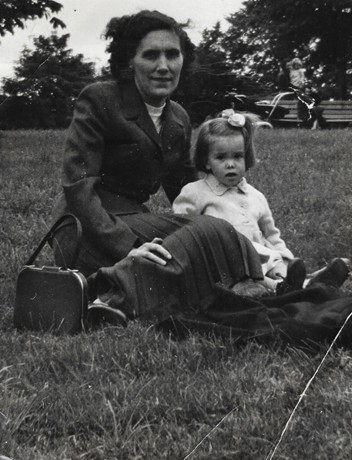
Second, the annual Bushey Horticultural Society Flower Show. As I have mentioned in an earlier chapter, Dad was a keen gardener, so this show of vegetables, flowers and fruit was right up his street. We all dressed up, with Dad in his smart trousers and sports jacket, and strolled around the big white marquees looking at the plant stalls, having a go on the raffles and tombola.
The show was always very busy and after a while Mum and I went to the refreshment tent while Dad went to the beer tent. I seem to remember that there was a travelling fair, but it was nowhere near as big as the one at Cassiobury Park. I used to love Bushey Flower Show, but the worst part about it was that it meant the summer holidays were nearly over and it’d soon be time to go back to school!
Ruislip Lido
Once a year, weather permitting, Mum, Dad and I caught the 158 bus to Ruislip Lido (which we pronounced “Lie-do”, not “Lee-do”). Although it’s less than seven miles away, it took about an hour and a half to get there, so it was a long day trip and a wonderful treat. There would be a long queue of people waiting to get in and I’d look through the chain link fence towards the (artificial) sandy beach on the far side. I thought I was at the seaside! Once in, we headed straight for the beach and I spent most of my time digging in the sand, making sandcastles with a moat, that I tried to fill using my little bucket. I don’t ever remember swimming, but I enjoyed watching the water skiers and the men and boys fishing. There was also a miniature train ride that went through the woods. I had my first experience of riding on a donkey on the beach at Ruislip Lido. I think there was a small cafeteria where you could buy ice cream and cups of tea, but as usual, we took sandwiches and a flask of tea. My treat on our way toward the turnstile exit was to go, with Dad, for a paddle boat ride on the small sectioned off bit of the lake.
Apparently, Donald Campbell raced “Bluebird” at Ruislip Lido in the late 1950s and Cliff Richard filmed part of his 1961 film “The Young Ones” there, but at the time I wasn’t aware of either of those historic events!
The Circus
Once, I went to the circus with Mum and Dad. It must have made a big impression on me because I can remember a lot about it to this day. I know that Bertram Mills’ Circus and Billy Smart’s Circus were famous names in those days, but I think the circus we went to, in Cassiobury Park, was Chipperfield’s Circus (the name having nothing to do with the nearby village of Chipperfield!).
To me, entering the Big Top and seeing the Ringmaster was a new experience, and of course the clowns with their slapstick, balloons and wonky car were fascinating and comical. I loved the different “artistes” and their sparkly outfits – those with their spinning plates, the acrobats, the tightrope walkers, the trick cyclists, the sword swallower and the high wire and the flying trapeze acts. I thought it was a magical world!
However, it was the animal acts that enthralled me the most. The trained horses were amazing, with the bareback riders performing on them, but the spectacle of wild animal acts were the ones that took my breath away. It would be hard for the modern reader to believe, but, if my memory serves me right, there were chimpanzees, polar bears, black bears, tigers, leopards, lions and elephants too. It seemed to me like watching a performing zoo!
Luckily, since 2020, wild animals haven’t been allowed to perform in UK circuses. However, at the time, I found it exciting to see those animals doing their tricks, and it didn’t seem at all unethical or cruel. I didn’t think for one moment about the wild animals being frightened of the crowds, the loud noises and the bright lights, nor did it cross my mind whether whips or sticks (let alone mistreatment) might have been used to train them. Neither did it occur to me that these wild animals had to travel from one venue to another in cramped cages and trailers. Clearly, none of this occurred to most adults either, because I was sixty-seven before wild animals were banned in the UK circuses!
After the show, the audience was allowed to go “backstage” to see the animals in their little makeshift accommodation. I thought this was a real treat, although it was a bit scary to be that close to the animals. I’m sure I held Dad’s hand just that little bit more tightly. As well as the animals we had just seen performing in the circus ring, we also saw alligators, camels and zebras. Again, it didn’t occur to me that the wild animals were stressed out in temporary housing which didn’t meet their needs. I’m glad that, as I grew older, I became educated about the need to ban animal circuses, to stop exploiting animals in the name of entertainment. Wild animals don’t belong in circuses!
I loved those days out. It always seemed like the sun shone during the school holidays. As I write, I can still feel the warmth on my skin, hear the laughter, and smell the candyfloss. Those outings were simple, but magical—and they live in my memory like golden snapshots of a carefree childhood.
Sometimes we had outings further afield.
Over the course of my childhood, we made several trips to Bekonscot Model Village – and oh, how I adored it. There was something magical about peering into that miniature world: tiny coal mines, castles, windmills, farmyards and aerodromes; even escaped prisoners and little people frozen mid-drama. I enjoyed trying to peek inside the little houses and the church with music playing—it felt like stepping into a storybook.
Even in the 1950s and 1960s it all seemed charmingly old-fashioned. Bekonscot Model Village was quite famous too. According to its website: “It attracted the attention of the Royal Family, living just a short distance away in Windsor. The first visit was on 20 April 1934, the eve of Princess Elizabeth’s eighth birthday. The future Queen of the United Kingdom returned several times in later years, along with Princess Margaret, Queen Mary and the King. After her coronation, the Queen’s children came too ….” Dad was no royalist, but I’m sure he thought if Bekonscot Model Village was good enough for royalty, it was good enough for me!
Natural History Museum in London
I can remember once (and it was only once) going with Mum and Dad to the Natural History Museum. This was a very big adventure, because it meant not just going to London, but going on the train and on the Underground! We went from Bushey & Oxhey Station.
Like all children I loved seeing the dinosaur skeleton of “Dippy” (I didn’t know at the time it was a replica). I think Dippy has gone now and has been replaced by a real skeleton of a whale.
Tring Museum
Once we went to the “outpost” of the London Natural History Museum, the Tring Natural History Museum. After the excitement of seeing Dippy I was disappointed that at Tring the exhibits seemed to me to consist of taxidermies of birds and dogs – all those glassy eyes and motionless displays weren’t quite what I’d hoped for. It was like a dead animal zoo!
London Zoo
Now this was more like it—live animals! I remember the star attraction, Chi Chi the panda, and I enjoyed seeing the penguins, elephants, giraffes, a bored-looking Guy the Gorilla, and the chimpanzees’ tea party (yes it was thought acceptable then for chimpanzees to be dressed in human clothes and to have a tea party with a table of food and drink!). I think I especially liked seeing the chimpanzees because I had enjoyed watching the TV programme Zoo Time introduced by Dr Desmond Morris and because I had seen the PG Tips chimpanzees’ tea party advertisements.
I didn’t much like the Reptile House, not because of the darkness and the snakes and such like, but because of the humid atmosphere! My standout memory of London Zoo, however, is when we went to the “Petting Zoo” enclosure and a goat tried to eat my clothes. Well done London Zoo for cementing that incident in my memory! I didn’t experience the famous Snowdon Aviary as that opened when I was a little older – although I’m sure Dad would have disapproved of a member of the royal family, Sir Antony Armstrong-Jones who was married to Princess Margaret, having the honour of designing a bird aviary just because he was royal!
Whipsnade Zoo
When Dad owned a car we went to Whipsnade Zoo, near Dunstable, which I thought was another great adventure. I remember the thrill of spotting a giant white lion carved into the chalk hillside – a sure sign, Dad said, that we were nearly there. For anyone who has never been to Whipsnade, the idea is that you drive your car through the grounds, like a safari. I’m sure that Whipsnade was a lovely safari park/zoo, but on the day, we were there I remember it was very hot. It was stifling in the car because of course for safety we had to keep the windows closed and, in those days, cars didn’t have air-conditioning. Not only that, because it was so hot, all the animals seemed to be hiding in the shade so we could hardly see them. The most exciting part was when some monkeys came and sat on our car, which caused Dad to worry about the car’s paintwork and whether the monkeys might snap off the windscreen wipers. Luckily, both the paintwork and the windscreen wipers lived to tell the tale. I think Dad thought the outing was a waste of money because we didn’t see many animals. We never went again!
Dunstable Downs
I can remember, on one occasion, and only on one occasion, we took a picnic to Dunstable Downs. Dad wasn’t a lover of the great outdoors unless it was at his allotment or there was some reason, like an event, for venturing there. To go somewhere just for the countryside and the views wasn’t in Dad’s nature, so a trip to the rolling chalk grasslands of Dunstable Downs was a bit of an anomaly. Certainly, Mum and Dad weren’t great walkers. Luckily, the advantage of Dunstable Downs was that the road runs along the top of the chalk ridge, so Dad drove there, parked the car, and we walked straight out onto a sort of grassy chalk plateau. As with our outing to Whipsnade Zoo, I remember the answer to, “Are we nearly there yet?” being with Dad driving past a giant carving in the chalk hillside — but this time it was a giant horse, not a lion. I remember we sat at the top of the Downs, ate our picnic, watched the hang-gliders and kite-flyers and then went home again. No running around or ball games!
Day trips by coach to Southend-on-Sea, Essex
Before Dad could afford to take us on a proper holiday, our annual “holiday” consisted of a day trip, by coach, to Southend. Along with everyone else, Mum, Dad and I all dressed up—casual wear hadn’t really been invented in the 1950s and early 1960s. Dad wore smart trousers and his sports jacket, complete with long-sleeved shirt (Dad wasn’t a tie-wearer!) and brown sandals, worn with socks. Mum wore her best flowery dress and headscarf. I wore a child’s version of Mum’s clothes—minus the headscarf!
Depending on the weather, we spent the day on the sandy beach making sandcastles and paddling, watching the Punch and Judy show and having a donkey ride. I ate candy floss and Dad ate cockles or jellied eels, and later, all three of us ate fish and chips wrapped up in newspaper. I remember going on Southend Pier with its amusement arcades and playing on the penny slot machines. I think there might have been a little boating lake—but perhaps I’m muddling it with Ruislip Lido. The name Kursaal rings a bell as an amusement arcade near the promenade, and I distinctly remember going down a scary helter-skelter. Our coach trips to Southend were a great day of fun – they really were, I’m not being sarcastic! It was the highlight of my summer.
Before I sign off this chapter, I’ll refer readers back to my opening paragraph. To be blunt, don’t be fooled into thinking that children in the 1950s and 1960s had anywhere near the experiences that children in 2025 have. Our parents just couldn’t afford to take us to lots of events—even if those events had existed, which of course they didn’t in those days. But don’t feel sorry for those children of “yesteryear!” All working-class children were in the same boat—it was perfectly normal, and what we expected from life.
In the next chapter I’ll describe a big step-change in our little family’s life – our very first proper holidays! Stay tuned for more Punch and Judy, sandcastles, paddling, donkey rides, windy promenades and plenty of sunshine (or at least sunburn) …
Chapter 10: Family holidays
“I’d like to be under the sea / In an octopus’s garden …” Octopus’s Garden (Lennon-McCartney)
Some time around the late 1950s / early 1960s Dad changed from his lorry driving job to factory work, and with it got an increase in wages. Not only was it about this time that he got a car, a second-hand Hillman Husky (later upgraded to a second-hand Ford Cortina), but we also had our first holiday.
It wasn’t surprising that we hadn’t had a holiday before this – working-class people couldn’t afford to go on holiday. Don’t forget, it was before the days of credit cards, so people had to save up to pay for a holiday, otherwise they just couldn’t go.
Ramsgate, Kent
Cheap European package holidays didn’t exist in the late 1950s and early 1960s, so the first holiday we went on in this period was a one-week holiday to Ramsgate. (It is worth pointing out to the modern-day reader that most working-class people only got two weeks paid holiday a year!)
I must have been very excited as we set off—my first holiday! And it was Mum and Dad’s first holiday too. Mum and Dad were in their mid-thirties and had never had a proper holiday! Can you imagine?
The late 1950s / early 1960s were before the days of wheeled luggage so Dad had to carry our heavy cardboard cases, one in each hand. Yet again, we dressed up for the trip and I remember Dad even packed a suit – just in case! Mum had a smaller piece of luggage called a vanity case. I can’t remember how we got to Ramsgate – perhaps there was a train direct from Watford Junction? Either that, or we went by coach. It probably wasn’t long before I asked the inevitable question, “Are we nearly there yet?!”
We stayed in a “Bed, Breakfast and Evening Meal” boarding house. In those days, you had to leave the boarding house after breakfast and couldn’t go back until late afternoon, regardless of the weather! Needless to say, the room didn’t have ensuite facilities. There was an (even then) old-fashioned ceramic jug and bowl of cold water on a marble-topped washstand in the room for a stand-up wash. The landlady changed the water every day whilst we were out. The toilet and bathroom were along the corridor. Still, I thought it was all marvellous.
Our Ramsgate holiday was a dream – like our Southend day trips, but better, because this time we didn’t have to go home at the end of the day.
We always began and ended our days with a walk along the promenade – a tradition that, in my memory, was always accompanied by a stiff breeze whipping in off the sea. It didn’t matter what the weather was doing—Mum and Dad insisted it was “bracing” and claimed it “blew the cobwebs away”. The wind tangled our hair and turned our cheeks red, but those walks along the promenade were a highlight.
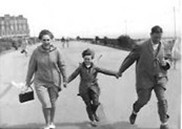
The promenade was a gorgeous medley of smells: vinegar from stalls selling Dad’s favourite of little dishes of whelks, jellied eels and winkles, eaten with little wooden forks. Other parts of the promenade smelled of my favourite: candyfloss!
Once on the beach, Dad would finally take off his sports jacket, roll up his shirt sleeves and put a knotted white handkerchief on his head. Later, he’d take off his sandals and socks, roll his trousers up, and take me for a paddle. I can’t recall him ever wearing shorts. Dad’s swimming trunks were like snug-fitting, coloured pants.
I can remember Mum wearing a swimming costume that was a bit like a one-piece corset. It was probably not very comfortable.
I had a bubbly-looking swimming costume, which I think was made of a fabric called seersucker, and I had a flowery rubber swimming hat to keep the salt water out of my hair. I remember I had what are nowadays called jelly shoes, but they were just called plastic sandals in those days. (Although I wasn’t particularly keen on them, because they were hard plastic and dug into my bony ankles!)


On the beach, Dad’s first job was always to set up the hired windbreaks (did I mention it was windy?!), followed by the hired deck chairs. These weren’t ordinary deck chairs either – they had little canopies on top to shield you from the sun or the wind. Very posh! Watching Dad set them up was like watching a scene from a Charlie Chaplin film. I always worried the whole contraption would collapse and chop my fingers off the moment I sat down!
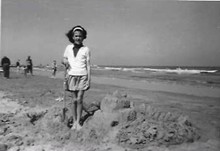
Throughout the week, Dad and I became expert sandcastle engineers. Each day, our castles grew more ambitious. I remember one in particular—Dad bought me a little flag for it, which I proudly planted on the tallest turret, then carefully decorated the whole thing with seashells. Another time, we added a moat. Dad helped dig the trench, and I ran back and forth from the sea’s edge, lugging buckets of seawater and tipping them in. Of course, it was a thankless task because as fast as I tipped the water into the moat it soaked away. Still, it kept me busy!
I soon discovered that the secret to choosing the spot to build the sandcastle was to be near to the sea’s edge so that the sand was damp, and therefore held together better for building sandcastles, and so that the to-ing and fro-ing with the buckets of water was quick and easy. Of course, that also meant that when the tide came in, the sandcastle was slowly washed away!
And then there was the burying- Dad would gently heap sand over me until only my head was showing. I thought it was hilarious. He thought it was a brilliant photo opportunity for his trusty Kodak Box Brownie. I’m sure lots of children of my generation (and indeed later generations) have photos of themselves buried in the sand!
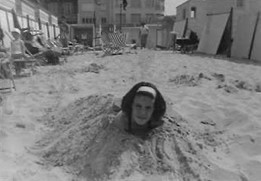
Mum’s task was to sit in her deckchair and write lots of postcards to friends and relatives. The postcards fell into two main types—the views and the “saucy” cartoon ones. (I think I started my sex education by reading some of the captions on those saucy cards!)
Mum wrote loads of cards, because if a friend or relative didn’t receive a holiday postcard from us they’d be upset about being left out. It might also have been a way for Mum to gently boast that we were on holiday, and they weren’t!
Because we had a whole week in Ramsgate, we had the luxury of doing more than just paddling at the water’s edge. We were able to swim properly in the waves. One day, Dad bought me an inflatable lilo – a bright, rubbery raft that smelled of new plastic. He waded into the sea with me, steadying it as I clambered on. I remember the joy of bobbing up and down, as Dad laughed and splashed beside me.
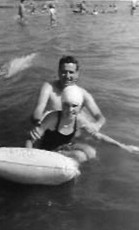
I also did my usual thing of making friends and playing with other children. Mum and Dad were careful to always sit in the same part of the beach every day in the hope that I’d see the same friends again. Sometimes I was lucky, and I did see them. If not, I’d just make new friends for the day!
“Punch and Judy Man/Puppets in your hand See the children sit/Round you on the sand And they don’t mind if the sun won’t shine You’ve put the moon in their eyes”
The first verse of Punch and Judy Man from Snaps by Harvey Andrews
I loved the Punch and Judy glove puppet show. I used to look out for the Punch and Judy Man arriving and setting up his little red puppet booth on the beach. There was a little pretend clock at the front of the booth, and he’d set the hands to let everyone know when the show was due to start.
My favourite puppet was the red-clothed Mr Punch, especially when he spoke in his funny voice and said, “That’s the way to do it!” as he hit the other puppets (his wife Judy, their baby, a crocodile and a policeman) with a big stick! I’d sit on the sand with all the other children, and we’d laugh and call out to the puppets to warn them of danger.
I remember that at the end of the show, the Punch and Judy Man (or was it his helper?) came around with a hat to collect money from the parents of the watching children. If he wasn’t quick, some of the parents and children would have scarpered, which meant he didn’t earn very much for his hard work. I think Dad was probably one of those who made a quick getaway!
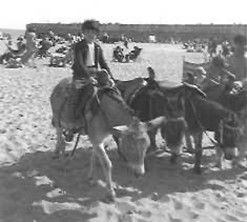
Donkey rides on Ramsgate beach were very popular in those days and Dad made sure that I had a few rides. I can’t remember how much it cost, but presumably not very much as the ride was only a few minutes long. I remember the donkeys were very gentle and I loved the little walks up the beach and back again. Dad walked alongside me to make sure I didn’t fall off. I remember each donkey had its name on its harness, but I can’t remember any of the names now!
Mum’s speciality was taking me to the amusement arcade, or penny arcade, as I think they might have still been called, because that is how much they cost to play. Among other things, Mum and I played on the coin pusher. I loved dropping a coin into the slot on the top of the machine and watching it roll down onto a shelf covered in coins, then watching a large platform pushing the coins towards the edge of the shelf, onto another level of coins, where another platform pushed them further, and then winning any money that fell off the final shelf. The trick, as I soon discovered, was to try to drop the coins in time with the rhythm of the pusher to help maximise the chances of an avalanche of coins!
Mum was a big fan of Bingo, and Mum and I went to the arcade together to play. This was very much a family version of the game and lots of children joined in the fun. I think I liked it because no real skill was involved, other than keeping alert! I remember that the “Caller” (if that is what they were called) sat in the middle of a big rectangle of players. The Caller had a special “ball machine” which mixed up different coloured numbered balls. They pressed a button, the machine released a ball, and they announced the number to the players. One of the things I enjoyed was learning the slang for the numbers (legs eleven for 11, two little ducks for 22, two fat ladies for 88 etc.).
The other thing I enjoyed was that one of the players (hopefully Mum or I, because we played separately, with Mum keeping a watchful eye on my card) was bound to win every time. This is probably why the Caller didn’t start a game until enough of the seats were taken! The prize wasn’t money, it was a token. The idea was to collect enough tokens to exchange them for a prize of your choice from those on display. I think the prizes were probably seaside tat, but Mum and I enjoyed playing anyway!
If Dad ever joined us in the arcade, he liked trying to win me a prize on the digger (grabber) crane game. It is the same game that features in the cartoon film Toy Story. Dad tried to scoop up a soft toy and place it in the chute so that it slid into my eager hands. I’m sure that for the amount of money Dad spent on trying to win me a soft toy he could have bought me one – but where’s the fun in that?!
I distinctly remember “the deckchair man”. He must have been employed by the council, and he walked around the beach every morning and afternoon, charging everyone using a deckchair. He issued tickets that rolled out of a machine strapped by a belt around his waist, like the machines used by old-fashioned bus conductors. Mum and Dad’s trick was to try not to make eye-contact with him, in the hope that he’d overlook us, and they’d get away without paying. Sometimes it worked!
I remember the beach photographer. He carried a large, bulky camera and took photographs of holidaymakers as they sat in their deckchairs, played on the beach, paddled in the sea, or even just walked along the promenade. The photographs were ready at the end of the day, displayed in a kiosk on the promenade. Dad only had a basic camera, probably something like a Kodak Brownie, so he sometimes bought a photograph from the beach photographer as a souvenir. Unlike nowadays, when everyone is a photographer, with a camera on their phone, back then, it was expensive to get a roll of film developed so most working-class people didn’t take many photographs.
In those days, like everyone else, we didn’t know about the dangers of unprotected exposure to the sun’s ultraviolet radiation, and we stayed on the beach all day without using any sunscreen. This meant our skin slowly burned to a lobster-like colour! In the evening Mum tipped a pink liquid called calamine lotion onto cotton wool and dabbed it onto our sore sunburned skin.
The following day we went back out and burned some more! I can clearly remember the pain from sunburn and the look and feel of peeling skin. However, both sunburn and peeling skin were commonplace and even expected of returning holidaymakers; after all, how else could we show off the fact that we’d been on holiday! I think that as the 1960s progressed, people started to use suntan cream / lotion, but this was designed to help tan your skin rather than protect it.
Another thing that sticks in my mind from our holiday in Ramsgate is watching the men in the rock shop, through a big window, making sticks of rock. I saw them throw huge lengths of soft rock across a large metal table and twist and stretch it before cutting it into lengths and leaving it to harden. Dad always bought me a stick of rock, and I was amazed by the way the word “Ramsgate” went through the middle of the rock. The sweet, sickly smell of that rock shop comes back to me now as I write this!
I have memories of going exploring with Dad (I think this was in Ramsgate) to a part of the beach where there were rock pools. It was like a secret world of seaweed and little creatures in the warm pools of water. I remember the sea anemones, limpets, starfish, crabs and tiny fish that darted about. The rocks were slippery with seaweed, but I didn’t care. I was on an adventure.
Bracklesham Bay, Chichester, Sussex
The second holiday we had in this period was a week in a holiday camp at Bracklesham Bay. It wasn’t one of the big companies like Butlins; I think it was called Gibson’s, but I could be wrong. I think we must have been “full board” (all meals included in the price) because I don’t ever remember venturing out of the camp.
I’m sure the holiday camp was fine for its time, but I can still remember that Dad wasn’t exactly impressed with the whole Hi-De-Hi setup.
Looking back, I’ve no idea what possessed Dad to book that kind of holiday in the first place – he was never one for being organised or told what to do! Maybe he was trying to be “modern,” or perhaps he’d just had enough of being turfed out of our Ramsgate boarding house all day. Either way, the holiday camp turned out not to be his cup of tea.
There was a big ballroom where they held things like knobbly knees competitions— not Dad’s idea of fun. There was evening entertainment too, but I don’t remember much about it. What I do remember is playing Bingo with Mum in that ballroom, and I loved it. Mum, I should add, never entered the ‘Glamorous Granny’ competition.
However, nothing about the place pleased Dad! He likened the rows of wooden chalets to garden sheds. He was probably right! Our chalet was number five in our row. I remember there was a sink, with cold water only, in the chalet, but the toilet and bath block were at the end of the row of chalets – not ideal if you needed the loo in the night!
I remember the meals were served in two sittings. There was an alarm call – disguised as a catchy song – which summoned us to our allocated slot. Dad thought the food was too basic and there wasn’t enough of it, especially if we were in the second sitting, so he made sure we never were!
Despite Dad’s grumbling, I had a good time. I loved the outdoor swimming pool and the children’s playground – and, of course, playing Bingo with Mum.
I even made a friend called Rita, and Mum and Dad got chatting to her parents. I think Dad finally found a kindred spirit in Rita’s dad – someone to have a good moan with!
I’ve still got a tiny photo of me and Rita – we’re sitting in the ballroom, wearing cardboard party hats and holding a bottle of fizzy drink. I often wonder where she is now.
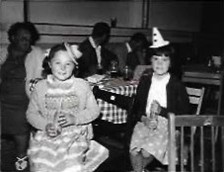
Although I had a wonderful time, six decades later I can still remember that Dad didn’t enjoy it. It was all too regimented for him and, looking back on it, I don’t blame him. We never went to a holiday camp again!
Reflecting on this holiday in 2025, I feel rather sad for Dad. He’d saved his hard-earned money for our week’s holiday, only to be disappointed at what he got.
If Dad were alive today, I’d say, “Don’t worry Dad. I had an amazing time.”
I can’t remember the running order of our holidays, but I think holidays in the Isle of Wight and Denmark followed next, perhaps as an antidote to the holiday camp experience at Bracklesham Bay.
Shanklin, Isle of Wight
The first thing I remember about our holiday on the Isle of Wight is getting off the ferry at Ryde Pier Head and transferring to a steam train for the last part of the journey to Shanklin. The ferry ride itself felt wonderfully exciting, but it’s that steam train that really lives in my mind. The engine and carriages seemed terribly old-fashioned compared with the trains I was used to from Bushey and Oxhey Station. There was the rhythmic chug of the engine, the hiss of steam and that unmistakable smell of coal smoke. Most memorable of all were the little bits of soot and cinders that drifted in through the open windows – until Dad quickly slid them shut!
We stayed in a traditional boarding house, although I can’t recall many details now. I do remember the sandy beach, and what I’m sure was a classic bucket-and-spade holiday: donkey rides, Punch and Judy, sandcastles and paddling. We strolled along the promenade with fish and chips and sticky fingers from candy floss, and then we went on to Shanklin Pier to visit the amusement arcades. I have a clear picture of a boating trip on the lake near the pier, too. There were steam train rides and coach trips to places like Shanklin Chine, Carisbrooke Castle, the Needles and Blackgang Chine. At Alum Bay I remember a little shop where you filled a glass ornament with different coloured sands – a perfect souvenir, now long lost in the sands of time!
Denmark
Our last holiday of this era was in Denmark. I don’t really know why Dad chose it, except that he might have been stationed there after the war, and it was one of the more accessible places to get to. Package holidays to Spain and other parts of Europe didn’t really become affordable until the 1970s, by which time I was married and living away from home. Perhaps Denmark was a sort of “transition” destination – a step between holidays in Britain and the more adventurous trips to come. Certainly, by the 1980s and later, Mum and Dad were roaming happily all over Europe and even to America.
Like the Isle of Wight, our Danish holiday was a mixture of traditional seaside fun and sightseeing. We visited the Tivoli Gardens and, of course, went to see the Little Mermaid in Copenhagen. The Tivoli Gardens felt like a magical combination of funfair and park, with rides, lights and beautiful gardens. Legend has it that Walt Disney was inspired by Tivoli – though, like all good legends, I’ve no idea how true that really is.
It was at Tivoli that I had my memorable “Ice Cream Experience”. To put this in context, in early 1960s’ England, food choices were still fairly basic, especially for a child. Mum and Dad took me to an ice cream shop with a huge board listing ten or more flavours: Vanilla, Chocolate, Strawberry, Cherry, Coffee, Orange, Banana, Mint, Lemon, Pineapple and so on. Dad asked which flavour I’d like. I’d heard of all those fruits and flavours – except Vanilla. “Vanilla” sounded wonderfully exotic, so of course I chose that one. I can see you smiling already. You can imagine my disappointment when I discovered that Vanilla ice cream was just the ordinary plain one I’d been eating all along. Ah, holiday memories!
Another abiding memory from Denmark is visiting the statue of the Little Mermaid. Dad told me she was very famous, though he wasn’t quite sure what for, beyond tourists like us going to see her. My expectations were sky-high. After the bright lights and spectacle of Tivoli, I imagined something huge and overwhelming. Instead, as you’ve probably guessed, my “Little Mermaid Experience” matched my “Vanilla Ice Cream Experience”—a bit of a let-down. The statue is, in fact, small and underwhelming. I suppose, if you go to Copenhagen, you feel you ought to see the Little Mermaid. But as Dad said, with a shrug: “It’s nothing to write home about!”
That’s enough of sun, sea and sand for now – time to brush the sand from between our toes and head back indoors. In the next chapter, I’ll take you somewhere just as magical: into the world of Entertainment, Music and Fashion. So put the kettle on, pop a record on the Dansette and get ready for community singing at Saturday Morning Pictures, songs about chewing gum and dustmen and Liberty Bodices…
Chapter 11: Entertainment, music and fashion
“She’s got a ticket to ride …” Ticket to Ride (Lennon-McCartney)
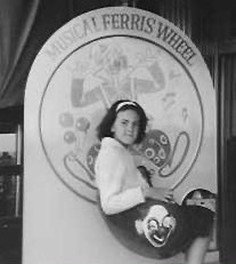
So much for outings and holidays! Now let’s slip back indoors – into the world of Entertainment, Music and Fashion.
Entertainment
‘We come along on Saturday morning
Greeting everybody with a smile.
We come along on Saturday morning
Knowing it’s well worth while.
As members of The Odeon Club we all intend to be
Good citizens when we grow up and Champions of the Free!
We come along on Saturday morning
Greeting everybody with a smile, smile, smile!!
Greeting everybody with a smile.”
Now here’s a thing that many modern readers won’t have heard of: Saturday Morning Pictures. Basically, they were films (or pictures as we called them) for unaccompanied children (yes, no adults allowed!), shown at the cinema (the pictures), every Saturday morning. I went to the Gaumont near the top of Watford High Street. It cost “a tanner” (6d/six pence) to get in. That would still only be about 75p in today’s money (2025). Of course, not everyone could afford 6d and some children tried to sneak in for free via the fire exits.
This is how it worked – one child paid to get in, then, once the lights went down, they went and opened the exit so their friends could get in without paying! I think after a while the cinema managers twigged what was going on and put usherettes or “monitors” on duty there. (Monitors were older children who were allowed free entry and whose job it was to stand at the exit to stop children getting in for free.)
I remember the community singing at the beginning of Saturday Morning Pictures, with the words on a screen with a ball bouncing along so we could follow them. Just imagine a cinema full of children belting out cheerful songs at full volume.
The pictures consisted of American “Cowboys and Indians” (such as The Lone Ranger), American adventure films (such as Tarzan swinging through the jungle), American cartoons (such as Tom and Jerry’s endless antics, Woody Woodpecker’s laugh and Bugs Bunny’s tricks). It seems that we were mainly entertained by American pictures, but we lapped it up. I remember they were very noisy affairs, with lots of booing of the baddies and cheering of the goodies!
There were also English films like the Mr Pastry comedies. Richard Hearne the actor, played Mr Pastry, who was supposed to be a bumbling old man. He was a bit clown-like, with a walrus moustache, a black suit or raincoat and a bowler hat. It was slap-stick comedy – custard pies, buckets of cold water, sliding across shiny floors, crashing through windows and tripping over himself—and we loved it!
At the end of Saturday Morning Pictures the cinema played the National Anthem and we all stood up – either that or we made a dash for the exit before they started playing it. If we only got halfway out, perhaps in the aisle, we had to stay frozen there with the rest of the audience until the last note. There’s respect for you! It wouldn’t happen today, and in fact cinemas stopped playing the National Anthem in the 1970s because cinema owners were worried that customers might be trampled in the rush to get out before they played it!
Music
I have previously mentioned my favourite songs on Two Way Family Favourites. They were mostly childish tunes that I could sing along to.
Rock ‘n’ Roll was more the preserve of my brother and sister – I wasn’t old enough to be interested, and anyway they weren’t played on the BBC Radio Light Programme! The likes of Elvis Presley, Little Richard or Buddy Holly weren’t on my radar, nor were Country and Western singers such as Johnny Cash. I was just too young. Jazz music might as well have been another language to me.
I was aware of the “skiffle” craze in the form of Lonnie Donegan playing with a washboard, tea-chest and guitar, but perhaps only because of his jokey songs: “Does Your Chewing Gum Lose Its Flavour on the Bedpost Overnight” and “My Old Man’s a Dustman.” I’m not sure if they count as jazz, but I’ve included the choruses of both songs below and I’ll let you decide! (To be fair to Lonnie Donegan, his earlier “Trad jazz” provided the original inspiration for the Beatles and a host of others. He received an Ivor Novello lifetime achievement award in 1997 and was made an MBE in 2000.)
Does Your Chewing Gum Lose Its Flavour on the Bedpost Overnight?
“Does your chewing gum lose its flavour on the bedpost overnight?
If your mother says don’t chew it, Do you swallow it in spite?
Can you catch it on your tonsils, Can you heave it left & right?
Does your chewing gum lose its flavour on the bedpost overnight?”
My Old Man’s a Dustman “Oh, my old man’s a dustman He wears a dustman’s hat
He wears cor blimey trousers And he lives in a council flat He looks a proper narner
In his great big hobnail boots He’s got such a job to pull ‘em up That he calls them daisy roots”
The only “pop” singers who really filtered through to me in that era were the so-called teenage idols: Cliff Richard with “The Young Ones” and “Summer Holiday”, Marty Wilde with “A Teenager in Love”, and Adam Faith with “What Do You Want”. I’ve already mentioned Adam Faith in the previous chapter, as he was the only pop star I actually saw “live” at the time.
However, I wasn’t yet a teenager, so one of my favourites was “How Much Is That Doggie in the Window?” sung either by (and I had to look their names up!) Lita Roza or Patti Page. I played both versions as I was writing this, and it is the Lita Roza one I remember.
Lita Roza’s version of “How Much Is That Doggie in the Window?” reached No. 1 on the UK Singles Chart. She was the first British woman to have a No. 1 hit in the UK chart. Apart from that claim to fame, I don’t think I heard any more about her. However, her singing must have touched many a heart, because when she died, none other than Elton John said in tribute to her that “we just don’t make singers like Lita Roza anymore”
“How much is that doggie in the window? The one with the waggly tail – Woof, Woof! How much is that doggie in the window?
I do hope that doggie’s for sale – Woof, Woof!”
Fashion
In the late 1950s and early 1960s, like most children my age (when I was aged 5-11), fashion wasn’t something I thought about. I mainly wore skirts and pinafore dresses. Mum hand-knitted my jumpers and cardigans. Mum knew someone who lived in Hillside Crescent, just off Pinner Road, who had an older daughter, and sometimes we went there, and Mum bought her daughter’s cast-offs—whether I liked them or not!
One strange thing I must mention, which modern readers won’t have heard of, are Liberty Bodices. They were like a children’s corset, only not so tight. I think the name was because they gave girls (and women) “Liberty” from corsets! They were meant as an extra layer of clothing, made of a fleecy or flannel fabric, to keep our chests warm, and so were only worn in the winter, over a vest. I remember mine were a pink colour and had strange rubbery buttons down the front.
Trainers hadn’t yet been invented, and I wore “proper” shoes or sandals. I had very long, narrow feet and the only place where Mum could find shoes to fit me was in the Gordon Scott shoe shop in Watford High Street. I think they mainly sold Clarke’s shoes. I can always remember that I desperately wanted a pair of patent shoes, but Mum wouldn’t let me because they weren’t practical—they were easily scuffed and couldn’t be cleaned with shoe polish to cover up the marks. When I was a bit older Mum said the same thing about Hush Puppy suede shoes and I wasn’t allowed them either!
I loved Gordon Scott’s and called it “The Monkey Shoe Shop” because it had a large toy monkey that performed somersaults on a bar in the window. The acrobatic monkey was such an iconic feature that, when the shop finally closed (long after it had moved from the High Street to the new shopping mall “The Harlequin”), the monkey “retired” to Watford Museum and is now an item in their “A History of Watford in 50 Objects.” By a curious twist of fate, when my daughter Nikki was a student, she had a Saturday and holiday job in Gordon Scott’s shoe shop in the Harlequin.
I’ll mention here the sorts of things that my sister Jean and my brother John wore during this period. My clothes were like a mini-me version of Mum’s clothes. Jean and John’s clothes were very much influenced by the new phenomenon—the rise of the teenager!
First, my sister Jean. I can remember her wearing gathered skirts and dresses with tight waists. The skirts had very full nylon petticoats and I remember that she soaked them in a sugar-water solution to keep them stiff. Jean said the petticoats used to catch on her nylon stockings and laddered them and the
bees and wasps were attracted to the smell of the sugar! Jean says she sometimes wore stirrup trousers if she went out, but for dances she wore a long dress with a pencil skirt (very modest, not plunging necklines). She wore pearlised white pointed “winklepicker” shoes with stiletto heels. I can remember Jean wearing Max Factor Pan-Stick foundation. She didn’t wear eye makeup, but she did wear Max Factor pink lipstick.
Writing this has reminded me about Mum’s makeup routine: she wore powder from a Max Factor compact and lipstick which she blotted on a handkerchief. She also wore Max Factor mascara that came in a cake or block that she had to spit on to moisten it before scrubbing it with a little brush and applying to her eyelashes. Although I can remember Mum’s mascara routine, I don’t think she kept it up for long. Too much effort!
Back to Jean – she put her shoulder-length hair into rollers, often sleeping in them, and then when her hair was dry, she took the curlers out and tried to backcomb her hair into a high “bouffant” style. Finally, she held it in place with lots of hairspray. I don’t think Jean ever had a towering “beehive” hairstyle as her hair wasn’t long enough to go up into a roll or a beehive shape. Did she style her hair to look like the singer Connie Francis or the actresses Sophia Loren, Marilyn Monroe or Elizabeth Taylor I wonder?
If my brother John thought of fashion at all, I think he fancied himself as a bit of a “Teddy Boy” – certainly not a “Mod.” He wore some of the fashions associated with that trend, including drainpipe trousers and long pointed winklepicker shoes. I remember John had the clever (or crazy!) idea of keeping his winklepicker shoes in shape when he was wearing them (bearing in mind that his toes didn’t reach the pointed end) by shaping wedges of wood and inserting them into the toes of his shoes. Very enterprising! John “quiffed” his hair, with a DA at the back (named for its resemblance to a duck’s arse!) and held it in place with Brylcreem. Did he style his hair to look like the actors Marlon Brando, James Dean or Tony Curtis, or the rock ’n’ roll singer Elvis Presley, I wonder?
And there you have it – my memories of Entertainment, Music and Fashion from my childhood years. In the next chapter, I’ll talk a little more about that flickering box in the corner – Television!
Chapter 12: Television
“I heard the news today, oh boy …” A Day in the Life (Lennon-McCartney)
“The past is a foreign country; they do things differently there.”
LP Hartley The Go-Between
Before I dive into the telly of the late 1950s and early 1960s, I think I need to explain a little about how different TV was then from how it is now, otherwise modern readers might get the wrong idea.
First of all, television sets back then were nothing like today’s sleek flat screens. The screen itself was tiny – around 14 inches across (35cm) – and the set came in a huge wooden cabinet, which took up a fair chunk of space in our small front room. Second, there were only two channels, BBC and ITV, and of course, programmes were only in black and white – colour programmes weren’t introduced until 1967.
In addition to this, TV was only broadcast for about twelve hours a day (afternoons and evenings), so there were times when I’d turn on the TV and see only a static image of a “Test Card” accompanied by music. Can you imagine? No TV in the mornings! Originally, the test card showed only black and grey bars, which Dad or Uncle Wally (Mum’s brother from York’s TV Repair Shop) used to tune the TV. Then the BBC introduced an image of the Test Card with a photograph of an eight-year-old girl in the middle. The girl was playing noughts and crosses on a blackboard, with what I thought was a scary-looking toy clown on the other side of her, surrounded by the test pattern.
TVs in those days didn’t come with a remote control, so every time we wanted to change channels or adjust the volume, Dad (and it was Dad who controlled the TV if he was around) had to get up and walk across the room to use the knobs and buttons. Our TV watching wasn’t straightforward or smooth either—our picture often broke up due to interference because of poor weather or transmission issues and we referred to the effect of this on the screen as ‘snow’.
I seem to remember that just getting the TV started was quite a long process because instead of today’s microchips, TVs had an antiquated system of valves which took some time to “warm up.” After a few minutes we’d get sound and then after another few minutes (if we were lucky) a grainy black and white picture with flickering horizontal lines slowly started to appear. I think our TV set needed about fifteen minutes to warm up!
After the last programme of the evening had finished, the National Anthem was played (the same as happened at the cinema). I think monarchists even stood up for it, but of course Mum and Dad, being anti-royalists never did. When the TV set was turned off there was a white dot on the screen which very slowly shrank until it disappeared. Unsurprisingly, I very rarely saw any of this because I was a child at the time and was rarely up at 10.30 or 11.00 when the programmes finished (unless I had fallen asleep on the sofa!).
In those days, children and adults all watched the same programmes – no one took themselves off into another room or their bedroom to read a book or listen to the radio, and absolutely no one had a TV in their bedroom. Watching TV was a family affair. I have already mentioned some programmes in my “Boring Sundays” chapter, so I’ll focus on different ones here.
First up, children’s programmes. I’ll start with my favourite: Watch with Mother, which was on after lunch. I clearly remember the Watch with Mother programmes of (Monday’s) Picture Book, (Tuesday’s) Andy Pandy, (Wednesday’s) The Flower Pot Men, (Thursday’s) Rag, Tag and Bobtail and (Friday’s) The Woodentops. As Watch with Mother was on in the afternoon, I think I must have watched it in the school holidays or if I was off school because I was poorly (which according to my sister Jean, I often was!).
I still remember the opening song from Andy Pandy:
“Andy Pandy’s coming to play, Tral la la la lah lah. Andy Pandy’s coming to stay tral la la la lah lah Andy Pandy’s coming to play. Tral la la la lah lah. Andy Pandy’s coming to stay, Tral la la la lah.”
And the hypnotic repetition of The Flower Pot Men:
“Bill and Ben, Bill and Ben, Bill and Ben, Bill and Ben, Flowerpot Men. Bill and Ben, Bill and Ben, Bill and Ben, Bill and Ben, Flowerpot Men.”
Other children’s programmes started at 4.00pm or 5.00pm and I remember that when I got home from school, I could settle down to watch TV. These programmes included Sooty (“Izzy wizzy, let’s get busy” and “Bye bye everyone! Bye bye!”), Torchy, Twizzle, Crackerjack and of course Blue Peter. My favourite part of Blue Peter was Tony Hart, who showed how to draw and make pictures. (An interesting fact: Tony Hart designed the ship logo used by Blue Peter and the show’s badges.)
None of my friends can remember Torchy or Twizzle, so those two programmes must have struck a chord with me, but not with them! As I remember Torchy, he was a string puppet boy with a battery inside him and a torch on his forehead who went to Topsy Turvy Land. The part of the story that lives in my head is that in Topsy Turvy Land all the toys come to life. I was so enthralled by this notion that I thought my toys came to life at night when I was asleep!
Twizzle was another string puppet boy. I can’t remember any storylines, but I can remember the crucial part of Twizzle’s adventures – he could extend, or twizzle, his arms and legs and be as tall as a lamppost.
Crackerjack was a significant programme for me. When it first started it was on at 5:15pm on Wednesdays. Later on, it had the famous rallying cry of, “It’s Friday … It’s 5 to 5 … It’s Crackerjack!”. One of the themes of the show was that the audience of children had to shout out “Crackerjack” every time the word was mentioned. I can still picture Leslie Crowther and Peter Glaze. And here’s my claim to fame – I was actually on the show! How did that happen? I simply wrote to Crackerjack and asked for a ticket. Not bad for a child of ten! Not only that, but I was chosen from the audience to play the children’s game. My “team” won, and I came home with a Compendium of Games as a prize. One embarrassing thing though, was that when I was asked my name (live on air), I froze—starstruck by all the cameras and lights!
Programmes I watched with Mum and Dad in this era that bring back some fond memories are: 77 Sunset Strip (an American detective drama); Perry Mason (about a fictional American criminal defence lawyer); Criss Cross Quiz (a British game of giant noughts and crosses); Double Your Money (a British quiz show hosted by Hughie Green whose catchphrase was “I mean that most sincerely”); Take Your Pick (a British game show hosted by Michael Miles, whose catchphrase was “Open the Box!).
We also watched police and hospital dramas like Dixon of Dock Green (about a fictional London police station with, “Evening All” and “Goodnight All”); Emergency Ward 10 (a British hospital-based soap opera) and army comedies like The Army Game (a British comedy about the adventures of a dysfunctional group of National Service conscription soldiers).
Dad laughed at Hancock’s Half Hour (a British comedy starring Tony Hancock who lived at 23 Railway Cuttings); and Mum and I followed the lives of Coronation Street characters from “Weathersfield” – although of course we all just called it Corrie.
This Is Your Life was another family favourite—Eamonn Andrews would surprise a special guest and then walk them through their life with the help of his “Big Red Book.”
I used to love listening to the panel’s reactions on Juke Box Jury, the pop music show hosted by the ever-smooth David Jacobs, whose catchphrase – “Let’s hear what the panel thinks of the next record”, was a cue for everyone to sit up and listen. Each week, a panel of celebrities voted on the latest singles and decided whether they were a “hit” or a “miss”. I always hoped my favourites would be a “hit”!
People my age might also remember Thank Your Lucky Stars, a rival show presented by Keith Fordyce. It was a bit livelier, with audience participation and a teenage panel to rate new records. That’s where Janice Nicholls, a young office clerk from the Midlands, became a household name. She was famous for her catchphrase – “Oi’ll give it foive” – delivered in her wonderfully strong Black Country accent. Janice was so popular she stayed on the show for three years and even released a novelty single called “I’ll Give It Five.”
Needless to say, Dad didn’t watch Juke Box Jury or Thank Your Lucky Stars – he couldn’t see the point of them. But for me, they were must-watch telly and a big part of my growing love for pop music.
The Black and White Minstrel Show (a British light entertainment show) deserves a special mention because, although very popular, as time went on the use of white performers in blackface started to be considered offensive and racist and thankfully the show was eventually withdrawn. It is hard to believe that the programme lasted so long (twenty years, 1958-1978) before the controversy about its racism caused it to be cancelled. As a child I was oblivious to the racist content. Indeed, even Sir Lenny Henry, the black actor, comedian, singer, television presenter and writer, appeared on the show as a teenager. Thank goodness that by 1978 public opinion meant the BBC couldn’t defend the show any longer.
On a lighter note, I must mention the TV football results. In the days before the National Lottery, it was common for people to “do the pools”, in our case Littlewoods Football Pools. The idea was to try to predict which twelve UK football matches would result in a draw. On a Saturday tea time our front room fell silent as Mum checked Dad’s football pools by listening to the results being read out as part of a sports programme called Grandstand. I soon learned never to make a noise during this hallowed time in case Mum couldn’t hear if the score draws matched Dad’s predictions. They never did of course and, as far as I know, Dad never won anything.
Television in this era was very basic, quaint even, (tiny screens, just two channels, black and white and limited hours), but I loved it! The advent of TV probably meant that people didn’t go out so much for their entertainment and leisure (cinema, variety theatre, dancing and sporting events etc.), but, as I was a child, going out didn’t apply to me. I was born into the Golden Age of TV— or so it seemed to me at the time. The modern TV viewer wouldn’t be impressed and would think nostalgia means I’m looking back through rose-tinted glasses, which of course I am. Perhaps every decade is a Golden Age for those living through it as a child! Certainly, when I watch TV with my grandchildren I’m astounded by the outstanding quality and quantity of what is available.
In the next chapter, I’ll take you to school with me – to Oxhey Infant School – where Janet and John books, The Three Rs, the nature table, Music and Movement, warm milk and playground games were all part of the fun.
Chapter 13: Oxhey Infant School
“All together now …” All Together Now (Lennon-McCartney)
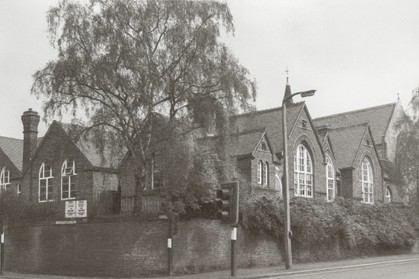
I started at Oxhey Infant School in 1958 and left in 1961 to go to Bushey Manor Junior School in London Road. Both schools have since been demolished and re-sited, and by a strange turn of events, my daughter Nikki taught at Oxhey Infant School (since renamed Bushey and Oxhey Infant School).
In 1958, Oxhey Infant School was situated high on the corner of London Road and Aldenham Road, where Faithfield’s Sheltered Housing is now.
Both schools were within walking distance of where I lived in Oxhey Avenue, and walk we did; no one drove their children to school in those days, not least because not many people had cars!
In the 1950s and 1960s there were few state or private pre-schools or nurseries, so like all children just turning 5 years old, my first day at school was also the first time I had been away from home for the day.
Mum didn’t work (outside the home) at this time (her work at local corner shops came later), so this was the first time I had been apart from her. Plus, I didn’t know anyone else who was starting at the school. Having said that, I don’t remember any tears or trauma at being left at the school gates (Mums didn’t enter the playground), and if there were any, I clearly soon got over them. I loved school!
Oxhey Infant School was an old Victorian building with outside toilets on the other side of the playground. The toilets were no more than smelly brick-built sheds, but I was used to that as we had an outside toilet at home.
The school itself had parquet flooring, and the lower parts of the walls were shiny glazed bricks with painted plaster above. The classrooms had wood stoves to heat them in the winter. All of this was no different from when Mum attended Oxhey Infant School four decades earlier!
I didn’t realise it at the time, but I was part of the “baby boomer” generation, and I think that class sizes were probably quite large.
There weren’t any classroom assistants, just the class teacher, and so behaviour management (discipline) was likely to be quite firm, but, as I remember it, in a kindly way.
In those days, teaching was very much by “chalk and talk”, where our teacher stood at the front of the class, and we sat in rows of proper desks facing the board.
I remember there being lots of reading, writing and arithmetic (The Three Rs) and learning things by rote, even in infant school.
I don’t ever remember learning to read, I just remember being able to read – mainly dog-eared Janet and John books and my favourite “The is the House that Jack Built.”
“This is the house that Jack built
This is the malt/That lay in the house that Jack built
This is the rat/That ate the malt
That lay in the house that Jack built
This is the cat/That chased the rat/That ate the malt
That lay in the house that Jack built.
This is the dog/That worried the cat That chased the rat/That ate the malt
That lay in the house that Jack built.”
And so on! That same sense of rhythm, repetition and simple joy carried over into my school years.
I don’t remember there being a school library, but there was a rickety book corner. We didn’t have book bags in those days or take books home – they stayed in the classroom. My Leaving Report graded me as B+ in Reading, Writing and Arithmetic, so I was clearly off to a good start.
It wasn’t all about “The Three Rs” though, and nature study was popular at Oxhey Infant School. I remember taking things in like leaves and seeds to put on to the “nature table”, but I never retained any knowledge about the names of trees, plants or birds, so that says something about the efficacy of that form of “Science” teaching! According to my Report I was, “An interested worker.”
We seemed to do a lot of making and painting at this time. I especially remember a lovely teacher called Miss Joseph, who was very keen on art and craft, and we made a little model village with her when I was probably about six. It obviously made an impression on me. According to my Report, “Art is very good.”
Apart from Miss Joseph, I remember a Miss Brinkworth, a Miss Marlow, and the headteacher, Miss Dyball. (I don’t know why Miss Dyball’s name should’ve stuck in my head, because I probably only saw her for assemblies!)
We used to “dance” to “Music and Movement” on the wireless (radio) in the school hall. Sometimes we were asked to imagine we were different animals or to stand still and look like a tree. I absolutely loved it! I don’t remember playing with bats, balls, or bean bags, or climbing on PE apparatus. I remember the class going out onto the playground and standing in rows and doing exercises which consisted of jumping up and down and swinging our arms around – a bit like calisthenics for children.
We didn’t have a PE kit in those days, so we just removed our outer clothes and did PE in our vests and knickers. There was a uniform – the girls had a brown skirt or pinafore dress, a yellow blouse and a brown cardigan, but it wasn’t compulsory, and I don’t remember wearing it.
Another wireless programme was, I think, called “Music Box” where we sang traditional folk songs such as “Oh, soldier, soldier, won’t you marry me” and “Michael Finnegan”. The lyrics were catchy, but when I look back now, I question the content and meaning of some of these old folk songs!
Religious Education consisted of Bible stories and singing hymns in assembly first thing in the morning, while a teacher played the piano. We finished assembly by saying prayers with our “Hands Together, Eyes Closed” and we soon learned “The Lord’s Prayer” off by heart.
Mid-morning we were given a 1/3-pint glass bottle of milk, (no snacks that I remember) which was always extremely cold in the winter and unappetisingly warm on hot summer days. We drank it anyway!
The playground at Oxhey Infant School was just that – an asphalt playground. There wasn’t a blade of grass, and I don’t remember any playground equipment, but we had a great time running around anyway. Being more-or-less an only child (because John and Jean were so much older than I was), I was quite shy, but nevertheless made lots of friends.
In those days all the children in our area were white British, and I clearly remember when a French girl, Patricia, joined our class, everyone wanted to play with her. She seemed very exotic!
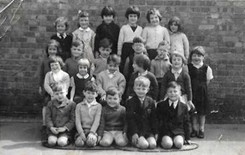
“Playdates” didn’t exist in those days, so unless your school friends lived nearby, and therefore you could “go out to play” with them, you didn’t see them except at school.
Friends’ names I remember from that time are Helen Selleck (from Silverdale Road), Penny Lock (from Wilcot Avenue), Margaret Cornish (from Elm Avenue), Angela Gover (from Grover Road) and Sheila Howells (from King Edward Road).
Then there were the children from The Royal Caledonian Boarding School (the “Caley Kids”), Katie Steele, Jennifer Gunn, Jackie Donovan, Beverley Gunn and Fiona McLaughlin. The Royal Caledonian School was on Aldenham Road, Bushey and was a boarding school for children whose Scots parents were in the Armed Forces.
Looking back now, it’s deeply upsetting to know what was happening behind the scenes. Many years later, serious allegations of sexual abuse at the Royal Caledonian School came to light. Several former staff members – including two housemasters – were convicted of abuse. Others were accused, but one died before he could be brought to justice, and the trial against the headteacher and his deputy collapsed. There were also reports of inappropriate relationships involving other staff, though not all led to charges.
In writing this memoir, I spoke with someone who was at school during that time. She told me the Royal Caledonian School was a deeply unhappy place and that the abuse was widespread. Many former pupils still struggle to speak about those years. As a child, I had no idea what those “Caley kids” were going through, and I feel such sadness now, knowing what they endured. Even as I write this in January 2025, Thames Valley Police are still appealing for information— a sign that this painful chapter remains open.
The Royal Caledonian School is now the Purcell School, a specialist boarding and day school for exceptionally gifted young musicians.
This was the era of the “Nitty Nora” school nurse, who made regular visits to check for headlice. We all lined up to be examined by Nitty Nora, who combed our hair with a nit comb to see if there was any infestation. We didn’t mind. I didn’t catch headlice as a child – that came later, when I was a teacher and a Mum myself! Nitty Nora also weighed and measured us and gave us regular eye and hearing tests, and there were visits from the school dentist. It was all part of school life, and we took it in our stride.
I was sad to leave Oxhey Infant School. My Leaving Report included, “We shall miss her help in many ways.” I missed them too. But not for long because I went to Bushey Manor Junior School – another lovely school where we were taught the “Three Rs” but where we also had heaps of hands-on learning.
At Bushey Manor we grew mustard and cress, painted murals, carded sheep’s wool, listened to a live pianist and stitched samplers on “Binca” fabric. It was creative, child-centred and joyful. It was the kind of learning I later embraced in my own teaching career.
Chapter 14: Bushey Manor Junior School
“Little darling, the smiles returning to their faces …” Here Comes the Sun (George Harrison)
“Macavity’s a Mystery Cat: he’s called the Hidden Paw
For he’s the master criminal who can defy the Law.
He’s the bafflement of Scotland Yard, the Flying Squad’s despair:
For when they reach the scene of crime—Macavity’s not there!
Macavity, Macavity, there’s no one like Macavity
He’s broken every human law, he breaks the law of gravity
His powers of levitation would make a fakir stare
And when you reach the scene of crime – Macavity’s not there!
You may seek him in the basement, you may look up in the air
But I tell you once and once again, Macavity’s not there!”
“The Mystery Cat” by T S Eliot
In 1961, I left Oxhey Infant School behind and moved up to Bushey Manor Junior School, just along London Road where Bushey Health Centre stands now. I loved it. In fact, I ended up being School Captain. David Gould was the boy School Captain, although we had absolutely nothing to do with each other. At ten and eleven we were already at the age where boys and girls played entirely separately from each other.
As far as I can remember, most of the children from Oxhey Infant School transferred to Bushey Manor, although a few may have gone to Watford Fields Junior School. This was the stage in my school career when I started to walk to and from school by myself – yes, from the age of seven. The roads were safer then and walking to school was quite normal. It was also an adventure: walking along the pavement and avoiding the cracks; walking along the tops of walls and running through the trees by the grassy area (Bushey Green?) that was next to the school and around the “tardis” (a police box). As an aside here, being a Daddy’s Girl, I can remember that I used to run home after school just so that I could wave goodbye to Dad before he set off for work when he was on this “twilight” shift. Sometimes I made it just in time, sometimes I didn’t!
Like Oxhey Infant School, Bushey Manor Junior School was a Victorian building, but this time it was on two floors. The younger Juniors’ classrooms were on the ground floor and the older Juniors’ classrooms were on the first floor, along with the Headmaster’s and Secretary’s offices (which was up another small set of stairs as I remember it). There was a prefab hut on the playground where we went for our school dinners. For some reason, girls from Victoria Secondary School in Addiscombe Road, Watford came to Bushey Manor for their domestic science (cooking) lessons. It was always a bit intimidating seeing those teenage girls sitting chatting and giggling on the playground!
Because I was that little bit older, I can remember more about the teachers at Bushey Manor. Mr Ruffett was the headteacher and the teachers I remember were Mrs Pope, Mrs Basnett, Mrs Alliker, Mr Perry, Mr Coleman and Mr Cliff. Mrs Basnett was a bit scary, and Mr Fox taught italic handwriting. Neat handwriting was seen as very important, and we practised it daily. I remember that Mr Fox sold Osmiroid italic fountain pens: this was the first time I experienced splotchy pages and inky fingers. He also had a slipper in his classroom for corporal punishment, but I don’t ever remember him using it. (Corporal punishment wasn’t prohibited in state schools until 1986.)
Looking back, I think it is significant that we had three male teachers (and a male headteacher). That was probably half of the teaching staff. This would be unusual in a Primary School nowadays, but I wonder if then it was because some of the men came into teaching from their time in the army. Don’t forget that the war had only finished about fifteen or so years earlier. All the teachers seemed to me to be old, but then, to a child, most adults seemed old!
Out of all my time at Bushey Manor, Mr Ruffett (the headteacher) and Mr Coleman were my favourites. Mr Coleman wrote and directed the Year 6 school play (except it wasn’t called Year 6 then, it was called Year 4 so I’ll call it that from now on), “A Christmas Carol” and I was the ghost of Christmas Present. My only line I remember is, “I am the Ghost of Christmas Present”.
Mr Coleman also organised some sort of poetry competition where we all had to learn a poem by heart. There was an outside invigilator or judge. I remember that a classmate, Eleanor Wheatley, rolled her “Rs” when she recited her poem and was asked by the invigilator why she had done it. I learned the poem “The Mystery Cat” by T S Eliot. I don’t know who won the competition; it wasn’t me. Perhaps it was Margaret Cornish, whose parents sent her to elocution lessons. It was all very enjoyable though, and I still remember some of the “Macavity” poem to this day.
As a little aside about Eleanor Wheatley, I remember going to her house once (don’t ask me why – maybe I’d been invited for tea). I think she lived somewhere in Villiers Road. What really stuck in my mind, though, wasn’t the visit itself – it was that one of the walls in her house was lined with LP records. Not just any records, either – they were all classical music. I’d never seen so many LPs in one place before, and certainly never any that weren’t pop or light entertainment. To me, it felt incredibly sophisticated – like stepping into another world!
When we were in Year 5 (our Year 3) we went on a five-day camping trip to Cuffley Camp, near Potters Bar – not very far away, but it seemed like a long way away to me then! I remember it all very fondly. All the different camps (or villages) had names, but unfortunately, I can’t remember what ours was called. I think it was the first one in from the car park. Some of the aspects that stick in my mind are filling our palliasses with straw; sleeping in a tent (of course); singing round the campfire; orienteering in the woods; bark-rubbing and the walk to the toilets and shower blocks. I remember Mum bought me a kit with a knife, fork and spoon that clipped together and an enamel plate and mug. I kept those for quite a long time afterwards. We had to write home, and we received letters – I remember receiving one from my Auntie Ann reminding me to dry between my toes. What a strange thing to remember!
We were “catered” for by going to a nearby dining area (it was open air as I remember it), but on one occasion we cooked sausages and marshmallows round the campfire. It was a very carefree “holiday” and a lot less “learning-focused” than it would be nowadays, thank goodness. I had a wonderful time, but the experience didn’t create a love of camping, because I have never been camping since!
When we were in Year 4 we went on another school “holiday” to Dinton House, Wiltshire. I remember Dinton as a huge squarish stately home with enormous round columns by the front door and vast parklands. The two things that most stick in my mind however, are first its huge sweeping staircase and, second, the ha-ha (a ditch which kept the deer out while allowing for unbroken views). I thought the ha-ha was very clever, but mainly I just liked the funny name!
While at Dinton we went on coach trips every day, and the places I remember going to were Stonehenge, Swanage, Lulworth Cove, Old Harry Rocks and Corfe Castle. I’m so glad that we went to Stonehenge because this was at a time when visitors could wander around the stones with no restrictions. I think we even sat on the stones to eat our picnics! Up close, the stones seemed awesome, whereas now that visitors must look from afar, they seem much less remarkable. Swanage was our trip to the seaside. I can remember the long promenade and digging on the sand. Either on this day or, more likely, on other days, we went to Lulworth Cove, Old Harry Rocks and Corfe Castle. Being young and naïve, I remember being disappointed that Corfe Castle was a ruin. The fact that it was over a thousand years old didn’t reduce my disappointment. I think the teachers should have managed our young expectations!
When we were in the top juniors we learned to play the recorder. I can remember that I was hopeless at it and used to “mime” playing as I couldn’t get the hang of reading music. I must have mimed quite successfully though, as I was part of a small group who occasionally played in assemblies! Regarding singing, the radio programme “Music Box” was replaced with “Singing Together”, and I remember triangles and tambourines were involved!
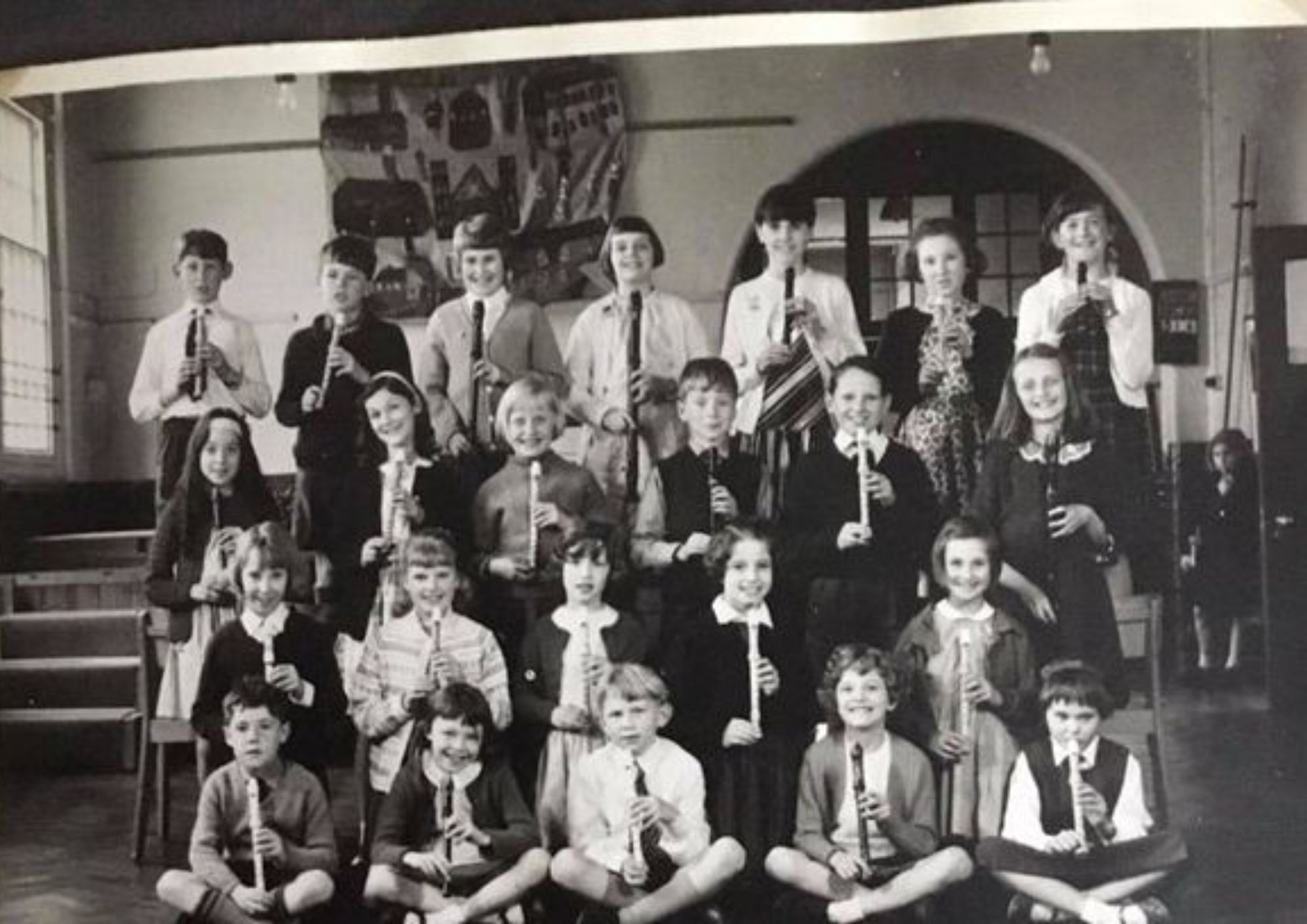
PE at Bushey Manor was much more varied because we had apparatus in the hall – climbing bars, benches, boxes and ropes etc. I greatly enjoyed it, but I fear I wasn’t very good at it, especially at climbing the ropes. But that didn’t matter! One thing that sticks in my mind is lying on the school floor to do exercises. I remember it because we weren’t on mats, and the hard floor hurt my bony spine.
I enjoyed being in the school netball team. Because I was tall for my age, I was chosen to play in the Goal Defence position, which suited me perfectly. I loved the physicality of it – jumping to intercept the ball and marking my opponent.
Again, being tall for my age, I was quite good at long jump and when I was in Year 4, I was chosen to represent the school in a Saturday inter-school competition. It was held just up the road from the school in the field area belonging to Bushey Day Nursery – which I think is now the site of Sacred Heart School. Unfortunately, I found the prospect of competing in front of a crowd overwhelming and chickened out, or to put it more precisely, I feigned illness so as not to have to go. What a shame Mum and Dad didn’t encourage me and how disappointed the school must have been with me. The things one remembers are often significant. When the time came, I always encouraged Tom and Nikki to “Have a go.” (Nikki will recall me chivvying her, every week for weeks on end, to go to The Pump House Children’s Theatre group when she’d rather not have. She enjoyed it in the end though!)
Going off on a bit of a tangent here, but in the late 1940s my brother John went to Bushey Day Nursery where my long jump event was held. I had vague memories of Jean and John talking about it, but I think it was demolished in the late 50s – possibly to make way for Sacred Heart School. I put out a request for information on a Bushey Facebook group and the replies were wonderfully evocative: “Can’t remember what it was called but I was there in the 40s can still remember the smell of the blankets and the camp beds we napped on.”; “like a corridor of rooms, single-storey, had a weird smell.” I prompted Jean about her recollection of Bushey Day Nursery, and she says she remembers going with Mum to collect John, once Mum was home from work and Jean was home from school (bearing in mind this was in the late 1940s, before I was born). Jean says she remembers “the smell of school – chalk, crayons and disinfectant.” A very helpful Facebook member searched the 1950s Kelly’s Directory and found: “Bushey Day Nursery (Hertfordshire County Council) (Mrs K M Wait, Matron) London Rd.”
The wonders of the internet – and the joy of shared memories – can bring long-forgotten places back to life. And judging by everyone’s recollections, one thing’s for sure: whatever else Bushey Day Nursery was, it definitely had a smell all its own!
At Bushey Manor, (just like Oxhey Infants) there wasn’t any grass for either outdoor play or PE lessons. I remember walking up that field behind Bushey Day Nursery for Sports Days (which is why I can visualise the long, single-story building of the Nursery). Parents were invited to watch our Sports Days, and it was always a special event in the summer term.
At Bushey Manor, I have vivid memories of country dancing. I can’t remember the names of all the dances, but a few have stuck in my mind: Circassian Circle, Dashing White Sergeant, Strip the Willow and Cumberland Square Eight. Great names aren’t they?! Just saying them makes me smile. We walked, marched, galloped and skipped around the hall in pairs to line dances and circle dances. We didn’t seem to be too embarrassed about holding hands with the boys. In one line dance I can remember, the teacher called out “Thread the needle!” and we’d all go, in our pairs, under an arch formed by one pair in the line. I can still hear her shouting “Do-si-do!” (or is it dosey doe?!) and “Heel and toe, and heel and toe!” – and off we’d bounce like spring lambs. It really was great fun.
An extension of our country dancing was dancing round the maypole—a special treat when we got older. Country dancing must have been on the mind of the architect when Bushey Manor was being built, because I remember a special hole in the hall floor where the maypole was fixed. We danced around the pole, boys in one direction and girls in the other direction, with ribbons, enthusiastically weaving under and over, making a plait pattern. Well, that was the idea, but it often ended up in one big tangle. We didn’t mind, but I’m sure the teacher found it frustrating!
On the rare occasions when we actually got it right, it looked quite spectacular with the ribbons braided beautifully around the pole—a proper moment of triumph for us and for the teacher!
When I was in Year 4, we went swimming, although I can’t for the life of me remember where we went. I think it must have been Watford Swimming Baths, and I suppose we went by coach, but the details elude me. I enjoyed swimming (don’t forget I used to go to Watford Swimming Baths with Angela and Sarah) and I was good at it. This was before the era when children went to private swimming lessons, so I’m glad Bushey Manor offered us the opportunity for proper lessons.
Overall, I must have been better than I thought at PE, because my Leaving Report read, “Keen on physical activities and has reached a high standard.” I’m impressed with myself!
Religious Education was very similar to that at Oxhey Infant School – Bible stories, prayers and singing hymns. Although it was daily, it was very light-touch. However, to this day I can still remember the words to many hymns that we sang at that time.
I think it was at Bushey Manor (but it could have been at Oxhey Infant School) that I first experienced the joy of being a “Monitor.” If something needed to be given out (pencils, books, etc.) everyone put their hands up to volunteer to be a Monitor. I was very quiet and responsible, so perhaps that is why I progressed from various Monitor jobs to School Captain (like Head Girl). As far as I can remember being School Captain didn’t mean I had any extra tasks or responsibilities, but it was a great privilege to have been chosen!
It is funny how things stuck in my mind, but I have a clear memory of a lesson about the moon and how it was covered in a thick layer of dust and if a spacecraft landed on it, it would sink! How wrong was that—the 1969 moon landing didn’t sink into a thick layer of moon dust!
I wrote in my chapter about Oxhey Infant School about the children from The Royal Caledonian School (the “Caley Kids”). I don’t know what the occasion was, but one day they came to Bushey Manor with a bagpipe player and treated us to a demonstration of Scottish Sword Dancing! They placed two swords on the floor in a cross shape and danced around and within its four quarters with their arms raised in the air! The girls were dressed in traditional green and red kilts, white socks, white blouses (and hats?). Their stamina and agility were amazing, and we were mesmerised and impressed!
The only thing I didn’t enjoy at Bushey Manor was the rote learning of times tables by chanting aloud in class. I don’t know if this was part of the reason I never took to maths, but chanting times tables always filled me with terror. I remember the feeling of doing it as if it were yesterday, never mind over 60 years ago. I think it was partly because I didn’t understand the purpose, application, or even the meaning of the words that I was repeating. Learning my times tables was the only time that Bushey Manor filled me with panic and deprived me of the joy of learning. But I forgive them!
Again, I was better than I thought at mathematics, because my Leaving Report read, “She has reached a high standard.” Why didn’t I realise this at the time!
I think that both Oxhey Infant School and Bushey Manor must have been quite progressive for their time, because as well as The Three Rs we spent a huge amount of time in what I’d now call very child-centred learning. We certainly learned to read, write and add up, but the curriculum, as I remember it, had a huge number of ‘experiences’, creativity and fun.
To put it simply, we did a lot of learning by doing. For example, we grew things like mustard and cress, we made things, we worked in groups, and we did cross-curricular topic work. I can remember a few examples.
One day, an outside organisation came in and set up an art exhibition in the school hall – I think they were prints of famous paintings. We were asked to walk around, have a good look, and choose our favourites, then say why we liked them. It felt very grown-up giving an opinion!
Then there was the time someone (a student teacher, maybe?) brought in some freshly shorn sheep’s wool. We washed it, carded it, and even had a go at spinning it. I can still remember the smell—very sheepy!
We also made a class mural of a nature scene, a huge collage that seemed to cover a whole wall. I remember thinking it was absolutely glorious —leaves, birds and flowers and so colourful.
On another occasion, a pianist visited and played classical music for us. I’d never heard anything like it – completely outside my everyday world – but I was completely captivated.
And then there was embroidery. We used “Binca” – that gridded cotton fabric with little holes – and learned stitches like running, cross, and whipped (the one that looked like a little snake curling along the fabric). If we got really good, we moved on to battlement and chain. I can’t remember whether I ever mastered more than that—possibly not—but I remember being very proud of whatever it was I stitched!
All the above examples of “learning by doing” were accompanied by appropriate teaching of not just The Three Rs, but also science, history, geography and art etc. It was all very hands-on. Great fun and great learning! I’m sure that a decade or two later, many of these approaches to teaching and learning (which I subsequently learned where probably influenced by the American philosopher and psychologist, John Dewey) are ones that I incorporated in my own teaching.
The 11+ exam still existed in the Watford area in my Junior School years, but the difference is that, at that time, it wasn’t a big deal in terms of preparation or implementation – certainly not at Bushey Manor or in my household anyway. In fact, it was so low-key that I don’t remember having taken it. The first I knew of it was when Mum and Dad received a letter saying that I had passed and had a place at Watford Grammar School for Girls. I later found out that only one other girl, Sheila Howells, had passed for Watford Girls’.
To my mind, Bushey Manor was a beacon of excellence in teaching and learning (luckily this was before the days of the National Curriculum and before Ofsted) and I loved my time at both schools. My Leaving Report read, “A very good year’s work. She has proved an excellent School Captain.” The saying is that schooldays are the best years of your life, and certainly, up to the age of eleven, mine absolutely were.
When, in 2004, I heard about the death of the headteacher, Ted Ruffett, I somehow found out where his daughter lived and sent her a condolence letter, which included:
” I wanted to write to … tell you what a deep, lasting and positive impression Mr Ruffett made on me. I am grateful to Mr Ruffett for instilling in me such a love of life and a love of learning. I am fortunate and proud to have been a pupil at Bushey Manor when he was Headteacher.
My time at Bushey Manor were some of the happiest days of my life. I still look back upon those Primary School years with fondness. I especially remember camping at Cuffley Camp and a residential trip to Dinton.
What a brief letter such as this cannot do is fully reflect the friendly and caring atmosphere that there was within Bushey Manor — a school where children always came first.”
That’s it for my time at Oxhey Infants and Bushey Manor Juniors – two magical places that gave me the best start in life.
Next stop: Christmas! I’ll take you from five to eleven with Father Christmas, pantomimes, Christmas decorations and Dad’s “secret” way of providing new potatoes at Christmas!
Chapter 15: Christmas
“So this is Christmas / And what have you done?” Happy Xmas (War Is Over) (John Lennon)
Christmases when I was growing up were very different from what they were for my children, and different again from what they are for my grandchildren. It was a very special time of the year, no doubt about that, but much less money was spent on big expensive presents, decorations and food – mainly because working-class families didn’t have much money to spare.
In addition, the “Christmas season” didn’t last as long: it usually only started in shops at the beginning of December, and then in earnest in homes a few days before Christmas. In my childhood, the Christmas season was rather short-lived. Working-class men worked long hours and didn’t finish early on Christmas Eve. Also, they went back to work after Boxing Day, so Christmas was only a two-day event. No long festive breaks, just a joyful, fleeting pause!
In this timeline (1958-1964), Jean and John were teenagers, so their interest in Christmas was different from mine. As I got older, I remember John’s girlfriend (and later wife) Barbara Barnes joining us for Christmas or Boxing Day tea. Jean and her husband, David Element, and their firstborn, Paul, also joined us.Plus, Dad’s Mum also came to our house on Christmas Day (Dad and his sister Ann took it in turns to ‘have’ my Nan at Christmas, although I think she once upset her daughter Ann by saying she preferred coming to our house!). So, at times, in our little terraced house, it was standing room only!
Let’s start with Father Christmas. I can remember Mum taking me to the grotto in the basement of Clements at the top end of Watford High Street. There was a short corridor decorated with Christmas trees and snow before meeting the great man himself (never “Santa” – he was always Father Christmas).
As an aside here, I had a memory of there being a mini zoo in the basement, complete with goats, a monkey and even a lion, but it seemed such a bizarre thing to have wild animals in a department store that I wasn’t sure if I had imagined it! I spoke with my sister Jean, and she confirmed that yes, there had been a little menagerie there and that my memory of the awful smell was accurate. Just to be sure, I checked the Watford Museum Facebook page.There was no mention of the zoo at Clements, but apparently the nearby Cawdells had an elephant! Such was the competition between the two rival stores.
Father Christmas also visited Cawdells – he was clearly a very busy man. I remember Father Christmas used to arrive at Cawdells by stagecoach. Imagine my surprise one day when I opened the “Nostalgia” page of the Watford Observer to see a photo from 1968 of Shirley Eaton (the actress who was painted gold in James Bond’s “Goldfinger”) greeting Father Christmas outside Cawdells, and whom should I spot in the crowd, looking over Shirley Eaton’s shoulder, but Mum!
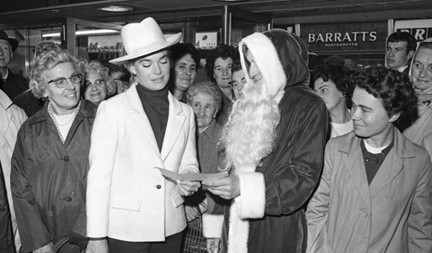
I can remember only going to two Christmas parties in this entire period – one was a Labour Party Christmas Party, and the other one was a Sun Printers Christmas Party. I think the Labour Party Christmas Party was held at the Town Hall.
I can remember going to Watford Palace Theatre to see the pantomimes. We used to go and sit in “the gods”. The gods were the cheapest place in the theatre, and were so-called because they were right at the top of the theatre – nearest to the heavens I suppose! There weren’t any seats as such; just wide steps to sit on, so it wasn’t very comfortable. I didn’t know it at the time, but the pantomimes were written and presented by Gilda and James Perry. James “Jimmy” Perry was the Palace Theatre’s “actor-manager” who later went on to become one half of the scriptwriters, with David Croft, for the popular television series “Dad’s Army”, as well as other sitcoms. I think this was the golden age of pantomime.
“Oh No It Wasn’t” “Oh Yes It Was!”
At school we started to learn and sing Christmas Carols. It’s true that music can bring back memories, and whenever I hear traditional Christmas Carols being sung, it whisks me straight back to my childhood. Children used to go carol singing in those days and, as I mentioned in an earlier chapter, Angela, Sarah and I used to go door-to-door carol singing. We loved it.
Mum always sent Christmas cards. At the time, postage was relatively cheap, and it was the only realistic means that ordinary people had to communicate. Plus, it was a status symbol to send and receive lots of Christmas cards. They formed part of the Christmas decorations, and I remember Mum hanging them on string around the front room walls, for everyone to see. Nowadays, the sending of Christmas cards is dying out, mainly because postage is so expensive, but also because many people send Christmas greetings by electronic means – Facebook, email and WhatsApp. Back then, they were a key part of the festive décor.
Christmas decorations were very different to those of today. Most houses had a Christmas tree – usually real, but as we entered the 60s artificial trees (PVC plastic) came into fashion. Mum thought the artificial tree was a godsend because it didn’t shed its needles! Our tree was always decorated with tinsel, baubles, foil-wrapped chocolates and fairy-lights from Woolworths, which were brought out from a big cardboard box year after year. At the top of the tree we put an angel or fairy – I’m not quite sure what she was supposed to be!
The Christmas tree lights were always a problem. When we got them out of the box where they had been stored, they inevitably didn’t work! The first thing Mum did was check the fuse in the plug. If this wasn’t the problem, she had to begin the laborious process of checking for an obviously broken bulb or trying to find out which bulb was loose by tightening it, or even worse, had “blown”, meaning the filament had parted. To do the latter, Mum had to swap the bulbs, one at a time, with a new one to see which one (or ones) had blown. Hopefully, by the end of all this, the string of lights would finally light up!
Our front room was decorated with two types of paper decorations – those bought from Woolworths (they sold everything!) and paper chains we made ourselves. Our decorations from Woolworths were twisted “garlands” made from crepe paper. We also had individual “concertina” type decorations that opened into bell shapes. Mum strung the decorations from the corners of the room, and they met in the middle of the ceiling at the lampshade. Sometimes we hung up balloons.
Not quite “decorations,” but worth a mention – we always had Christmas crackers on both Christmas Day and Boxing Day. Pulling them was a little ceremony in itself: the bang, the scramble for the tiny plastic toy, the groans at the corny jokes we all pretended we hadn’t heard before, and of course the flimsy paper hats that we dutifully wore throughout the meal. The hats never quite fitted anyone’s head properly – they either slid down over your eyes or tore before the turkey had even arrived. Looking back, it’s amazing how much joy could come from a cardboard tube stuffed with cheap plastic toys, bad jokes and paper hats!
In those days we made no effort to “theme” the tree or room decorations by colour or anything else—the more garish the better! The decorations were, as Mum would have said, “cheap and cheerful” – but we thought they were lovely!
Christmas food in the 1950s and early 1960s was simpler too, as there were no ready meals and very few “speciality” foods in the shops. When I was young, we never had a fridge, and I can remember Dad storing the turkey in their bedroom because it was the coldest place in the house! (Remember, no central heating.) Apart from the traditional roast turkey dinner (or was it really chicken as that was cheaper?) we had winter vegetables from Dad’s allotment: Brussel sprouts, cauliflower, parsnips, cabbage and potatoes (not carrots as Dad thought they should only be in stews!). There were no fancy imported vegetables.
Dad had a “secret” way of providing new potatoes at Christmas: he put some uncooked, unwashed new potatoes from his allotment into an old biscuit tin and filled it with silver sand (not sharp or builder’s sand as this is too salty). Next, he buried the tin about three feet (100 cm). When he dug it up on Christmas Eve we had perfect new potatoes for Christmas Day, fresh as the day Dad had first dug them up. Delicious!
Mum always made her own stuffing from Gibson’s sausage meat and onions. The stuffing was always heavy with onions as Dad loved them! To finish it all off there was bread sauce and OXO gravy. There was Christmas pudding, Christmas cake, mince pies and treats such as Cadbury Dairy Milk, Turkish Delights for Mum, dates and nuts (in their shells) and a special treat: tangerines! At Christmas, Dad always had a little bowl of walnuts and Brazil nuts next to his chair, with an ancient pair of nut crackers. Of course, other food included the ever-present trifle, tinned fruit and Carnation milk, and for Boxing Day, tinned ham, sausage rolls, strong cheese for Dad and of course, home-pickled onions for Dad!
I don’t remember Mum making her own Christmas puddings, but perhaps she did. What I do remember though, is her putting sixpences in it. It was good luck if anyone found a sixpence in their pudding. Of course, I always found one. I wonder how that happened?!
We children ate the same food as Mum and Dad – there was no thought of Mum cooking us anything different. “Take it or leave it” was the universal motto of the time! One thing I remember, and continued when I got married and had children, is Mum spreading the cost of Christmas by buying a few non-perishable food items every week and storing them away until the big day. It’s funny how some habits from childhood stay with you into adulthood.
It wasn’t usual for working-class families to keep alcohol in the house – that’s what pubs were for! However, at Christmas Mum might buy a bottle of sweet sherry or some beers for Dad as a special treat. In the 60s Mum might also have included a bottle of medium-sweet white wine such as Blue Nun.
Talking of pubs – Dad always went for a Christmas drink at 12:00pm and was always back at 1:30pm on the dot. That was the time that Mum served Christmas dinner. Not a minute earlier and not a minute later! After lunch, Dad went upstairs for a nap, Mum had a rest on the sofa in the front room and I watched television.
Christmas presents in those days all came from Father Christmas. Not from Mum, Dad, or siblings— and certainly not from aunts, uncles or grandparents. After all, Father Christmas was the one who brought everything, wasn’t he? In our house, I didn’t hang up a stocking – I left a pillowcase at the end of my bed. As soon as I woke up, I took the pillowcase through to Mum and Dad’s room and opened my presents while sitting with them in their bed. In those days, Father Christmas only brought two or three presents, so the unwrapping didn’t take long!
I have tried to remember some of the presents I received in this period (1958-1964) and this is all I could come up with: a John Bull printing kit, a doll and doll’s bath, a Give a Show Projector, a Post Office Set, a skipping rope, a yo-yo, a kaleidoscope, a toy harmonica, colouring books, crayons, a Rupert Annual, a string puppet and a Sindy doll. Bear in mind that this was over a six-year period! By today’s standards that would be a modest list, but then, it was normal. I don’t remember feeling deprived of anything.
There’s one Christmas present I do remember particularly well – not because it was big or expensive, but because it shows just how innocent (or maybe gullible!) we children were. But to explain it, I need to tell you the backstory first.
There was this strange little place in Watford called the Dolls’ Hospital, on the corner of Loates Lane and Queen’s Road. (I think there may have been another one opposite the Palace Theatre in Clarendon Road, but this story is about the Queen’s Road one.) I say “strange” because the window display was downright creepy – some dolls hanging by their necks, others lying lifelessly on the floor of the window display.
Once inside the shop, it was very claustrophobic with cheap magic tricks, stink bombs, caps for toy guns, as well as cigarettes and sweets. I think the actual “hospital” part – the doll repairs – was hidden away at the back.
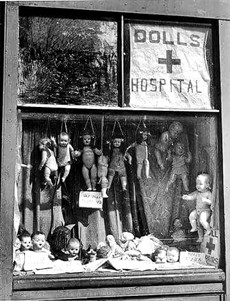
Apparently, the man who ran it was called Bert Neate, helped by someone named Nancy. I only know that now thanks to local Facebook groups. I’ve even found an old photo of the shop, shared online – I’m not sure who took it, but if you’re out there, thank you!
So much for the backstory. I remember going (I must have been about five) with Mum to the Dolls’ Hospital, and Mum producing a baby-sized porcelain doll which needed new hair. I asked whose doll was it, and Mum said, quite matter-of-factly that it was for another little girl that she knew. I accepted that answer and didn’t pester her with any more questions.
Fast forward to Christmas and, lo and behold, what should I find in my pillowcase but a porcelain doll with a lovely head of hair! What a delightful present! I did not put two and two together until years later. I now suspect that Mum had bought the doll at a jumble sale and took it to the Dolls’ Hospital to have her missing hair added.
I’ve since learned that she was what’s called a bisque doll – the kind people collect. Victorian, probably. She might be worth hundreds of pounds today. But like so many childhood treasures, she disappeared when I grew out of dolls. I wish I’d kept her. Not because of the value, but because of Mum’s love and quiet cleverness in providing me with that present.
We had an unusual Christmas present tradition in our house when, on Boxing Day, we had a “tree present.” Looking back, it was quite a bizarre thing to do – it was as if the tree was giving us a present! It was always just a small token gift. Something to look forward to on Boxing Day, I suppose. I have yet to meet anyone else who does that!
Christmas television was very limited, usually something like Billy Smart’s Circus and a Variety Show of some sort. Of course, we never watched The Queen’s Speech!
In the evening, it was a Christmas tradition that we played cards. We would play a card game called Newmarket. I think it was quite an obscure game as I have never met anyone else who has even heard of it!
Newmarket is a game of luck which revolves around betting money on four “horses” (the four Kings) and hoping that your horse comes in. I think the reason we played it was because it’s so simple that I could join in. The only issue that I had was being able to hold my cards in a fan shape, so I used my chair to lay out my hand of cards.
If Mum and Dad could see my cards, they pretended they couldn’t. I still remember the thrill of winning the few pennies we used to place bets!
Another strange little tradition in our house was indoor fireworks. Dad lit them in our front room grate on Christmas Day or Boxing Day evening. One I can remember was like a black snake: Dad lit a small blob of something, and it let out a growing column, or snake, of black ash. Another was called rip-rap and it zig-zagged lamely about the grate. Ice fountains produced a tiny column of coloured flames which soon fizzled out. Then there were sparklers, my favourites.
None of the indoor fireworks were very spectacular, but I enjoyed them anyway. However, I’m not sure how safe it was. Plus, the room smelled of smoke and cordite for a long time afterwards!
You can see from the above that Christmas in the late 1950s and early 1960s was short and simple. But it was like that for all working-class people. The men were back to work on 27 December, then we waited for Twelfth Night so that we could take the decorations down and pack them away until next year! As Paul McCartney later sang, we were:
“Simply having a wonderful Christmastime”
Wonderful Christmastime (Paul McCartney)
And that brings us to the end of my journey from 1958 to 1964, taking in men’s work and women’s work, health, indoor games and outdoor games, Sundays, outings, holidays, entertainment, music, fashion, television, school days and now Christmas.
But don’t go just yet – I’ve still got a few more bits and bobs from that era to share. The next, and final, chapter of my memoir is a mixed bag – the oddments, the memories that didn’t quite fit neatly into other chapters but are too precious to leave out. Think of this as the final rummage through the memory box—random, nostalgic, and sometimes unexpected.
Chapter 16: Tying up the Loose Ends
“There are places I’ll remember / All my life though some have changed …” In My Life (Lennon-McCartney)
“Up the wooden hill to Bedfordshire/Heading for the land of dreams
When I look back to those happy childhood days/Like yesterday it seems
It was grand my mother held my hand/Daddy was the old gee gee
The old wooden hill was the old wooden stairs
…
When the sun had gone to rest and I was tired of play/Dad would put me on his back and then to me he’d say
Up the wooden hill to Bedfordshire/Heading for the land of dreams
When I look back to those happy childhood days/Like yesterday it seems”
-Up the Wooden Hill to Bedfordshire. Sung by Vera Lynn
Looking back, my childhood was all about change – big, small, and everything in between. The 1950s and 1960s were a time of rapid transformation in just about every aspect of life: gender roles, healthcare, holidays, entertainment, music, fashion, television, education —you name it, it was evolving.
In this final chapter, some of the events I mention happened before I was born, but they shaped the world I grew up in. Some I remember vividly, others only vaguely, and a few I’ve pieced together through conversations with family and friends (and a little bit of help from Google!). There’s a mix of the minor and the momentous, but all of them played a part in shaping the person I became.
Let’s start with the lighter stuff—the memories that are small in scale but big in heart.
Minor Events: c.1953 – Up the Wooden Hill to Bedfordshire
I mentioned much earlier that I was a Daddy’s girl. I also mentioned that I had a very happy childhood. I think the song above sums up my childhood, and that’s why I started this chapter with “Up the Wooden Hill to Bedfordshire.”
Not only do the words convey the joy and security I felt with Mum and Dad, but they are also apt because, when Dad was carrying me up to bed, he’d say “Come on, Up the Wooden Hill to Bedfordshire.” It was just part of our nightly routine, but looking back, it was a moment of pure comfort. My childhood really was “happy, happy days for me.”
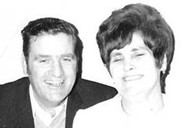
Minor Events: c. 1955 – Rag ‘n’ Bone Man
I clearly remember the Rag ‘n’ Bone Man. You could hear him before you saw him, as he, or the young lad who accompanied him, rang a hand bell to announce his imminent arrival. Not only that, but he’d call out “Rag ‘n’ bone, Rag ‘n’ bone.” It was an excitement of sorts hearing, and then seeing, his open-backed lorry (not a horse and cart in my era) coming down Oxhey Avenue. He collected any unwanted household items: old metal, paper and literally rags and bones – hence the name “Rag ‘n’ Bone Man”.
The Rag ‘n’ Bone Man made his money by selling his wares to George Ausden, the scrap dealer in Lower High Street, Watford. I fear the rag ‘n’ bone man must have had a meagre existence, surviving on the proceeds of what he collected each day.
Talking of George Ausden, Scrap Dealer, I have a very vivid memory of going with Mum as she pushed my old pram all the way from our house up to George Ausden’s. Mum must have decided to cut out the middleman and take our “rag and bones” direct to the scrap dealer herself to make a bit of cash to supplement the housekeeping Dad gave her. I remember the scrap dealer weighing Mum’s meagre offering and money changing hands.
To me, as a young child, it was an exciting morning out. Looking back now, however, it’s a very sad image, but times were hard in those days. Mum was a great one for ‘sayings’ and I’m sure her attitude would have been, “Needs must,” as in, “Needs must when the devil drives.”
Years later (1962-74), the BBC TV comedy “Steptoe and Son” reminded me of those George Ausden Scrap Dealer days. I wonder how accurate the portrayal was!
A quick check on the internet tells me that:
“Geo Ausden is a family business with a very proud history, having been one of the most long-standing businesses based in Watford for over 100 years. Five generations of the Ausden family have owned and operated the company since it was founded at the start of the 20th Century.”
I think Mum’s dealings with them were probably with the third generation, John and Peter Ausden. The fifth generation, Grant and Steve Ausden, currently run it, and gone are the days of rag and bone. Now they focus on steel fabrication and metal recycling services.
Minor Events: c. 1956/7 – Livestock market “behind the post office,” off Stones Alley, Market Street
I remember Mum used to take me, for a treat, to see the animals in the livestock market that was held every Tuesday morning “behind the post office” off Stones Alley, Market Street. As it was during the week, it must have been before I started school, so approximately 1956–57. It couldn’t have been earlier than that because then I wouldn’t have remembered it! Cows, sheep and pigs were held in little pens waiting to be sold. The livestock market was shut down in 1969, but of course by then I was sixteen and had long outgrown the thrill of looking at cows, sheep and pigs on a weekday morning!
Minor Events: c. 1958 – Mum: The Inventor of Latte Coffee?!
Did Mum invent the latte? Well … not technically – but she might as well have! Long before baristas were frothing milk, Mum was in the kitchen, boiling up a pan of milk and pouring in a spoonful of instant coffee. Voilà: milky coffee. No fancy names, no foam art, just good old-fashioned comfort in a cup. She didn’t call it a latte, she just called it what it was – “A milk and a dash”!
Minor Events: c. 1960 – Jumble Sales
Just a bit of background first: Mum’s brother, Wally, and his wife, Dora, had two children – Maureen and Philip. In 1960, Maureen was thirteen, Philip was seven, and I was six. Philip had been born with Down syndrome, and Wally and Dora became very involved with MENCAP, the charity that supports people with learning disabilities and their families. Back then, MENCAP owned The Table Hall on Pinner Road – the very same place that’s now Table Hall Nursery (funnily enough, where Eric and Rufus went!).
Wally and Dora organised fundraising jumble sales at Table Hall, and Mum was always on hand to help – sorting the jumble and selling on one of the stalls. If I’m honest, I think Mum also saw it as a golden opportunity to spot the best bargains before anyone else —she loved a rummage and definitely liked to have “first dibs”!
I went along with her, supposedly to help, although I suspect I was more of a hindrance than anything. Still, I loved being there.
I can still picture the trestle tables piled high with clothes and bric-a-brac – and I’ll never forget the smell of those jumble-sale days: a heady mix of mothballs, musty coats and old-fashioned woollens!
Minor Events: c. 1961 – My One and Only Birthday Party
Nowadays children’s parties are big business. Entertainment, themed decorations and party bags make for weeks of planning and great expense. But in the 1950s and 1960s they were a rare event indeed! In fact, I can only remember having one birthday party, and I can’t remember going to one at all. Don’t feel sad for me – it was a different time and birthday parties were just not a thing that working-class people did. I can’t remember much about my one and only birthday party, but I think I must have been about eight. It was in Mum and Dad’s front room in Oxhey Avenue, and as far as I recall, involved musical chairs, pass the parcel, sandwiches and jelly, but it really is a distant memory, and I may be imagining even those small details.
Minor Events: c. 1963 – A sad story with a happy ending…
Hertfordshire County Council ran a “Travelling Library” service, and once a week it parked almost opposite our house, near Heath Road. A little bus full of books, right on our doorstep. I only ever went once or twice – and to this day, I’m not quite sure why. Maybe it arrived during Mum’s afternoon nap, or maybe she worried about overdue fines. Or perhaps, more simply, borrowing books – even from a travelling library – just wasn’t part of Mum and Dad’s world. Reading, for them, belonged in other people’s lives.
Whatever the reason, I never really caught the reading bug as a child, because books just weren’t part of my everyday landscape. I still remember the moment at Watford Girls’ Grammar School when we were handed a well-meaning form to fill in, and one of the questions asked, “How many books are in your house?” That one was easy. I could count them on one hand – and they were all Dad’s gardening books! It was only later, overhearing my new classmates talking about their shelves of books at home, that I realised my answer had been the “wrong” one.
But here’s the happy ending: everything happens for a reason. When I became a mum – and later, a grandma – I made sure my own children and grandchildren were surrounded by books. I might not have grown up in a bookish household, but I made sure the next generations did. And that, in its own way, feels like a story worth telling.
Minor Events: c. 1963 – Mum and Dad’s Friends
Back then, people didn’t socialise in the same way that we do today. Part of the reason for that was that money was tight and there was little spare cash for socialising. Another reason was that, even if they had the money, there were fewer places for them to go. Lastly, people’s social circles were much smaller, and certainly for women, mainly consisted of other women they’d grown up with. Don’t forget, people tended to live in the same geographical area all their lives in the 1950s and 1960s and women tended to be “housewives”, so didn’t have workmates to get together with.
Mum’s main friends were Elsie Weatherly and Peggy Seaward who she’d grown up with, and who lived in cottages next to The Load of Hay by Watford Heath. Elsie had a daughter Caroline and Peggy had two children, Trevor and Jennie.
Mum and I occasionally visited Elsie and Peggy – they lived in the same row of cottages, with their tiny parents’ cottage in between. Whether their proximity made for a good nuclear family relationship or whether it was claustrophobic, I don’t know! Certainly, this sort of closeness would be very unusual nowadays.
I used to enjoy visiting Elsie and Peggy, although Elsie had quite a loud personality, and I was always a bit frightened of her. I remember that she was very talkative and used swear words quite liberally, which I found quite shocking. However, there were always biscuits, and Elsie had a pet monkey called Pepe who roamed about the cottage, so that made it all worthwhile.
Mum’s other main friend was Olive Ladmore, who lived in a tiny cottage in Heath Road, Oxhey. I think Olive may have been a bit younger than Mum. Olive had two sons, Michael and David. Michael was in my class at Oxhey Infant School and Bushey Manor Junior School. David was a little younger. Olive’s husband Bill was a survivor and former prisoner of war (POW) who had been held by the Japanese during World War II, and I think he got a small extra war pension because of that.
Olive was a collector for Littlewoods Football Pools, which meant that, once a week, she called at our house to collect the payment for Dad’s completed football coupon. For this, Olive got a percentage of her takings. “Doing the pools” was a big thing in those days, equal to doing the lottery nowadays. I’m not aware that Dad ever won anything. Two memories about Olive, when she came to collect the pools money, are that she suffered from chilblains, and that she always wore leather gloves. I can clearly remember her coming into our front room, sitting on the sofa with Mum, and removing her gloves. Isn’t it strange how some memories stick in your mind? I can visualise it now, over six decades later, and often think about Olive when I’m putting on my gloves.
Mum rarely went out in the evenings, but her one exception was going to play Bingo once a week with Olive Ladmore. In this they were joined by Peggy Woodward who also lived in Heath Road. I don’t know where they went for this, but Jean says they went to the Gasworks Social Club in Lower High Street (near where the Gasometer used to be). However, after a while Mum’s interest in Bingo, and going out in general, began to wane, and she stopped her weekly evening jaunts.
Dad’s social life mostly revolved around the pub. His friends were his Saturday and Sunday lunchtime drinking, dominoes and cribbage mates. He never went to the pub during the week. Dad frequented several local pubs at different times during my childhood, changing venues when either the landlord changed and he and his mates didn’t like the new one, or when they found out that the price of beer in another local pub was cheaper.
Dad was a creature of habit and always left home for the pub just before 12 o’clock ready for opening time and returned at 1:30, ready for lunch (or as we called it then, “dinner”). Because Dad’s drinking mates were limited to meeting them at the pub, I never got to know them. The only name that rings a bell is Ernie Ridout, who lived near us in Grover Road and had an allotment near Dad’s. Years later, Ernie’s son Ian (who was closer in age to Jean than to me) emigrated to Texas, USA and became a staunch Trump MAGA (Make America Great Again) fanatic. In the 2020s, Ian “Friended” me on Facebook and we communicated for a while, but we had very different political views, and in the end, he blocked me!
At one time Dad discovered that the beer at the Conservative Club in Oxhey was cheaper and so he transferred his allegiance there. A Labour voter all his life, he kept quiet about it at the Conservative Club! He also started visiting the British Legion and made a firm friend called Bill King, or “Duke” as Dad called him. Years later Dad and Duke went on a couple of European holidays together, visiting their old wartime haunts. I’m sure the holidays also involved a lot of drinking!
I’ll never forget Dad telling me about the day Duke was tragically killed in a road traffic accident. It was a Saturday and Dad was at the British Legion waiting for Duke. Duke’s children were so kind – they went up to the Legion to tell Dad and to raise a glass in Duke’s memory. The Legion flew the flag at half-mast that day in Duke’s honour.
Once Dad had a car, sometimes Mum and Dad went for a Saturday evening drive to a local pub (no drinking and driving laws in those days!). I was taken with them, but I’d be left in the car to get bored with a bottle of orange juice and a bag of crisps. Dad drank bitter beer and I think Mum drank a sweet martini and lemonade or a Dubonnet (Mum wasn’t a great drinker.)
On one of those Saturday pub outings, Mum and Dad got chatting to two other couples: Marjorie (or Marge, as everyone called her) and Jack Woodward, and Freda and Reg Saphin. Over time, the six of them started meeting up regularly – usually at different local pubs on a Saturday night. The evening often ended back at our house for a nightcap.
I think they may have shared the driving, because I can remember Dad joking about Jack’s poor driving skills and his hopeless sense of direction. Dad had been a lorry driver for a living and he considered his own driving abilities to be excellent and he knew his way around like the back of his hand.
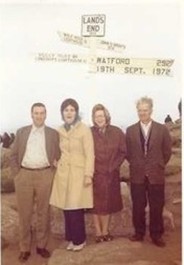
As the years went on, Mum and Dad saw more of Marge and Jack in particular. I’ve got a photo of the four of them taken at Land’s End, dated 19 September 1972 – I was almost 19 at the time. They’re standing in front of the famous signpost that reads “Watford 292 miles.” Mum and Marge are both wearing headscarves, the kind so many women wore in those days, and Dad and Jack are looking very smart in their sports jackets. All four of them are wearing proper shoes – not a trainer in sight! Casualwear hadn’t quite taken hold yet.
Minor Events: c. 1964 – My brother John’s car
I must quickly mention this here as, in retrospect, it is quite amusing. By about 1964, my brother John, who was nine years older than me, had proudly bought himself a second-hand car, a black Ford Anglia, complete with a running board. Very posh. One day, John parked the car outside our house and, in a moment of forgetfulness, forgot to put the handbrake on. Well, you can imagine what happened next!
Luckily for him, Oxhey Avenue only had the gentlest of slopes, so the car didn’t exactly go hurtling off at breakneck speed. Cue John, suddenly realising what was happening, sprinting down the road after it, leaping onto the running board like something out of an action film, flinging open the door, and yanking up the handbrake just in time. Crisis averted! We laugh about it now, but at the time it was all very dramatic!
Minor Events: 1964 – Spot the Ball
The Watford Observer used to run a “Spot the Ball” competition – a regular bit of fun where readers studied a photo from a football match, except the ball had been removed. The challenge? To mark where you thought the ball was. If one of your crosses landed closest to the actual position of the ball, you won the prize. Mum entered every week, carefully studying the players’ eyes and angles. And then, in December 1964, she won. Not just a little prize, either – a whopping £125, which would be worth over £2,000 today. It was the perfect early Christmas present!
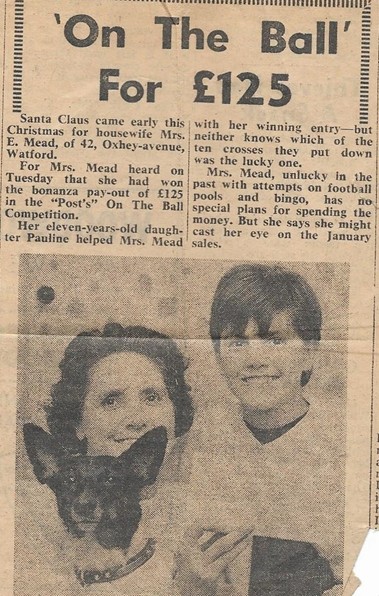
The Watford Observer photographer even came to our house to take a picture of the winning moment. There we were – Mum, me and our dog Judy – smiling in the front room, immortalised on the front page. Mum, modest as ever, looked a bit embarrassed by the fuss, but I was thrilled. Judy looked unimpressed, but then she never really got the hang of football.
Minor Events: 1965 – My American Friend
Strictly speaking, this event falls just outside the main timeline of my memoir, but it’s such a vivid memory I can’t leave it out. It was the summer of 1965, and something quite out of the ordinary happened in our quiet little corner of Oxhey Avenue—some American relatives came to stay with a family who lived opposite us. One of them was a girl named Laura, about my age, and we quickly became firm friends during the school holidays.
Laura came from Detroit, Michigan – a name that, to me, sounded impossibly glamorous. I had no idea where Detroit actually was, and it might as well have been a million miles away. I imagined skyscrapers, limousines, and movie stars on every corner. Just the fact that Laura and her family had crossed the Atlantic to come here was enough to make her seem very special in my eyes.
I remember being completely in awe of Laura’s Dad – an American policeman, no less! He seemed enormous to me, with a booming voice. A gentle giant.
It was like a little summer holiday friendship, intense, exciting and fleeting. We spent weeks playing together, and then, just like that, Laura and her family were gone. Life moved on. No email, no mobile phones, no way of keeping in touch.
And then, like something out of a film, we reconnected more than fifty years later, thanks to the magic of the internet and Facebook groups like Watford Memories and History. In 2017, we exchanged messages, swapped stories, and shared memories of that one golden summer. Just goes to show – some friendships might be brief, but they leave a lasting glow.
Minor Events: c. 1966 – My first taste of “the world of work” Again, this falls just outside the scope of this memoir, but it’s too good not to include. My first two forays into the world of work were (drumroll, please) … delivering the Evening Echo and washing up in someone’s kitchen! Glamorous, right?
Mum and Dad (especially Dad) were great believers in the idea that, “Hard work never hurt anyone.” Combine that with the fact that they didn’t have any extra cash to give me as pocket money, and the message was clear enough: if I wanted my own money, I’d have to earn it myself.
I can’t exactly remember when I started delivering the Evening Echo, but I’d have been about thirteen years old. It was my first taste of paid work, and I didn’t enjoy it! The big canvas bag of newspapers was ridiculously heavy and trudging up Oxhey Avenue in all weathers was no fun at all. I have vivid memories of being cold, wet and utterly miserable. And the letterboxes! Why on earth were they all such awkward shapes and sizes? The worst ones had vertical slots with fierce springs that made getting the newspaper through a real battle. The ones positioned low down, practically at ground level, were just as bad.
Then there were the dogs. One in particular, in Lime Close, used to terrify me. It would launch itself at the letterbox, snarling, and pull the newspaper through whilst I was delivering it. I wonder if that’s where my dislike of dogs started!
Although I can’t remember how much I got paid, I do remember that it didn’t seem worth it! My dear Mum even accompanied me on some evenings as the nights started to get darker, and I don’t think she was too impressed either. With a sigh of relief, when the cold, dark winter nights arrived, my first taste of the world of work ended.
But I wasn’t off the hook just yet! Mum had obviously decided I needed a more civilised form of employment, so before long, I found myself as the sole washer-upper in a private house in Upper Paddock Road. Compared to newspaper deliveries, this job had two major advantages: it was indoors, and it was on Saturday mornings instead of early evenings. So far, so good.
The downside? The family who lived in the house seemed to use every single item in their kitchen on the Friday night and just leave it all piled up for me to deal with. To my young eyes, the sheer number of caked-on crockery, cutlery, glasses, pots and pans was overwhelming. Where on earth was I supposed to start?! Somehow, I devised a system and powered through. By the end of the morning, everything was washed, dried and put away—without the luxury of rubber gloves, I might add! I can’t remember how long I stuck with that job – probably until about 1967, when I turned fourteen and could finally get a job as a “Saturday Girl” in Watford. But since 1967 is beyond the scope of this memoir, I’ll leave it there!
Momentous Events: 1952 – King George VI Dies, Queen Elizabeth II’s Reign Begins
King George VI died in February 1952, and his daughter, Elizabeth, became Queen – a full 22 months before I was even born. So, although I wasn’t around for the Coronation in June 1953, it still felt like part of the backdrop to my childhood.
I grew up knowing Elizabeth II as the Queen. She was just always there – on our coins, on the stamps, on the telly at Christmas (although we never actually watched The Queen’s Speech!). She was part of the furniture of British life, and her face became as familiar to me as those of my favourite teachers or television presenters. She wasn’t someone I ever felt especially connected to, and I’ve never been a Monarchist, but her reign spanned my entire life, right up until 2022—and that’s no small thing.
Even though I missed the Coronation itself, my older siblings were right in the thick of it. Jean (aged 12) and John (aged 8) happened to be staying in Dewsbury, Yorkshire at the time, with Mum’s brother Mac (Malcolm), his wife Lil, and their daughters Valerie and Angela. Their daughter Diane hadn’t yet been born.
Jean still remembers that Valerie lent her a white dress with a red sash for the local Coronation party. The children were all given souvenir pencils and commemorative glasses – Jean’s glass is still intact over seventy years later! The pencil, unsurprisingly, hasn’t survived.
I’ve always liked that story. It’s such a snapshot of the time—borrowing a dress, going to a hall filled with other excited children, being handed a small glass and a pencil as keepsakes. No social media, no selfies, no grand commemorative plates. Just simple things, given with pride and treasured.
Even though I wasn’t born when Elizabeth took the throne, I do remember watching the silver, golden and platinum jubilees over the years and thinking how much the world had changed since that day in 1953. Her reign really did mark the end of one era and the beginning of another – and I, along with the rest of the country, grew up in the middle of it all.
Momentous Events: 1954 – The End of Rationing
Rationing officially ended in July 1954 – I was just over six months old at the time, so of course I didn’t have a clue what was going on. But even though I don’t remember it myself, I grew up in a house where the memories of wartime rationing still lingered in the kitchen cupboards, shopping habits and Mum’s way of cooking.
Years later, I remember Mum telling me how thrilled she was when rationing finally ended. Meat was the last thing to come off the ration books, and for Mum, that was the moment she felt truly free of the restrictions of the war years. She’d lived through it all – powdered egg, dried milk, queuing for hours, making do and mending – and now, at last, she could just walk into a shop and buy what she needed. No more books, no more coupons. She said she tore up her ration book with great satisfaction and flung the pieces into the bin with a big smile on her face.
Even when I was little, the legacy of rationing still shaped how we lived. Mum wasted nothing. She saved bits of string, reused foil, washed and reused plastic food bags and kept the fridge bare because, for so long, there hadn’t been a fridge! Leftovers were never thrown away, and even as life slowly became more comfortable, I think that wartime mindset stayed with Mum and Dad—and probably rubbed off a bit on me too. (I remember Dad’s “siege cupboard” which was stocked with tins of soup, vegetables and fruit etc.— just in case it was needed. When Dad died, the “siege cupboard” was still full, ready for any emergency.)
The end of rationing might not have registered in my baby brain at the time, but I can still picture Mum’s face when she talked about it years later – a mix of pride, relief and joy. It was a turning point for her generation, and although I was too young to remember it, I feel like I inherited the sense of just how much it meant.
Momentous Events: 1955 – Mary Quant Opens ‘Bazaar’ in Chelsea
I had no idea that Mary Quant opened her very first shop – ‘Bazaar’ on the King’s Road – as far back as 1955. I’d have been just over one year old, so of course it didn’t mean a thing to me at the time. But fast forward a decade, and oh, how her influence took hold!
By the late 1960s, I was completely obsessed with Mary Quant-style fashion – not the real deal, mind you (we couldn’t afford that!) – but the high street look-alikes that mimicked her bold, swinging style. Mini skirts, shift dresses, Peter Pan collars, coloured tights … I loved it all. Getting dressed up felt like being part of something new and exciting altogether — a proper break from the past. Gone were the stiff petticoats and sensible shoes of earlier years. This was fun, fresh and a little bit daring — and I lapped it up.
In 2020, I visited the Mary Quant exhibition at the V&A, and honestly, it was like someone had opened a door straight back into my teenage years. The colours and the shapes brought it all rushing back. I left the exhibition with a huge smile on my face, feeling like the teenage me was still in there somewhere – just in slightly more sensible shoes!
Momentous Events: 1956 – Elvis Presley Hits the UK Charts Elvis burst onto the UK music scene in 1956 with Heartbreak Hotel, shaking things up in a way no one had seen before. At the time, I was only two, so he completely passed me by — but not my older siblings, Jean and John. I remember hearing his name floating around in our house as they started to pay attention to this new American singer with the slicked-back hair, wiggly hips and that deep, velvety voice.
Back then, Elvis felt like part of their world – not mine. But as I got older, I began to realise just how much he’d changed the musical landscape. He didn’t just bring rock and roll to life—he lit the fuse. He made music exciting. Dangerous, even. And although I wasn’t dancing to Hound Dog in my early childhood, by the time Beatlemania hit a few years later, I was ready. I’d been primed, even if I hadn’t realised it at the time. Looking back now, I can see that Elvis kicked open the door — and The Beatles (and the rest of us) charged right through it.
Momentous Events: 1958 – ‘A Bear Called Paddington’ is Published
This one’s especially for my grandchildren — Eric, Rufus, Clara, Grace and Mabel— who absolutely adore Paddington Bear. It’s hard to believe that the little bear from Darkest Peru first appeared in 1958, just as I was toddling around in my knitted cardigans and Liberty bodices. I didn’t read the Paddington books as a child but he was always there in the background of our culture. A polite little bear with a duffle coat, a battered suitcase and an endless supply of marmalade sandwiches. It’s only been in recent years that I’ve fully come to appreciate his charm.
Who’d have thought that the bear Michael Bond first imagined over 60 years ago would go on to become a global superstar – with not just books and toys, but blockbuster films in 2014, 2017 and in 2024? Watching the grandchildren laugh at his misadventures feels like closing a lovely generational loop.
Momentous Events: 1961 – The First Man in Space
I vaguely remember the buzz about Yuri Gagarin becoming the first human in space. It was all over the news in 1961, but I was only eight, and, truth be told, far more interested in skipping ropes and running about with Angela and Sarah than I was in space travel. Rockets and cosmonauts just didn’t capture my imagination at that age – not when there were camps to make and chalk hopscotches to draw!
It wasn’t until 1969, when I was a bit older, that space really caught my attention. By then, the moon landing was big news – the kind you couldn’t ignore. I’ll never forget watching Neil Armstrong step onto the lunar surface, grainy black-and-white pictures on the telly, and Dad muttering something about it being a waste of money. But I knew, even then, that I was witnessing history being made.
Yuri Gagarin may have been first, but it was that moon landing that lit up my young mind and made me realise just how much the world was changing – and how exciting it was to be growing up right in the middle of it.
Momentous Events: 1961 – Birth Control Pill
The arrival of the birth control pill in 1961 completely passed me by – I was only eight, after all, and still playing with my skipping rope and reading Janet and John. The whole idea of “family planning” meant nothing to me back then—I probably thought the stork still had something to do with it!
But looking back now, I can see what a huge moment it was. The pill quietly started a social revolution that shaped women’s lives – including mine – for decades to come. It gave women choices and freedom they’d never had before. At the time, though, I was far too busy climbing trees and making daisy chains to notice a revolution was happening right under my nose.
Momentous Events: c. 1962 – London Smog
I was nine when the London Smog rolled in, and even though we were a good eighteen miles from Marble Arch, I remember it like it was yesterday. That thick, yellowy-grey fog wrapped itself around everything, and I can still picture myself trudging to school with a scarf pulled tightly round my mouth, barely able to see more than a few steps ahead. It was what everyone called “a real pea-souper” – the kind that swallowed up cars, lamp posts, and even the people walking right in front of you.
It wasn’t just the visibility – the smell was awful too. It reeked of smoke and sulphur, and it clung to your clothes and your hair. I later learned in science lessons that it was sulphur dioxide causing all the damage, but at the time it just stank. The news was full of grim stories about people falling ill, and even dying, because of it.
Afterwards, my Auntie Anne and Uncle Don in Hemel Hempstead got really strict about only burning smokeless coke. But Dad? He still burned anything. I think the dangers of smog passed him by, but for the rest of us, that eerie, choking fog left a lasting impression.
Momentous Events: 1962 – The Beatles release ‘Love Me Do’ Now this was the moment that changed everything. I was nine years old when “Love Me Do” hit the airwaves in 1962 – and even though I didn’t quite realise it then, it was the start of something huge. By the time I turned sixteen in 1969, The Beatles had taken over the world, and I’d grown up with their music as the soundtrack to my childhood and early teens. Talk about perfect timing!
It goes without saying that I was always a Beatles girl. In the great Beatles vs. Stones debate, there was no contest for me—the Beatles were cheeky but wholesome. The Rolling Stones just seemed too wild and dangerous for little me! While Jean and John were rocking out to Elvis and Buddy Holly, I had my heart firmly set on those four lads from Liverpool.
Years later, in the 1980s and 1990s, my first husband Gerald and I found ourselves — quite by chance — providing typesetting and artwork for Club Sandwich, Paul McCartney’s official fan magazine. It was overseen by Paul and Linda McCartney themselves, though we never met them directly (everything was handled, and fiercely protected, by the designer, Roger Huggett). Even so, it felt a bit surreal to be involved in something connected to one of my childhood heroes!
And finally, after all those years of singing along to Yesterday and Hey Jude, I got to see Paul McCartney live – not once, but twice – at the O2 Arena, first in 2015 and then again in 2025. He was 82 by then, but honestly, you’d never have known. He played for nearly three hours straight, no fuss, no frills, just pure magic. A lifetime later, and he was still the Beatle to me. Absolutely unforgettable.
Momentous Events: 1962/63 – The Big Freeze
Now this one’s etched into my memory like a snowflake on a windowpane. The winter of 1962/63 – famously known as The Big Freeze – was like something out of a storybook.
Temperatures dropped to a bone-chilling -16°C in the South East, and snow blanketed the ground for over 60 days. Imagine that! Even parts of the sea froze. It was absolutely relentless, and for many, it must have been a miserable time.
But for us children? It was pure magic.
I was nine, and to me, it was the most exciting winter of my life. My friends Sarah, Angela and I bundled ourselves up in coats, scarves, woolly hats and mittens, and headed up to Watford Heath, where the deep snow had turned into a frozen wonderland. I remember crunching across the top of the snow without sinking – it had frozen so solid we could walk across it like a proper ice crust. It felt like walking on a frozen planet!
We built snowmen, had snowball fights, and slid along pavements in our wellies. The cold nipped at our fingers and toes, but we didn’t care – we were too busy making memories.
Looking back, I realise how tough that winter must have been for the grown-ups, with frozen pipes, icy roads and the daily grind made even harder than usual. But as a child, it felt like the world had been transformed into a sparkling, snow-covered playground just for us.
I honestly don’t think we’ll ever see another winter like it – not with climate change doing its bit. But oh, what a winter it was. The best one ever.
Momentous Events: 1963 – The Great Train Robbery
I was only ten when The Great Train Robbery hit the headlines, but even at that age, I knew it was something big. The news was full of it – £2.6 million stolen from a Royal Mail train travelling from Glasgow to London (which would be around £69 million today!). It felt like something out of a film, not real life.
Dad, of course, had very strong opinions. He didn’t buy into the idea of “glamorous gangsters” for a second. While some people seemed fascinated by the robbers, especially Ronnie Biggs with all his dramatic escapes and interviews from abroad, Dad wasn’t having any of it. “They’re not heroes,” he’d say. “They’re criminals.” He had a deep sympathy for the train driver, Jack Mills, who was badly injured during the robbery – that part always stuck with Dad. He hated how some of the gang ended up with a kind of celebrity status.
Over the years, the story of the heist has been told again and again – in books, films and endless documentaries. I think it’s fair to say The Great Train Robbery became part of British folklore. But in our house, it wasn’t a thrilling caper or a tale of daring rogues. It was a violent crime, plain and simple.
Momentous Events: 1963 – The Assassination of John F Kennedy I was only ten, but I knew something huge had happened the day President John F Kennedy was shot. Even from across the Atlantic, it felt like the world had suddenly stopped turning. I remember seeing the black-and-white footage on our tiny TV—Jackie Kennedy in her pillbox hat, cradling her husband as the motorcade sped away. That haunting image of her holding him has stayed with me ever since.
At the time, I didn’t really understand the political weight of it all – I just knew everyone, even the adults around me, looked shocked. You could feel it in the air, that strange, heavy silence when something terrible happens.
Of course, as I got older, I read more about what actually happened: how a policeman stopped Lee Harvey Oswald, thinking he matched the description of the assassin, and Oswald shot him dead. Then, how Oswald was arrested for JFK’s murder—only to be shot himself, live on TV, just two days later by Jack Ruby, a nightclub owner. It all sounded like a thriller – except it was real life.
Even now, the conspiracy theories swirl. Was Oswald really acting alone? Was it the Mafia? The CIA? The Russians? We may never know. But one thing’s certain – for a little girl in a quiet corner of Oxhey, it was the first time I realised just how suddenly the world could change.
Momentous Events: 1964 – BIBA Opens in London
BIBA opened in 1964 when I was just eleven, so it wasn’t quite on my radar at the time – but fast-forward a few years, and teenage me was absolutely swept up in the magic of it. By the time I got to visit the iconic boutique in Kensington during the late 60s and early 70s, it felt like walking into another world. BIBA wasn’t just a shop—it was an experience.
I remember stepping inside and being completely mesmerised. It was dark and moody, with loud pop music thudding through the speakers and shop assistants who looked like they’d just stepped off a fashion shoot. Everything felt mysterious and glamorous – nothing like the bright, sensible shops I was used to in Watford! The clothes were dreamy – floaty and bohemian, all in earthy colours like plum, mustard and deep olive.
I wish I could remember what I actually bought – probably just an accessory or two, or maybe something from the BIBA mail-order catalogue. Whatever I had from there is long gone now, but oh, if only I’d held on to it! Today, those pieces would be worth a small fortune – and more importantly, they’d be a little slice of my youth in fabric form.
BIBA was bold, theatrical and wonderfully rebellious – it captured the spirit of the era perfectly. And for a teenage girl finding her own style in the middle of the Swinging Sixties, it was pure magic.
Momentous Events: 1964 – The Swinging Sixties
The Swinging Sixties started swinging in 1964, the final year of this chapter of my life – and what an incredible time to be young! Everything seemed to shift almost overnight: the music, the fashion, the energy. London was at the heart of it all, and although I was only eleven, I could feel the buzz in the air!
By the time I hit my teenage years, I’d had a taste of it firsthand. A trip to Carnaby Street was like stepping into another world – miniskirts, Mary Quant, loud pop music, bold prints, and colours that seemed to shout rather than whisper. It was vibrant, chaotic, and absolutely thrilling.
The Beatles were leading the charge, of course, followed closely by The Rolling Stones, The Who, The Kinks and The Tremeloes. Pirate radio stations like Radio Caroline blasted their music from offshore, as if defying the adults.
Attitudes were changing. You could feel it everywhere – in the music, in the fashion, even in the way people spoke. The Mods and Rockers were making headlines for their seaside clashes, and Twiggy, all eyes and legs, became the face of the era.
Incidentally, in 2023, my husband David and I went with our friends, Jacky and Pete Martin, to see Close-Up: The Twiggy Musical at the Mercier Chocolate Theatre in London. It was like a trip down Memory Lane—and who should be sitting in the audience, not just Twiggy herself, but also Ronnie Wood from the Rolling Stones!
Even though I was still on the edge of it all in 1964, I knew something big was happening. It felt like a door had swung wide open, and on the other side was colour, freedom, excitement – and the future.
Momentous Events: 1964—Beatlemania Takes America by Storm And so, my roundup ends in 1964, with The Beatles stepping off the plane at JFK Airport and into the hearts of America.
Thousands of screaming fans greeted them, and within days, Beatlemania had well and truly crossed the Atlantic.
I remember feeling a strange mix of pride and protectiveness. On the one hand, it was thrilling to see them conquer the world.
But on the other hand? They were our Beatles! We’d had them first – those cheeky lads from Liverpool – and now the Americans were claiming them as their own.
I wasn’t quite ready to share.
Mum and Dad, of course, didn’t get it at all. Dad, in particular, thought it was all ridiculous. He’d mutter things like, “When are they going to get a proper haircut?”
Little did any of us know then just how iconic The Beatles would become, or how much their music would mean to so many generations.
But for me, a wide-eyed eleven-year-old girl from Oxhey, they already felt like something special – like the world was shifting ever so slightly, and I was lucky enough to be along for the ride.
The End
So, there you have it – my childhood years, wrapped up in all their working-class, 1950s and 1960s infused, Beatles soundtracked glory. It really was a magical time to grow up. We had freedom; we made our own fun. We didn’t have much, but we never felt like we were missing out. Life was simpler, and the world seemed full of endless possibilities.
Looking back, I feel incredibly lucky to have grown up when I did. The 1950s and 1960s shaped me – the music, the fashion, the changing world. And through it all, family, friends, and the everyday moments of joy made it special. We didn’t have smartphones, social media, or 24-hour TV, but we had laughter, adventure and the thrill of a Saturday trip to Watford.
As Baroness Floella Benjamin once said:
“Childhood? It lasts a lifetime.”
And I believe she’s right. Those early years live on in our hearts – shaping who we are, colouring how we see the world and reminding us what truly matters.
So, thank you for coming along on this journey with me. I hope you found moments that made you smile, maybe brought back a few memories of your own, or simply gave you a little window into what life was like for a working-class girl growing up in 1950s and 60s Oxhey Avenue, Watford.
Let’s end with The Beatles, the soundtrack to my youth:
“And in the end
The love you take
Is equal to the love you make.”
The End (Lennon-McCartney)
Because that’s what life comes down to, isn’t it? The people we love, the kindness we show, the laughter we share. If I took anything from those years, it’s that happiness isn’t about how much you have—it’s about the love and memories you make along the way.
And on that note, I’ll say goodbye—probably with a Beatles’ song still playing in my head!
Acknowledgements
Some of the images included in this memoir were found online during my research and memory-gathering. In a few cases, despite my best efforts, I have been unable to identify the original source or creator. I would like to acknowledge and thank the photographers who captured these moments in time. Their work has helped bring the memories of this era to life, and I am very grateful.
As this book is drawn from my own memories, I should also apologise in advance for any errors, omissions or misremembered details. Memory has a way of softening edges and blurring dates, but everything here has been written in good faith and with affection.
If anyone recognises an image or knows more about its origins, I would be delighted to hear from you.
And now, having tidied up the practical bits, I want to end where my heart truly lies.
With Love
And finally, before I really do close the book, I want to say a few thank-yous from the heart.
First, to my Mum and Dad, who are no longer here but are present on every page of this book. Without them there would be no story to tell at all. They gave me my start, my values, my sense of humour, and more love than I probably realised at the time. This memoir exists because of them.
And then, always, to my darling husband David — my partner, my anchor, my biggest supporter and the love of my later life. I’m so glad our stories found each other when they did.
To my two gorgeous children, Tom and Nikki, who have been my pride and joy from the very start, and to Lizzy and Pedro, who came along later and fitted in as if they’d always been meant to be part of the family. I couldn’t have chosen better.
And then there are the grandchildren — Eric, Rufus and Clara, and Grace and Mabel — who remind me daily that life keeps renewing itself, that laughter still matters, and that the future is always brighter than we fear.
To my sister Jean, and to my brother John, who shared my earliest years and a lifetime of family memories with me, and to Angela and Sarah, my childhood friends, who knew me back when it all began — thank you for holding those early chapters with me. Some bonds really do last a lifetime.
All of you are woven into who I am, just as surely as Oxhey Avenue, Watford, and the music of The Beatles. This book may be about my childhood, but the love runs right through to now.
And now — truly — The End.
18 December 2025
Further information
York Radio & TV Services
Pauline talk about her family’s connections to the former York Radio & TV Services shop. We don’t know the exact address of the property, but it was located on Aldenham Road, approximately where Anytime Gym stands, opposite what is now Bushey Blinds.
Bill ‘Duke’ King
Bill King, a friend of Pauline’s father, died in a car accident in 2011. Known to friends simply as Duke, the reaction to his passing was covered in the Watford Observer.
You must be logged in to post a comment.