
This article is a reproduction of a letter, written by local historian Thomas William Hedges, to Hertfordshire Countryside magazine. We discovered the letter from torn-out pages stored in the OVEG archives and, as such, don’t know the issue or date of the magazine’s publications. If you can help, or have additional information on the subjects covered in this article, please contact history@oveg.org.
Mr. Wolfe’s letter on New Bushey (May) recalls the short stay my family made there in 1894-5.
I fear we did not like the district, my mother especially. She missed the friendliness of the folk of Bushey village, with whom she had been associated since 1883. A newcomer takes time to be assimilated! Furthermore, she suffered from a form of claustrophobia: the loss of the outlook across the park of Bushey House from the old home in the High Street, the ‘old smithy’ as it came to be known after we left it in 1894. Another matter that offended my parents was the practice of most householders in Grover Road of ‘sweeping’ their copper chimneys every Saturday morning with ha’p’orths of gunpowder from old Joe Moore’s general shop at the end of the road. On one occasion a tenant who omitted one Saturday dosage gave a double proportion the next week, which removed not only the soot but the copper as well! Grover Road, we understand, was so-called after a gentleman of that name who owned most of the property there. He gave stern instructions that the Saturday Guy Fawkes exhibition was to cease!
Grover had a wine and spirit off licence at the corner of the marketplace, where one could obtain a quart of gin or rum for 2/6, a similar proportion of whiskey for 3/-, and Brandy and port for 5/-, drawn from the wood. Those were the days!
My first acquaintance as a very young lad with New Bushey was when a beloved aunt came to visit us and I had the privilege of taking a cab to meet her from Jane Bruton’s livery and bait stables in the High Street. Jane, by the way, had two elderly sons who, when not engaged in the normal affairs of the business, spent a considerable portion of their time quarrelling and fighting, bombarding each other with stones, brick-bats, bottles and any other ammunition that was available.
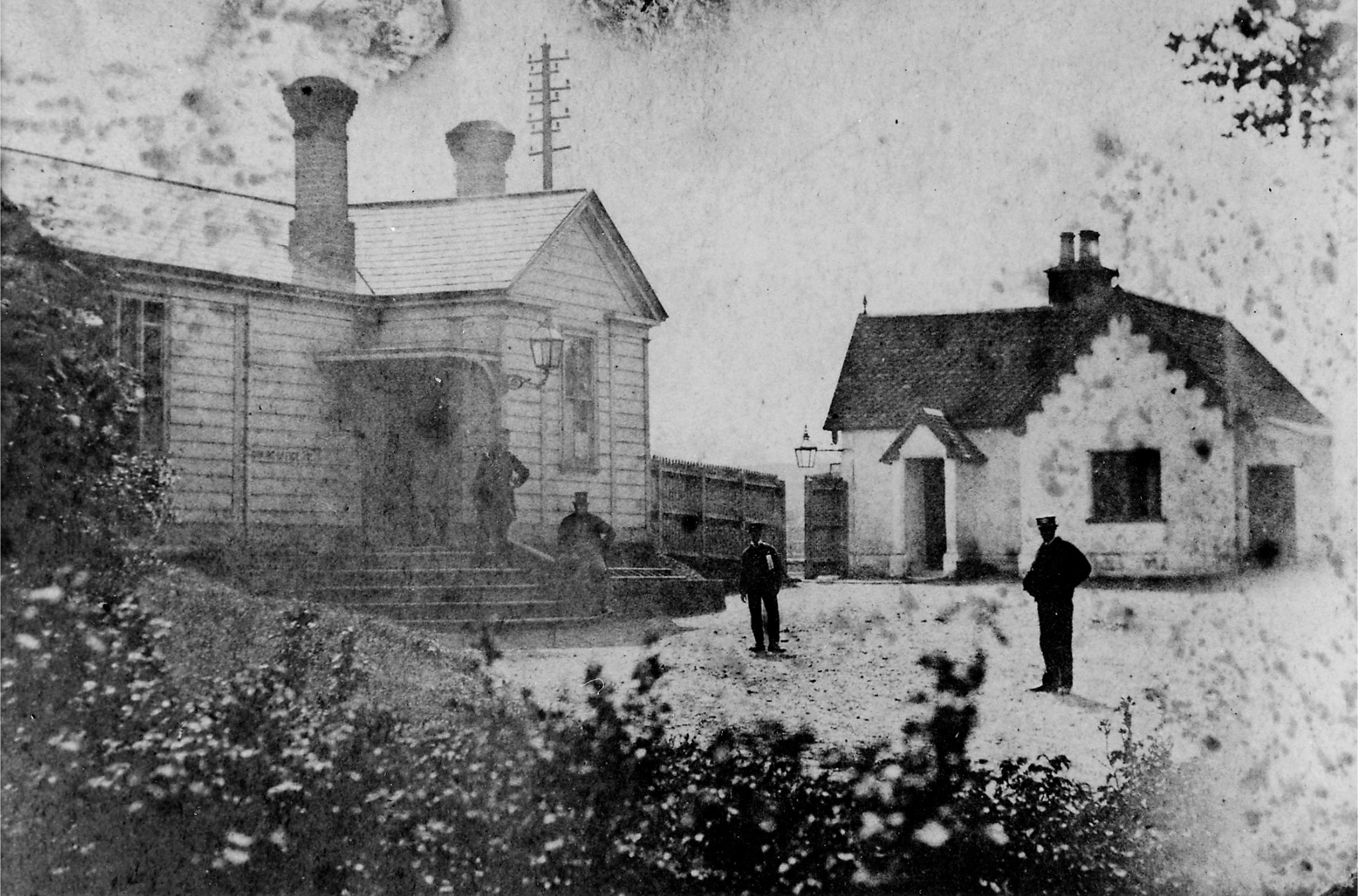
Bushey station, if I remember rightly then had only two platforms, paved with old sleepers, and could be approached through a hole in a brick wall in Pinner Road which led by a narrow pathway to the platforms. Conveyances for passengers had to wait by the hole in the wall.
Soon after the first booking office was built an agitation was made by the residents of New Bushey to change the names of the station to Oxhey for prestige reasons. This offended many of the Bushey villagers who, remembering that Bushey appeared in the Doomsday Book, felt outraged by this young upstart whose hamlet did not exist until the coming of the railway in 1838 and protested against being erased from the railway guide. However, the North Western Railway, in the best British tradition, compromised by naming the station as it exists today.
The fare from Bushey to Euston as I first remember it was 2/2. It was found, however, by my father and some other like-minded travellers that it was possible to take a ninepenny return ticket to Harrow and then pay the excess from Harrow to Euston, which was 1/-. This habit caused so much confusion at Chalk Farm and Euston in collecting the excess that in the end the charge was reduced to 1/9.
There was, of course, no fifteen-minute service in the 1880s. The first up train was 6.30 am, the next 8.00 am. This did not fit in with my father’s employment hours, so he had to give up daily travel, live in Kentish Town with relatives and become a weekender. I could expand on the result of this on my very young home life, but enough for the day!
T.W.Hedges
1B Rosebery Road, Bushey
Further information
Bushey and Oxhey station
At the time when Thomas’s letter was written, our local rail station was still called ‘Bushey and Oxhey.’ It adopted the shorter name of ‘Bushey station’ in May 1974.
You must be logged in to post a comment.