
This article was written by Ron Fordham and first published in the Oxhey Village Environment Group newsletter in October 1994.
Footnotes with additional information are available after Ron’s article. If you have additional information on the subjects covered in this article, please contact history@oveg.org.
We arrived at our new home, 47 Pinner Road, Oxhey on 5 January 1935. Oxhey was very different in those days. There was not much traffic – just the coalman, milkman and a few other horse-drawn vehicles and very few cars. Pinner Road was a quiet road.
Watford Heath seemed, at first, view like a model village. The large green with the houses on all sides, the little island (which was also a bus stop) on the Pinner Road corner with the stone fountain. Opposite was Smith’s Farm – with a large old barn in a small field, where a few sheep often grazed.
Also living on Pinner Road was Mr. Pitkin, a dairyman. He delivered the milk daily via horse and milk-float, which had a large milk churn in front with a tap at the bottom from which he filled his can. He then poured out a pint of milk into your own jug – using the measurements of the can. Rather friendly really – a chat was usually part of the service.
The shop opposite the end of Villiers Road was then a general stall, and at the corner of Pinner Road and Oxhey Street (later to become part of Oxhey Avenue) was the Co-op. This is where most of the villagers did their weekly shopping. On the other side of Pinner Road, opposite the Co-op, was a small grocers – now a private house.
Table Hall was then the Parish Hall; as now there were two shops on either side of Grover Road. One sold sweets and tobacco – and changed owners several times while we lived at 47; the other was a drapery kept by Miss Bush for many years. Next to the Arches Garage was a coffee shop and on the other side of Pinner Road was a row of cottages – the middle one was Mr Henley’s Barber Shop (hair cuts 9d – 9 old pence). On the corner of Capel Road was another sweet shop – Bentons.
The Railway Arms was there even then, and opposite it, on Aldenham Road, was the Duke of Edinburgh, now mostly the Mercedes showroom and garage. There were also three cottages opposite the station – now all gone, as is the Sportsman Public House kept by Lucketts, who, even then was running a taxi service, keeping a horse-and-carriage for special hire for weddings etc. In those days, the area was known as The Coal Wharf, by reason of the gas company cars going up and down with coal from the good yard to the gas-works daily. Now it’s a car park.
Returning to Aldenham Road and walking from Bushey Station towards the traffic lights, there was a row of shops on the left with a little coffee shop at the end. Then there was Vale’s Garage service and petrol pump, followed by a barber’s and a W.H. Smith’s bookshop on the corner.
Turning, left down Chalk Hill, next to Smith’s was a sweet shop (now that was a real sweet shop, ed), then Vale’s Stores (a general store and hardware shop) a drapers shop and lastly Pitts the Butchers. Across the road Lucketts had a garage and a petrol pump by the arches.
Returning up the hill, on the other side, there was the doctor’s surgery in the big house, (Dr Aveling and Partners), plus two banks – Midland and Barclays – an off-licence, a chemist, and, on the corner, Lee Wiggs and Clark, Dairy. Turning up Aldenham Road, Mr. Forward, the watch-maker could be found in the alcove (which it is believed was to be the entrance of a cinema, never built), now home to a tattooist, with, next door, another chemist and the shop that is now a Chinese Takeaway. Across the road was the Oxhey Infant School – the site now occupied by Faithfield.

Continuing along Aldenham Road, where the Larches are now, was the entrance and garden of a large house where the boss of the Colne Valley lived. The corner of Vale Road and Aldenham Roads was much as now – with a post office and shops, while behind was Vale Garage workshops, with another entrance in Aldenham Road. In Vale Road itself was Lott’s Brick Factory. Thompson’s Garage was opposite the factory and there was a large garden with house at the London Road end.
Crossing over London Road to Haydon Road, where the Midland Bank is now, was another part of Vale’s Garage, used during the war as a sub-station for the AFS for a time. The corner shop in Field Road has been as it is now, ever since I moved here. Back in London Road, the shops of which Londis is a part, have housed various trades. In Lower Paddock Road we come to Keyser Hall which then had a lovely bowling green.
Villiers Road and Capel Road were the chief shopping centres – with two bakers. Mr Hunsden used to deliver locally, as did Brown’s the greengrocers, and the paper shop by Browns. Mr. York had a small electric business in a building behind Palmer’s in Villiers Road – where in the early days, we took our accumulators to be recharged every week. The post office, as now, was next to the chemist then owned by Mr. Gant. There were two more pubs in Villiers Road then: the Prince of Wales and the Royal Oak.
If you walked along Villiers Road to Upper Paddock Road, you could get your shoes repaired at the cobbler’s, buy another paper from another newsagent and more food from another grocers. Opposite these shops were an Ironmongers and Eastman’s butchers, and a little way up Upper Paddock Road was the Roman Catholic Church (replaced after a temporary stay of only a few decades or so, by the new church now on London Road).
Mr. Wilson had his coal yards in Upper Paddock, with Glenister’s Contractors, Mr. Maxey’s builder’s yard and, at the top, Mr. King’s nursery.
The footpath from the Paddock Road allotments to Wilcot Avenue was there, the reservoir was in use too. Lime Close was a private house and so was Firbanks. Oxhey Avenue was decidedly ‘upper middle-class’ – running from Watford Heath to Heath Road where it became Oxhey Street before continuing down to Pinner Road. Grover Road had one shop in the centre, and between there and the railway were allotments.
You could really hear the fast steam trains going through Bushey, and children would stand by the Oxhey Road bridge to watch the trains pick up water as they came through. It was here that we saw the first Coronation Scot Express. The footpath from Watford Heath by the railway and over the bridge led through to what is now South Oxhey. Before Anthony Close was built, it was a corn field, and you could walk through the middle of the standing wheat onto the golf course!
Ron Fordham (born 1903)
Further information
Midland Bank
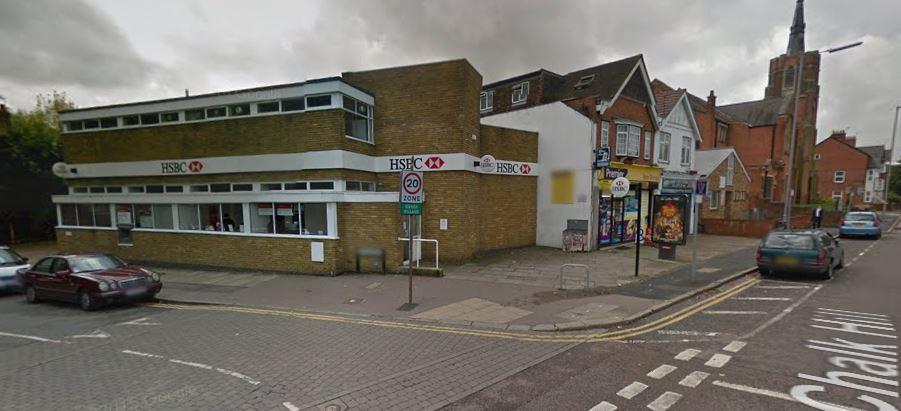
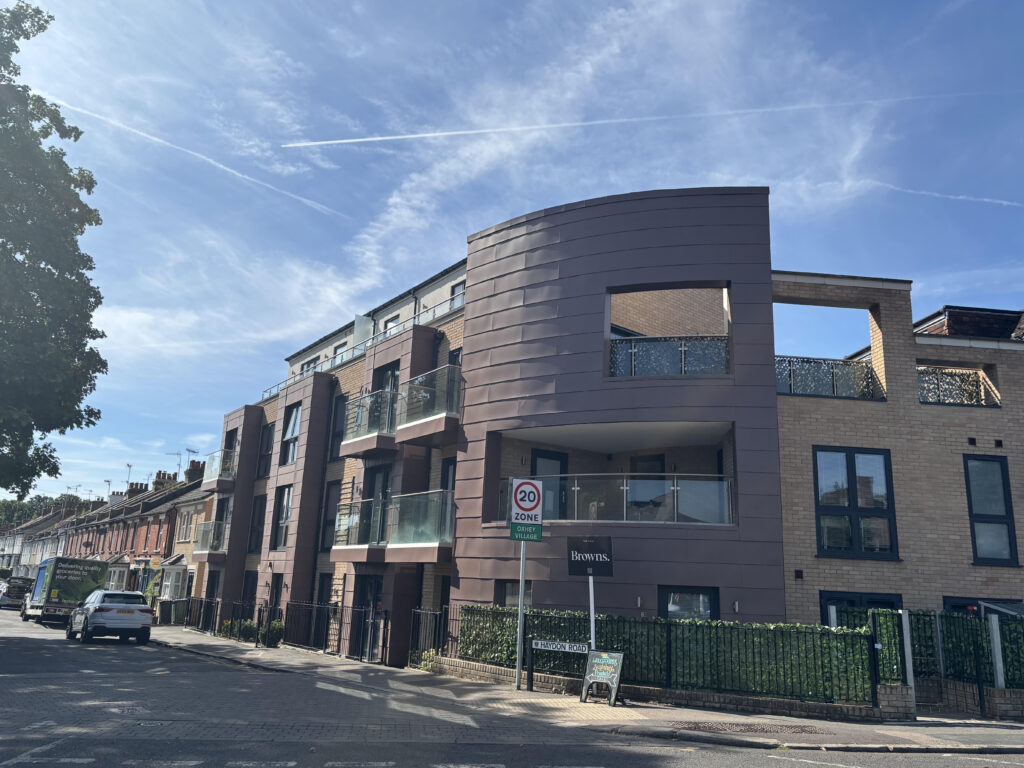
The Midland Bank branch was located at 85 Chalk Hill. It eventually became a HSBC and closed in 2015. The site was cleared around 2017 and redeveloped into a much larger block of flats, marketed – given its heritage – as ‘The Vault.’
You must be logged in to post a comment.